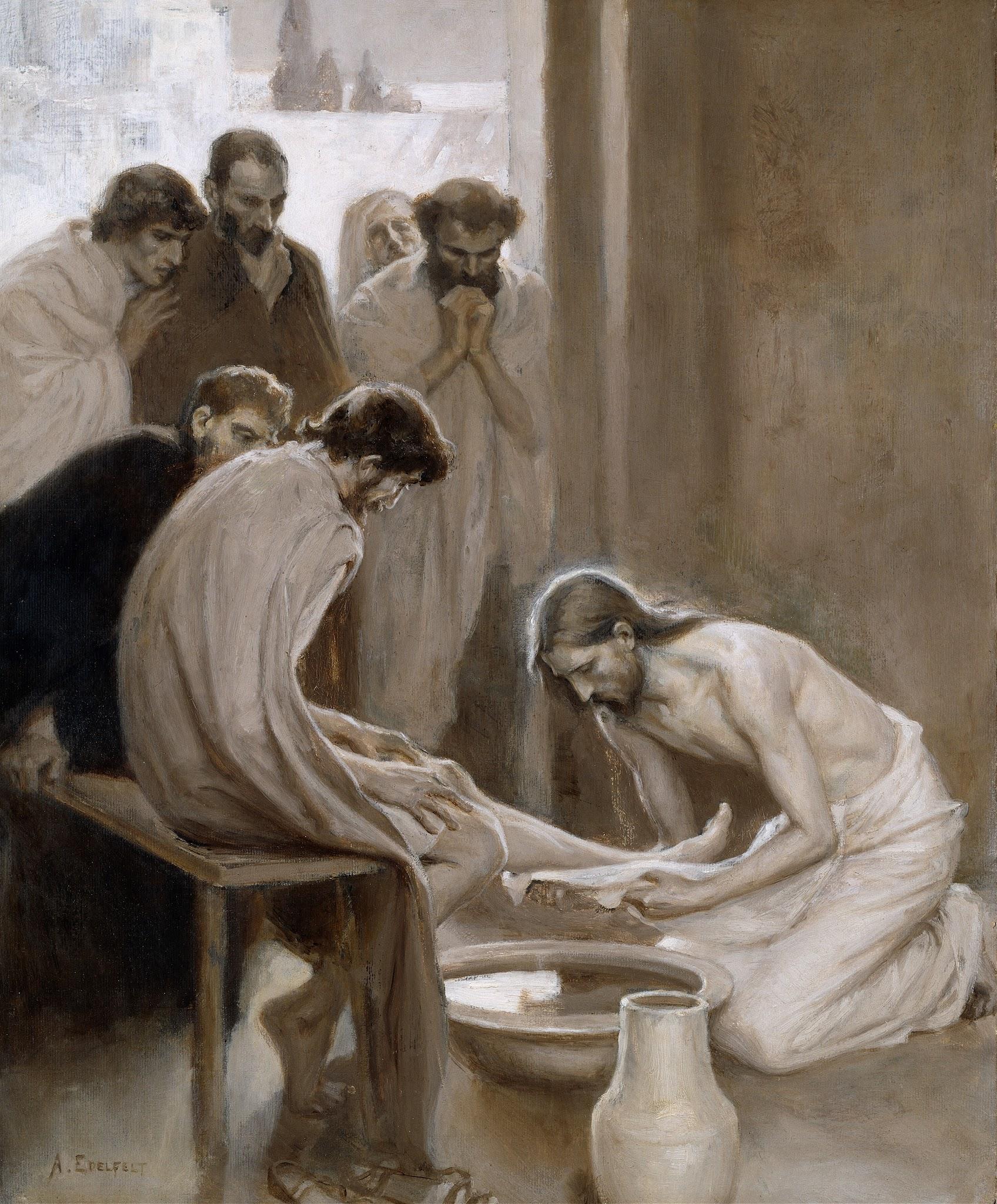
Maundy Thursday is a significant date. It precedes Good Friday, the most solemn occasion in the Christian calendar. It commemorates Jesus washing His disciples feet in a simple act of devotion and humble piety. In many churches all over the world, similar rituals are repeated to honour Christ’s example.
In this country, during the Middle Ages the Monarch washed the feet of his poorest subjects. It was the purest demonstration of obeisance, an integral part of noblesse oblige. In our modern and increasingly cynical secular society, such rituals are now sneered at, as it is fashionable to undermine the sacred and to diminish people with status and authority, particularly those with hereditary power.
However this interpretation is naive and shallow. It must be emphasised that traditions matter because they are a fundamental part of who we are as people. Our shared history strengthens the bond that ties us to our ancestors, and this allows us to pass on something meaningful to those who are yet to be born.
Unfortunately, as our society became wealthier, it moved further and further away from religion. Material concerns were the primary focus, matters of the soul were only secondary. The notion that the greatest treasure lies within the cultivation of the life of the spirit was lost, because the riches on earth provided so much joy, however temporary.
The Reformation was a double edged sword, it brought a necessary and democratic change to our culture but ultimately it severed the most important connections. It weakened the spiritual power of the Monarch, and the most profound religious rites that they enacted were stripped of their meaning.
Tudor and Stuart Monarchs did not inspire as much awe in the populace as their medieval forebears but they still managed to maintain a semblance of piety. The Cromwell regime divested itself of Monarchical influence altogether, along with its ceremonial trappings and perceived superstitions. After the Restoration many of the religious ceremonies were revived, including the Maundy Thursday rite of foot washing. The King’s subjects also believed that one touch from the King could cure them of their iniquities.
In the wake of the Glorious Revolution, however, the dour Protestant King William revealed his disdain for “foolish old Popish ceremonies”, a shocking outburst reflecting his prejudices, and deep seated arrogance. When told of the power of the King’s touch he sneered, “Well, God give you better health and more sense!”. Since his accession, the Monarch’s only role on Maundy Thursday has been to distribute money to the poor. The sacred rites have disappeared.
It is sad that these rites have been abandoned, and it is indeed telling that a practical, purposeful and material act has replaced the traditional ceremony. The Victorians, with all of their numerous faults and failings, still recognised the importance of noblesse oblige. The wealthiest members of society were often the greatest philanthropists.
However there were still pockets of greed and selfishness which rapidly became a source of great shame. Disraeli bemoaned those with wealth who continued to ignore the plight of the poor and described this noticeable gap in society as, “between whom there is no intercourse and no sympathy…who are formed by a different breeding, are fed by a different food, are ordered by different manners, and are not governed by the same laws”. This was part of his infamous speech about the Kingdom, which far from being united, was in fact two nations separated by different values and priorities.
The reason for disunity was the decline of the Established Church and its influence in society. During the Middle Ages the Kingdom was happy and stable. It was a rich tapestry of social classes held together by numerous threads of rights and responsibilities that maintained peace and helped to preserve people’s sense of wellbeing. As soon as the Church lost its power and influence, the poor lost their education, the land was usurped by the nobles and the Crown was blackmailed into giving up its rights of succession in favour of their own rulers. In turn, these rulers controlled the masses, with mixed success over the years.
Disraeli saw a parallel with the medieval barons, as the country was under the yoke of a new kind of tyranny. The factory owner operating in an industrialised England was an entirely new innovation, but he was nonetheless imbued with the same avaricious intent. His only motive was profit, and he disregarded the moral values and traditions of the nation state. Disraeli’s social reforms were his attempt to revive the concept of noblesse oblige in a modern, capitalist society.
Today should be the one day that we reflect upon the greatest gift that has been given to us, our spiritual inheritance as a Christian nation. It is worth more than gold, and we must never forget that.
 Ponderings
Leave a comment