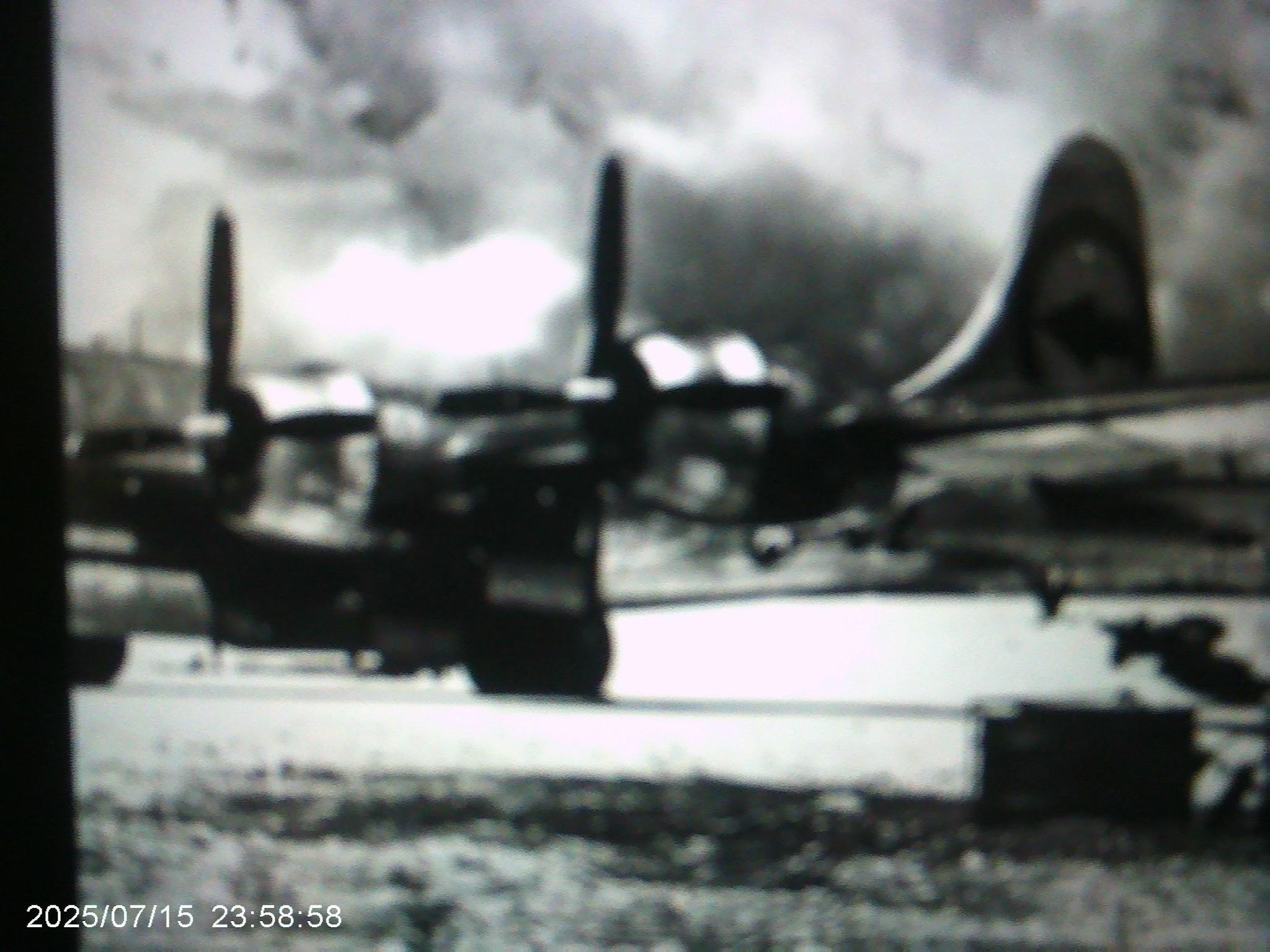
Eighty years ago this month, two atomic bombs were dropped on the Japanese cities of Hiroshima and Nagasaki. These acts would ultimately end the Second World War, but at a great cost to human life. The bombings were estimated to have killed between 150,000 and 246,000 people, mainly civilians. A month after the attacks the Japanese government signed an instrument of surrender and all hostilities ceased.
There is an official narrative of the Second World War, but this is not a clear eyed, objective view. It is obscured by a series of popular, propagandist myths which upon closer inspection fall apart. History is actually very complicated and riddled with bias and prejudice. There are so many contradictions that it is difficult to present the facts as nothing is ever that straightforward, there are always ambiguities.
The concluding episodes of the war have been framed as a triumphant proclamation of good over evil, but there is a profound moral conundrum. It is an oxymoron to refer to a “righteous war”, when it is the innocent and blameless who are sacrificed. Justifying the attacks on Japan in basic and simplified terms is of course virtually impossible, because the bombs did not just destroy military targets, they obliterated entire cities. There are dangers in swallowing the official narrative whole, because we forget that ignorance is what led to the War in the first place.
Our modern sensibility is much more aware of the dangers of stereotyping groups of people, and making generalised assumptions without considering the full information. This is an important lesson that we have garnered from our recent history.
It must be acknowledged that at that time the Japanese people were also unduly influenced by malign propaganda. Equally, western chauvinism dismissed the military and imperial might of Japan, and British complacency about the strength of its own Empire proved to be a deadly mistake. The Japanese captured British territory across Asia, and took civilians captive. These prisoners of war were subject to the most horrific acts of torture and brutality.
In a state of war, lines are drawn between allies and enemies. Propaganda is utilised as a vital weapon, as it helps to reinforce these battle lines. However propaganda is not objective truth, it is a deliberate confection of distortion and exaggeration. It is easy to manipulate a frightened population, as they are vulnerable and suggestible. Fear and ignorance are easily sublimated into vicious acts of hatred and aggression.
It is naive and foolish to condemn past atrocities when most of the world is in a relative state of peace. At that time, the entire world was trapped in a deadly and cruel war, while the curtain had fallen on the theatre of war in Europe, Japan remained an outlier. This intransigence and obstinacy was frustrating the rest of the world powers, and this was a major stumbling block on the path towards world peace.
This was evident when the terms of the Potsdam Declaration were presented to the Japanese government. The terms were unequivocable, Japan had to surrender, or face “prompt and utter devastation”. It seems unfathomable to us now, but the Japanese leaders were prepared to sacrifice an already starved and demoralised populace to avoid losing the war. However they refused to give in, and the most deadly force was unleashed.
In the aftermath, the entire world was forced to reflect on the ethics of war. It is especially pertinent today, as world powers are ramping up aggression once more. There is a genuine fear that history will repeat itself, but with deadlier consequences.
 Ponderings
Leave a comment