Category: Uncategorized

  • Illumination

    On February 19th, 1917 the American author Carson McCullers was born. She was a shy and diffident child, and by her own admission an outsider. She spent her childhood in a deeply conservative town that, in her mind, valued conformity above everything else. It seemed to her that imagination, creativity and the pursuit of meaning were of little or no concern to the majority of people who lived in this environment.

    However this formative experience was tremendously useful. Her solitary childhood inspired her greatest fiction. It enabled her to write perceptively about the struggles of lonely people living in stifling environments who long to liberate themselves. All her characters yearn to express their own individuality without fear of censure, their difference is never celebrated, it is only feared. They are not embraced by the community, they are exiled to the fringes.

    Her portraits are tremendously powerful and moving. She paints each character in painstaking detail. She illuminates their inner lives, giving them the dignity to tell their own stories. They are allowed some credence denied to them by others. They are not ostracised to the darker recesses, they are brought back into the light. Their importance is crucial to the narrative, there is no pretence or artifice. They are both seen and heard by the reader, instead of being relegated to the shadows and silenced.

    McCullers endured her own struggles. She was frequently ill, and spent protracted periods convalescing at home. Spending so much time away from her peers at school set her apart. Her closest friendships were forged with her family’s household staff, and her extended family. She grew especially close to her aunts and her grandmothers. This was an education in itself, she developed empathy, maturity and wisdom that belied her youth.

    When she was just five years old her father bought her a piano and a typewriter, and for many years she felt conflicted in her ambitions. She was not sure whether she wanted to be a musician or a writer. She remembered her cultural awakening. When she read a biography of Isadora Duncan, her example gave her hope that another life was possible, a life of personal expression and artistic fulfillment.

    She yearned to escape from her small town, and make her mark in the wider world. At seventeen she made her first attempt. She moved to New York with a powerful ambition to acquire a place at the prestigious music college, the Julliard School. When she realised that the fees were too steep, she decided to take part-time work and attend night classes in writing.

    One of her first stories was an early draft of what would eventually become the novel “The Heart Is A Lonely Hunter”. This was a profound insight into the inner life of a profoundly deaf man called John Singer. Singer is detached from the community. His closest friend, another profoundly deaf man called Spiros Antonapoulous loses his mind and is sent to an asylum. He later dies at this institution. Isolated and alone, Singer takes his own life. His tragic death leaves a void in the town and the other characters are forced to contemplate their own moral failures.

    It is extraordinary to consider that McCullers was just 23 when this novel was published. Her precocious literary talent was admired and feted by luminaries like Tennessee Williams who encouraged her to adapt her work for the stage. Tragically her health declined in the intervening years. At the age of just 50 she succumbed to a fatal brain haemorrhage. However her legacy as a writer and champion for the marginalised continues to resonate today.

  • A Short Shrift

    On the 17th February, Christians all around the globe will observe Shrove Tuesday. It is an occasion of great significance, as it is the day before Ash Wednesday and the tradition of the Lenten fast. In many cultures, Shrove Tuesday is traditionally a day of feasting marked by communal indulgence and celebration. Pancakes are made with the richest ingredients. Families participate in the cooking and games like pancake racing are all part and parcel of community celebration.

    In more devout communities, Lent is a time of complete abstinence. During this period a plain vegan diet is adopted and eggs, butter and sugar are totally forbidden. However Shrove Tuesday is a day when these strict dietary rules are ignored, in fact the direct opposite is true. Pancakes are topped with jam, chocolate and sweetened lemon. It is a day dedicated to fun, and family celebration before the austere ceremonies of Lent begin. Lent is not just about fasting, it is a time of atonement and reflection on past sins and dishonourable behaviours.

    Our ancestors understood the significance of events like these, and the profound meaning embedded within every ceremony and spectacle. They were more aware of occasions when food was scarce, and were eternally grateful when there was a surfeit. The connection between honourable behaviour and heavenly reward was inextricable. They literally believed that this was true. Human wickedness may have material rewards in the mortal realm, but the punishment in the hereafter was guaranteed. “Shrove” is a now obsolete English word meaning absolution. Derivations of this word include “shriven” and “to shrift”. Also the phrase “short shrift” is still in common parlance, albeit with a slightly different meaning and connotation.

    In everyday conversation, “short shrift” is only understood as receiving unsympathetic treatment, but originally it referred to the quick method of absolution granted to a condemned prisoner destined for the gallows. The religious aspect to this term has vanished, along with the religious nature of Shrove Tuesday itself.

    However in Shakespeare’s time, religion was integral to the discourse. His audience would have been god fearing and devout. He utilised these sensibilities for his own dramatic purposes, creating dastardly caricatures who meet misfortune as a consequence of their behaviours.

    His play “Richard III” was effectively Tudor propaganda. The last Plantagenet King is presented as a grotesque, the personification of evil. The brutality of his character is exaggerated for theatrical effect. His scheming and callous disregard for human life is all laid bare.

    The King’s cold condemnation of Lord Hastings, who he believes is plotting against him is revealed. He sentences Hastings to death, and on the day of his execution these same ominous words are uttered by Richard’s closest aides Sir Richard Ratcliffe, and are appended rather chillingly with “the King longs to see your head”. However the King’s underhand tactics were destined to end badly, in a humiliating defeat at the Battle of Bosworth.

    The history plays of Shakespeare, and the intricate poetry, inspired by Biblical truth continue to resonate. Throughout the festivities, it is apt to recall the poignancy and piquancy of these lost words and phrases as a distillation of a simpler time.

  • The Abomination of Desolation

    On the 6th February, 1685, King Charles II died. He is chiefly remembered as the King who returned from enforced exile to restore the Monarchy. As the newly restored Monarch he helped to rehabilitate the divided nations after years of Civil War, and his influence shaped the culture and identity of what would eventually become the United Kingdom.

    However at the time of his Restoration, the nations were neither united nor cohesive, and the Kingdom itself was a distant memory. His own father had been executed, and in the interregnum tyranny had not disappeared, it was reanimated, albeit in a different form. The King knew that his father had lost the trust of many of his subjects. They believed that he had failed them and even abrogated his duty.

    King Charles I left a painful legacy where the remnants of his Kingdom had been torn asunder. The responsibilities of his successor were unambiguous but onerous. His main task was to unify the divided entities of his realm. The political experiment of the Republic, or “Commonwealth” tested the concept of a united sovereign state without a sovereign. In theory, it was a worthy experiment but it was worthless in practice.

    Fundamentally, such an entity could not work as Kings ruled the state and the Church, and Scotland along with England. King Charles II was conflicted between these two nations. The Scottish leaders demanded that he must accept the Presbyterian tradition. They also stipulated that this must be imposed in England, and also Ireland, nations that had very different religious traditions.

    Charles found these demands offensive and insensitive. He felt personally affronted, but he was caught in an almost impossible bind between the various factions, all of whom believed that they had legitimate grievances. The bloody years of the Civil War had not been forgotten, the wounds were still fresh metaphorically speaking.

    The seventeenth century was an era of great turbulence, when religious fervour dominated the landscape and impacted the lives of everyone on these islands. The struggle to survive was not merely material, it was spiritual. The King felt this more keenly, as he had inherited the role of Defender of the Faith. It was a weighty inheritance, and a burden. Eventually, he gave a tacit acceptance of the Scots’ demands, but there were other religious forces that he had to quell.

    It was a time of extreme piety, and bigotry. It was almost impossible to find a compromise between implacable religious sects. Any sensible discussion was insoluble because reason was so limited. Self-righteousness obscured perceptions of others, and tribal loyalties were entrenched. This prevented a common understanding.

    The most extraordinary religious sect that emerged during this period was the Fifth Monarchists. They interpreted the fall of King Charles I as the end of the Fourth Monarchy, a Biblical prophecy from the Book of Daniel. Their prime belief was that the Restoration of the House of Stuart was an obstacle in the coming of the Fifth. Many followers were prepared to use violence in the name of the cause.

    However the sect foundered when their most prominent follower, Thomas Venner staged an insurrection in London. He was arrested and put to death. His zeal was undimmed, as he proclaimed from the gallows, “if they had been deceived, the Lord himself was their deceiver”. Venner’s martyrdom did not help the fortunes of this dwindling sect, and they vanished.

    The new Stuart King regarded religious extremism distasteful. One of his first interventions was the Declaration of Breda. This was his manifesto for his newly restored kingdom. It declared that, “we do Declare a Liberty to tender consciences; and that no Man shall be disquieted or called in question for differences of Opinion in matter of Religion, which do not disturb the Peace of the Kingdom”.

    The austere years of Cromwell had ended, and he was eager to reform and reconstitute his kingdom again. A dark chapter had closed.

    The contrast between his reign and the dictatorships that preceded him were stark. Suddenly his subjects were allowed to have fun, and laugh again with the advent of “Restoration drama”. One dramatist, Thomas Shadwell, met the approval of the King with his satire “The Virtuoso”. This featured a notorious character called Sir Nicholas Gimcrack, from which we derive the word “gimmick”. Gimcrack is pompous, arrogant and devoid of any imagination. The play ridicules his lack of humour, his earnestness and pedantry. He embodies all of the worst characteristics of narcissists and tyrants, as he seems impervious to notions of moderation and disagreement.

    Gimcrack is a figure of ridicule, instantly recognisable and familiar to the King. Shadwell’s satire was appreciated by him. This was noted by the diarist Samuel Pepys. Pepys recorded a meeting with the King in which he regaled him with scenes from the play and spent hours laughing about it. The culture of the Restoration, including the extravagance of the fashions has left an important legacy. It is a vital part of our identity, and we must never forget its importance.

  • Never Forget

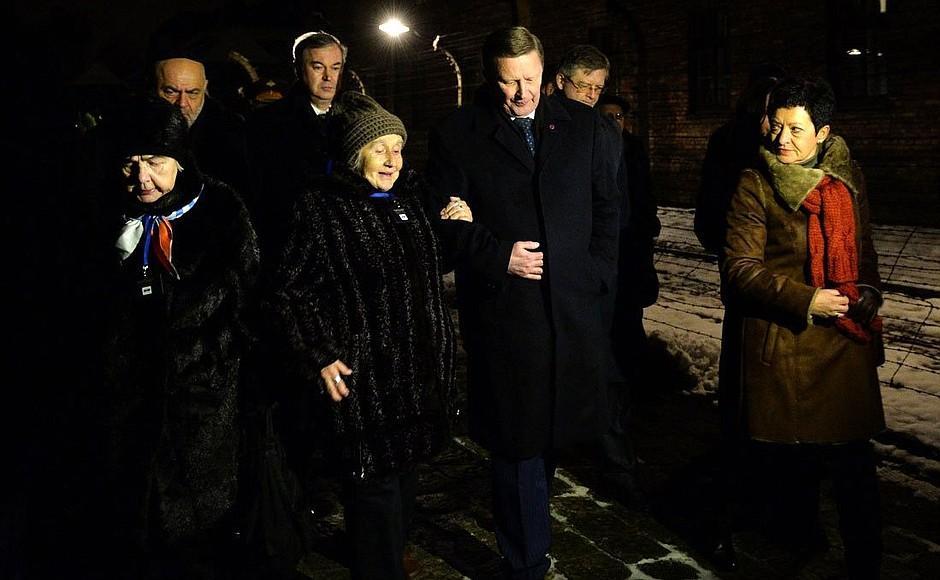
    On the 27th January, 1945 Red Army troops liberated Auschwitz concentration camp. The Second World War was drawing to a close, and as Nazi forces were on the verge of defeat, they tried to conceal their crimes. They evacuated the remaining prisoners, destroyed the gas chambers and crematoriums and dismantled the warehouses where those who had died from starvation and disease were corralled. Despite their vain attempts to erase it, the Soviets still managed to reveal to the rest of the world the brutal and inhumane realities of the Nazi project.

    The Auschwitz liberation helped to uncover the worst atrocity of the twentieth century. Since then, the world has paused to remember the Holocaust at every anniversary. It is vital that we continue to do this, we owe it to the six million Jews who were murdered. We must always keep them in our memories. We must never forget, because it negates our collective humanity if we simply banish their existence as a mere footnote in history.

    Dehumanisation was a central tenet of Nazi ideology. The Jews, in their twisted minds, were not human beings. They did not even consider them to be as lowly as animals, they actually believed that they were a disease. In the propaganda materials they portrayed them as a virus that was infecting European civilisation, and eradicating them was the only cure. It is horrific that such views were countenanced, it is even worse realising that their genocidal plans were enacted.

    This sickening act of mass murder is forever emblazoned upon our memories, footage of the concentration camps was captured on news reels and broadcast to the British population after the end of the war. We were convinced that the years of privation were worth it, if it meant securing a victory of good over evil.

    When British troops liberated the camps of Bergen Belsen, it left an indelible impression. Many of the young men who saw such levels of degradation and inhumanity were haunted for decades afterwards and could never speak about something, which by its own definition is unspeakable. One of them who did eventually speak was the actor Dirk Bogarde, who wrote extensively in his autobiography about his wartime experience.

    Bogarde states that, “when we opened up Belsen Camp, which was the first concentration camp any of us had seen, we didn’t even know what they were, we’d heard vague rumours that they were…The gates were opened and then I realised that I was looking at Dante’s Inferno…I still haven’t seen anything as dreadful. And never will. And a girl came up who spoke English, because she recognised one of the badges…and her breasts were like empty purses, she had no top on, and a pair of pyjamas, and no hair…She gave me a big kiss, which was very moving”.

    Shortly after this encounter, the girl died.

    Sadly, the Holocaust is dwindling in importance year after year and increasingly relegated as yet another part of history. My generation has grown up understanding that this is more than history, because our grandparents endured the war years. They were our only living connection to this dark episode in human history. Younger generations have no such connection, and it often appears meaningless to them.

    Tragically the Holocaust is considered simply a far off event, rather like the Boer war would have appeared to my peers. A distinction needs to be made though, between other wars in history and the Holocaust. The Holocaust was in fact, the culmination of modernity, where society had chosen to forget that we are all one human race.

    Society had chosen to forget this, because selfishness had triumphed. Amidst the horrors that unfolded during the war, Pope Pius XII pleaded to those bewitched by Hitler to heed the words of the Bible. He referred to the Book of Genesis which proclaimed that all humanity has a common origin, and all of the people on Earth had a duty to be charitable to one another. His pleas were eventually drowned out by the persuasively manipulative campaign of the Nazis.

    Another pitifully modern development is the increasing trivialisation of the Holocaust. This is something which has been utilised by malign political forces. It is a perverse method of moral inversion, and subversion. The most egregious examples occurred in the aftermath of the October 7th attacks when Hamas terrorists committed a pogrom in Israel.

    When Israel valiantly defended itself, the efforts to eliminate a racist, genocidal threat to its very existence were undermined. They were even accused of committing genocide themselves. These accusations are deeply hurtful, and belittle the memory of those who were the victims of an actual genocide.

    The Holocaust was an industrial level murder machine. It was a deliberate and intentional act, aimed at an entire people. It is true that there have been conflicts and atrocities in various parts of the world since 1945, but nothing of this level in western Europe since, so it is outrageous that words like “Nazi” and “fascist” are flung about whenever difficult political issues are contested. These words have been diluted, and their original meaning has been lost.

    It is a bitter irony that the individuals who use these words as insults have more resemblance to Nazis and fascists. These individuals attend marches denigrating the world’s only Jewish state, and argue that alternative political voices should be silenced. It is clear now more than ever that we understand what actually happened in history, to honour the memory of those who suffered and died.

  • The People’s King

    On the 20th January, 1936 King George V died. He was seventy years old. However he had spent years in poor health, originating from an accident in 1915. He was thrown from his horse while inspecting the troops on the French frontline. His injuries were compounded by his smoking addiction and he was later diagnosed with chronic bronchitis.

    Ten years later, on his doctors’ advice, he took an extended break to the Mediterranean coast as they believed that the sea air would improve his breathing. In 1928 his health declined further when he developed septicaemia. His health never truly recovered and as a consequence, he was forced to delegate many of his official duties to his son, the future King Edward VIII.

    Duty was always paramount to George. Unlike other Monarchs, he believed this was much more important than his ceremonial role. Compared to other Monarchs, he was not as enamoured by the fawning and frivolities associated with pageants or other superficial displays of Monarchical power. His sober and sombre attitude was a stark contrast to the excesses and appetites of his father, King Edward VII. In fact, he was the polar opposite, slightly built and shy.

    He did not enjoy public attention, he only participated in his duties because he understood that these things were essential. He did not adjust as well to the role as Edward did, for him it felt normal. However, George was awkward. His diffidence, ironically, was an attribute that ultimately saved him and the future of the Monarchy.

    His work ethic was admirable, in spite of his illness he made sure to attend official engagements whenever and wherever possible. It was at often great cost to his already ailing health. He was reluctant to rest and relinquish his duties. However his health took a grave turn during the winter of 1929. He was recovering from lung surgery and was forced to take another rest cure. He was sent to the seaside town of Bognor to convalesce. The civic leaders of the town were honoured to have such an illustrious guest, and consequently the suffix “Regis” was added to the name to reflect the King’s association.

    His tireless sense of duty was something that was acknowledged by representatives of the Government. George had set a new standard of behaviour for Monarchs; his conscientious character distinguished him from the leisurely antics of his father. Edward always looked the epitome of the country squire, often clad in tweeds and either engaged in a hunting party or watching the races. In contrast, George was always in the same suit, and was indifferent to the whims of fashion. He took his role as King extremely seriously and endeavoured to serve his people to the best of his ability.

    His diligence and humility set him apart from the figureheads of other European countries. The continent was in crisis, and struggling to maintain a sense of homogeneity and unity. It was actually a loosely connected entity that was fracturing from within. The United Kingdom was not immune to these effects either, the culture and society was changing rapidly.

    It was frightening that the old order was no longer considered a certainty or an inevitability anymore. During the early part of his reign nascent political movements like socialism, communism and fascism emerged. These were populist revolts against an established social order. The Liberal government, fearing possible insurrection, introduced social welfare policies to dampen down this growing threat. Meanwhile in Europe militarism continued almost unabated, culminating with the outbreak of the First World War. The King found himself in a difficult and dangerous position. However he chose to put his own people first, before making any personal considerations or decisions.

    He anglicised the Royal Family, severing them from centuries of German history and culture. He was now head of the “House of Windsor” and his relations were no longer the Battenbergs, they were the Mountbattens. This was a swift and deliberate response to the feelings of antipathy towards Germans that were widespread across the Kingdom.

    He also reformed and democratised the honours system, establishing the Companions of Honour. These were awarded to people in public service, the first recipients of these medals were the leaders of the Metal Workers, the Railwaymen and the Transport Unions. It helped appease those who sought socialist revolution, and even regicide. George re-established the charitable role of the Monarchy and exercised noblesse oblige. His subjects were thankful for it, and for his impeccable morality.

    In 1935 the King celebrated his Silver Jubilee. The nation united in a spirit of warmth and familiarity, a glorious and harmonious picture totally divorced from the dark totalitarianism that had enveloped Germany and Italy. The serenity was broken six months later when his death was announced. The calm dignity he exuded throughout his reign was crucial in securing the continuity of the Monarchy, and cementing our national identity.

  • Native Wit

    On the 7th January, 1891 the African-American writer, anthropologist, folklorist and filmmaker Zora Neale Hurston was born. She grew up in Eatonville, Florida, one of the first autonomous black principalities in the United States. Her father was the Mayor, and a Baptist minister in the town.

    She was educated at a Baptist boarding school in Jacksonville but was forced to leave after her father failed to pay her tuition fees. She worked as a maid and attended night school, before leaving for University in Washington. While on the course she grew fascinated by anthropology and folklore.

    It opened up her mind to other cultures, which seemed so remote and distinct from the earthy humour and superstition of her hometown. However, as her upbringing was so detached from the experience of white Americans, it gave her a much greater sense of appreciation for the wisdom that she acquired growing up in an all black neighbourhood. She realised that her memories of the stories, traditions and rituals had a profound significance. She decided to continue to pursue anthropology as an academic subject, and she also composed short stories and satirical pieces.

    In 1925 she was granted a scholarship at Columbia University, and three years later she received her B.A in anthropology. Her literary and scholarly talents were recognised by the philanthropist and literary patron Charlotte Osgood Mason. She provided Hurston with a stipend of $200 a month to help further her research into folklore. In 1935 she published her first literary anthology on African-American folklore called “Mules and Men”. This was swiftly followed by the novels “Their Eyes Were Watching God” and “Moses, Man of the Mountain”. Her extensive research work took her to the Southern states of America and also the Caribbean, where she collected stories and testimonies from the African diaspora.

    In 1938, another collection of folklore was published. It was called “Tell My Horse” and it details the syncretic beliefs of the post-colonial world. Hurston’s work was overlooked in her lifetime, as she was overshadowed by literary titans like Richard Wright and Langston Hughes. Both Wright and Hughes were overtly partisan in their political beliefs, and this inevitably gave them more gravitas culturally. Hurston only reflected her experiences, and did not perceive herself as a propagandist for the cause of racial equality. Her objectivity, and obvious affection for the community of Eatonville resonates in her writing.

  • Black Flowers Blossom

    On the 1st January, 1988 the first English language edition of the novel “Love in the Time of Cholera”, by Gabriel Garcia Marquez was published. It was something of a gift to the Anglophone literary world, as it opened up a new and exciting frontier of writing and writers.

    The culture of post-colonial Latin America was once hidden from the rest of the world. It was a region that was considered mysterious and exotic, and Marquez was an expert and a vivid voice describing this colourful and multidimensional corner of the world.

    The novel is set in an era where tradition and modernity converge. It is a confusing time for the characters who inhabit a place of instability and uncertainty. The confusion stems from the imbalance between pragmatic duty, loyalty and the affairs of the heart.

    The characters are suspended on a precipice, a precarious line between the old world and the new world. This is illustrated with a dramatic and auspicious scene, the occasion of a hot air balloon ride on the eve of the twentieth century.

    The main protagonists are the fastidious, correct, upright Doctor Urbino, his wife Fermina, and her lost love Florentino. Florentino is a humble shipping clerk who, as the story unfolds, works his way up to become the manager of the company.

    He is revealed to have poetic aspirations and dreams. Their initial courtship is clandestine, and fails when by chance the doctor arrives in Fermina’s life. She is persuaded by her family to marry him.

    The contrasts between enlightenment and superstition, medicine and primitivism could not be more stark. The parallels between the epidemic of cholera and the pathology of love are intensely moving. Urbino seems immune to affection, and perceives marriage as purely pragmatic. He is puzzled by the very idea of romantic love, and how it is possible between two opposing genders.

    Urbino dies, allowing the revival of Fermina and Florentina’s love affair. Even in old age, their love has refused to die. It has left a permanent imprint. Marquez detailed an alluring and magical world that has continued to charm.

  • Chipping Away

    On the 20th December, 1954 the acclaimed author and screenwriter James Hilton died. His most famous work was “Goodbye Mr Chips”. This slim novella was published in 1934 but contains lessons which resonate throughout the ages. It is a romantic evocation of a schoolmaster at Brookfield, a provincial public school for boys. Mr. Chipping or “Chips” is the archetypal teacher, a warm, paternalistic and familiar presence in a world that refuses to stay still.

    Chips knows that history has undoubtedly shaped him, but he is uncomfortably aware that the future is a constant intrusion into his carefully ordered life. Chips finds himself in later years,a solitary widower after losing both his wife and child in childbirth. He is bereft of biological children, but nonetheless perceives himself as the adopted father of hundreds of boys. The boys who were fortunate enough to have been taught by him regard him as a mentor and a confidante, and by extension a father figure.

    The old “boys” of the school include high ranking church ministers, top businessmen, judges, lawyers and assorted pillars of the community. Chips’ role in their success has been incalculable, he is not merely a teacher to them he is the arbiter of moral correction. His lessons in civilisation are set and precise formulas for everyone to follow, this, he believes, is the natural order of everything.

    Chips’ is a traditionalist and a conservative. He is an unfashionable figure in a world that is constantly striving for modernity and the future. However his political and ethical position is not completely implacable, as it is revealed that his young wife helped to soften his stance. In their brief but eventful marriage he opens himself up to her liberal outlook.

    Under her influence he is willing and receptive to new ideas, and his prejudices, particularly those around class, are confounded. Yet his actual standards never change, and he refuses to waver, even in the face of external pressures, as Hilton explains,

    “Because always, whatever happened and however the avenues of politics twisted and curved, he had faith in England, in English flesh and blood, and in Brookfield as a place whose ultimate worth depended on whether she fitted herself into the English scene with dignity and without disproportion”.

    Chips is ultimately a product of a specific time and place. He is the personification of Victorian England, an upstanding figure, both patrician and correct.

    However the radicalism of the early twentieth century is alarming to him, along with the increasing appetite for war. As the First World War erupts, he is forced out of retirement to replace the younger masters who are conscripted. Every Sunday assembly is punctuated with a roll call of death notices, a poignant reminder of the waste wrought by war. An interesting twist occurs when it is announced that the master of German had been killed, another victim of this random and senseless event in history. Chips correctly admonishes the boys who denounced him as the “enemy” when in fact he was called up by his country’s government and had no real choice in the matter.

    Chips never forgets any of his pupils, he continues to invite them to tea at his lodgings. He is loved for his wisdom, his kindness and his tireless duty. The concluding chapter, when Chips says his final goodbye is so touching it is difficult to read it without tears. The vision of England that Hilton depicts, of immaculate cricket lawns and impeccable manners may not have existed, but it is recognised by most of us as the country in which we would like to live.

    This hopeful vision is dwindling year after year and seems more remote than ever in an age of technocratic globalism. Cynics paint this as a sanitised view of the country, and sneer at the supposed absurdity, complaining that it is excessively sentimental.

    However this criticism is hollow and contemptuous, revealing a coarseness and a bluntness which we have sadly become too accustomed to, it offers nothing positive. Hilton’s elegy to a lost England is timely, and even more necessary today than when it was written.

  • The Death of Innocence

    On the 8th December, 1980 the English musician, writer, artist and peace activist John Lennon was murdered. His murderer, Mark Chapman was seemingly affronted by his apparent hypocrisy and militant atheism. This one spiteful act heralded in a new decade of cynicism, which has perpetuated into the twenty-first century.

    This cynicism has not disappeared even though it has had a devastating impact upon humanity, in fact this mean spiritedness has mutated. We are living in an age of darkness and nihilism which Lennon would not recognise if he had actually lived to see it. The 2020s will be remembered as an era of degradation. In fact we are now existing in a terminal state of moribund decline.

    It is pitiful, but he would not have much of a creative career in today’s climate because it is driven by the opposite, there is a much greater desire to destroy. It is sad to witness this unfold before us. The information age has given us many more advantages. However the actual disadvantages are rarely discussed, the rise of online bullying has meant that nobody wants to offer any opinion because it is howled down by the mob. Very few people are prepared to present anything optimistic, because negativity is so deeply entrenched within the general psyche. Sincerity is mocked, earnestness is belittled and this in turn eliminates any creative endeavour. Every new thought is inherently self-defeating, and pointless. Looking back on the past century is like looking at a different world entirely, there is a degree of innocence, which has been lost. There was nothing inherently malicious about Lennon’s songs, or political pronouncements.

    His sole intention was to spread a spirit of harmony in a discordant world. The only criticism that could have been leveled against him was naivety, but youthful idealism is never a valid reason to kill someone. It is shocking to consider that he was only 40 when he died. Lennon was an integral part of The Beatles. He was a well liked and well regarded cultural figure, and the British public felt a great deal of affection for him, and Paul McCartney.

    However the fame and success inevitably became too much for Lennon, and he longed for stability and quiet. He felt stifled by the culture of the UK, and The Beatles as a musical unit was far too confining. He left the band, and the country. He moved to New York in August 1971. Two months later he released a single called “Imagine”, an elegiac paean to an imaginary utopia where humankind “lives as one”. This stripped down piano ballad describes his vision of a universal brotherhood of man, with no heaven, hell, possessions, greed or hunger.

    However his relocation was fraught with problems. The American authorities viewed him with suspicion. Establishment figures denounced him, and suspected that he was a covert Communist. They believed that his songs were a subtle code for subversion, and that his influence was pernicious. They were convinced that his very presence in the country could potentially corrupt an entire generation.

    Lennon was regarded with the same distaste at the height of the Beatles when he compared his popularity with Jesus Christ. Unlike Jesus, Lennon lived in the opulence of St. George’s Hill and drove a Rolls Royce. In 1966 the Protestant firebrand, Norman Vincent Peale pondered on the Beatles meteoric rise to fame and asked, “one wonders what they do with all their dough”. It was evident that Lennon was not frugal as his residence also had a swimming pool.

    This criticism revealed a distinct shallowness, and a glaring lack of intelligence. Most of us can distinguish between a piece of art, and the artist, and actually understand the difference. It is sad that there are still philistines in our midst who take everything literally, including the lyrics of a pop song. Obviously, Lennon was not a politician. He was a singer-songwriter, and he did not compose or perform songs for an explicitly partisan cause.

    Pop music is merely a vehicle for the hopes, frustrations and aspirations of the young. It does not matter if the ideas expressed within the music seem contradictory, foolish or trite to the more mature and worldly among us because that is not the point. Pop songs are only designed to capture a mood. In Lennon’s case, they expressed a feeling of hope for the future of humanity, when in 1969, he implored the upper echelons of society to “give peace a chance”. It seems such a simplistic, and almost childlike plea, but that is the inherent charm of the song.

    Pop music, like other popular forms of entertainment, is meant to be escapist. It presents a fantasy to the listener, to elevate him or her beyond the brutal reality of life. It acts as a soothing salve or a balm. When there are forces in society determined to divide and to break you, music has the unique power to unify and to consolidate.

    Perhaps this is the reason why the elites are so determined to silence the very human need for self-expression, because it challenges their power. The technocrats prefer conformity over individuality, collective fear rather than singular courage and a bewildered, deracinated and atomised populace because it is so much easier to control us. Lennon flew into the light of the dark, black night and paid the ultimate sacrifice for his artistic liberty.

  • The Last Walk

    The mission to reach the South Pole was a bleak and forbidding endeavour. It was a testing expedition for even the most battle hardened men. Captain Scott’s journey across the barren and blank Antarctic was not just exacting physically, it was a supreme test of psychological endurance.

    His team were determined to reach their goal, in spite of the dangers to life. One of his men, Captain Oates displayed the most extreme example of courage in the face of adversity. Lawrence Oates heroically sacrificed his mind, body and spirit to save the mission of his fellow explorers.

    He left the tent to walk out into certain death with the famous last words,

    “I am just going outside and may be some time”.

    These words, so genteel and polite were befitting of an English gentleman, and characteristic of an officer who had served his country proudly and courageously in the Second Boer War. In that conflict he received a gunshot wound in his left thigh bone, which left his left leg an inch shorter than his right leg.

    However he remained fearless and undaunted by the scale of fighting, he did not want to give up. In spite of the clamouring calls from the other soldiers, he urged them to persevere, stating “we came to fight, not to surrender”. His fierce tenacity and bravery impressed military luminaries of the time, like Lord Kitchener.

    However the Antarctic was an entirely different frontier, and in this situation he had to surrender. He died in a blizzard on the 17th March 1912. It was his 32nd birthday. He had gangrene and frostbite and knew that his condition was beyond hope. His last and lonely walk into oblivion is immortalised in history.

    This was the age of exploration, and young men dreamed of becoming explorers. No frontier seemed too remote or arduous to them. It was the greatest competition on planet Earth, and many were determined to win. It did not matter that they sacrificed their lives to achieve it. Oates was a true hero, but in a typically British understated way. His courage lies within his willingness to sacrifice himself for the team.