On the 6th February, 1685, King Charles II died. He is chiefly remembered as the King who returned from enforced exile to restore the Monarchy. As the newly restored Monarch he helped to rehabilitate the divided nations after years of Civil War, and his influence shaped the culture and identity of what would eventually become the United Kingdom.
However at the time of his Restoration, the nations were neither united nor cohesive, and the Kingdom itself was a distant memory. His own father had been executed, and in the interregnum tyranny had not disappeared, it was reanimated, albeit in a different form. The King knew that his father had lost the trust of many of his subjects. They believed that he had failed them and even abrogated his duty.
King Charles I left a painful legacy where the remnants of his Kingdom had been torn asunder. The responsibilities of his successor were unambiguous but onerous. His main task was to unify the divided entities of his realm. The political experiment of the Republic, or “Commonwealth” tested the concept of a united sovereign state without a sovereign. In theory, it was a worthy experiment but it was worthless in practice.
Fundamentally, such an entity could not work as Kings ruled the state and the Church, and Scotland along with England. King Charles II was conflicted between these two nations. The Scottish leaders demanded that he must accept the Presbyterian tradition. They also stipulated that this must be imposed in England, and also Ireland, nations that had very different religious traditions.
Charles found these demands offensive and insensitive. He felt personally affronted, but he was caught in an almost impossible bind between the various factions, all of whom believed that they had legitimate grievances. The bloody years of the Civil War had not been forgotten, the wounds were still fresh metaphorically speaking.
The seventeenth century was an era of great turbulence, when religious fervour dominated the landscape and impacted the lives of everyone on these islands. The struggle to survive was not merely material, it was spiritual. The King felt this more keenly, as he had inherited the role of Defender of the Faith. It was a weighty inheritance, and a burden. Eventually, he gave a tacit acceptance of the Scots’ demands, but there were other religious forces that he had to quell.
It was a time of extreme piety, and bigotry. It was almost impossible to find a compromise between implacable religious sects. Any sensible discussion was insoluble because reason was so limited. Self-righteousness obscured perceptions of others, and tribal loyalties were entrenched. This prevented a common understanding.
The most extraordinary religious sect that emerged during this period was the Fifth Monarchists. They interpreted the fall of King Charles I as the end of the Fourth Monarchy, a Biblical prophecy from the Book of Daniel. Their prime belief was that the Restoration of the House of Stuart was an obstacle in the coming of the Fifth. Many followers were prepared to use violence in the name of the cause.
However the sect foundered when their most prominent follower, Thomas Venner staged an insurrection in London. He was arrested and put to death. His zeal was undimmed, as he proclaimed from the gallows, “if they had been deceived, the Lord himself was their deceiver”. Venner’s martyrdom did not help the fortunes of this dwindling sect, and they vanished.
The new Stuart King regarded religious extremism distasteful. One of his first interventions was the Declaration of Breda. This was his manifesto for his newly restored kingdom. It declared that, “we do Declare a Liberty to tender consciences; and that no Man shall be disquieted or called in question for differences of Opinion in matter of Religion, which do not disturb the Peace of the Kingdom”.
The austere years of Cromwell had ended, and he was eager to reform and reconstitute his kingdom again. A dark chapter had closed.
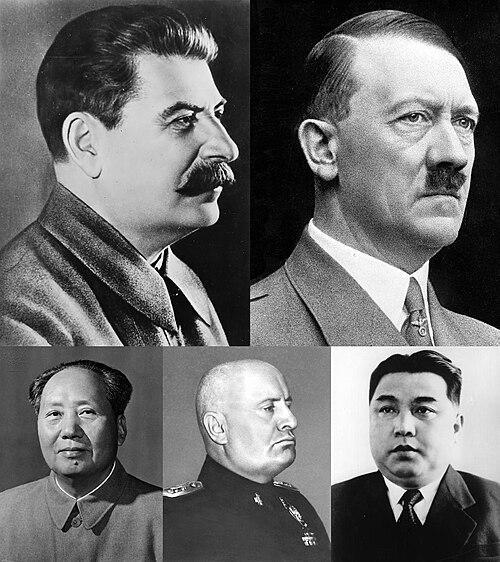
The contrast between his reign and the dictatorships that preceded him were stark. Suddenly his subjects were allowed to have fun, and laugh again with the advent of “Restoration drama”. One dramatist, Thomas Shadwell, met the approval of the King with his satire “The Virtuoso”. This featured a notorious character called Sir Nicholas Gimcrack, from which we derive the word “gimmick”. Gimcrack is pompous, arrogant and devoid of any imagination. The play ridicules his lack of humour, his earnestness and pedantry. He embodies all of the worst characteristics of narcissists and tyrants, as he seems impervious to notions of moderation and disagreement.
Gimcrack is a figure of ridicule, instantly recognisable and familiar to the King. Shadwell’s satire was appreciated by him. This was noted by the diarist Samuel Pepys. Pepys recorded a meeting with the King in which he regaled him with scenes from the play and spent hours laughing about it. The culture of the Restoration, including the extravagance of the fashions has left an important legacy. It is a vital part of our identity, and we must never forget its importance.
 Ponderings