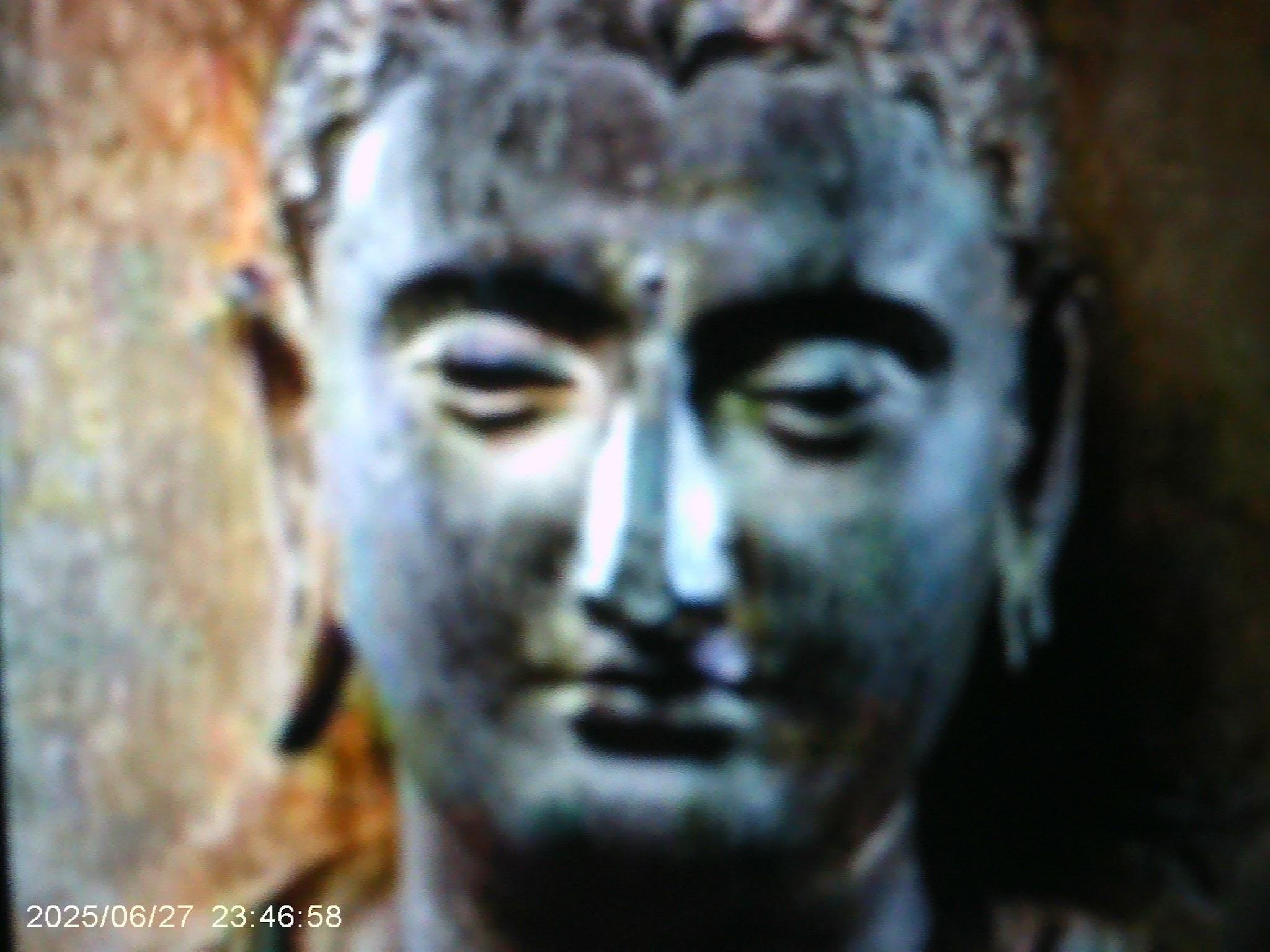
The West is lauded as the pinnacle of human civilisation. Yet there is an inherent paradox at the heart of Western life. Although we are blessed with material comforts and living much longer and productive lives, we are beset with ennui. The very soul of the West has diminished, and we are suffering as a consequence. Western man has been reduced to little more than a machine, and he has lost his way. The drive to find a sense of meaning has withered away, and there is a spiritual void.
Naturally, the rise of Western fragility has meant that the creeds and philosophies of the East are gaining traction amidst an increasingly discontented populace. However most Westerners have never truly experienced or learned the cultures of the East in their appropriate context. Naivety and ignorance about this subject abound as a consequence.
Buddhism, in particular, has been repackaged in a rather cynical and opportunistic manner for a Western audience. It is presented as a benign alternative to Christianity, a balm, or salve for individuals damaged by its supposed harsh strictures. In reality this is a shallow interpretation. It is an intentional mischaracterisation of its teachings, an attempt to strip away the bleaker aspects of the belief system. These darker elements are often regarded as unpalatable to a Western audience, for instance Samsara in its authentic meaning is glossed over or even omitted.
Buddhists understand this concept as an infinite cycle of human suffering, which cannot even be terminated with physical death, as the soul is just reincarnated, and the pain is simply perpetuated in another mortal body. This seems an affront to a Western audience, who continue to maintain a somewhat illusory optimism about the nature of human existence.
It must be acknowledged that there are immense and irrevocable cultural differences between East and West, and neither are truly compatible with each other. Instead of striving to seek a commonality, differences should be celebrated, as an example of the beauty of human diversity in all of its myriad manifestations. There are too many ideologies that have attempted to homogenise humanity. Every single attempt to universalise the human race has ended in mass murder, like Nazism and Communism. Ironically, these creeds were created by fantasists who were convinced that they could engineer world peace by dehumanising others.
Another example of the cultural differences between West and East is the notion of attachment. Buddhists believe that the attachment to worldly things is the source of all discontent and suffering. They believe that as soon as a person detaches themselves from their worldly desires, true enlightenment is achieved. Once more, this notion jars against the West with its culture of self-improvement and the almost interminable attainment for riches.
Negating the self, or the ego is an anathema to many people living in the West today, so this theory has had to be reformulated to seem acceptable. However, such a profound belief has been trivialised, and it is instead presented as “mindfulness”, a temporary escape from selfishness and self-centredness. Watering this concept down as akin to a relaxing hobby has defeated the purpose.
It is difficult for most people nowadays to imagine a spiritual realm. In the modern West this literally has no meaning because the material world of here and now is of primary importance. However, even in ancient times the understanding of a metaphysical world was a source of bafflement for Europeans. When Jesuit missionaries ventured into Asia they reportedly asked Buddhist monks to direct them to the geographical location of Mount Meru, unaware that this was not a literal place, but a sacred symbol representing the centre of the universe.
Cultural misunderstanding has had profound consequences. The senior Jesuit and missionary Andre Palmeiro decided to evangelise the Chinese people on an expedition which seemed cursed from the beginning. He was perplexed by the lack of belief in the one creator of heaven and earth, and confused by their insistence that the universe was subject to a naturally occurring order. The basic elements, fire, earth, air and water simply waxed and waned alternately in an infinite cycle of life, death and renewal.
These oscillations were interpreted by the Emperor, and obeyed without question by his subjects. It was an uphill battle to convince the Chinese people to switch allegiances. They were wholly subservient to the edicts of the Emperor, not the Pope. The Chinese people who encountered the missionaries were suspicious and fearful. They believed that if they dared to disobey the Emperor this would disrupt cosmic harmony, and chaos would ensue.
Many Westerners have convinced themselves that Eastern belief systems are simpler and hark back to a more innocent time. They want to appear well meaning, but they actually look and sound patronising. The decline of religion in the West has coincided with an increase in degradation and decadence. A spiritually hollow population has attempted to find true wisdom and enlightenment from the East, but without considering the complexities and nuances. Scholars have dedicated most of their lives trying to understand the purpose of human suffering, and it is demeaning to find their studies reduced to greeting card platitudes.
A spiritually moribund West needs to revert to its own traditions, and reinterpret them for a modern audience rather than misappropriate others. Stealing ideas and misrepresenting them is offensive. It is actually insulting to the people who have cherished their cultural traditions and value systems for generations.
The West has forgotten its own civilisational foundations, in fact it has destroyed them. There is no point seeking spiritual enlightenment elsewhere, as it is embedded within the institutions of our society. The notion that all humans are equal did not arise out of thin air, it came from theologians and philosophers from Europe.
Our culture is informed by the conventions and values that were honed over centuries. These things used to mean something, but since the late twentieth century they have been undermined. One glaring example is the toleration of blasphemy. Blasphemy was once a shocking thing, and it was considered a shameful act. Since belief has diminished, the shock has no currency anymore. It is a consequence of the contradictory notion of tolerance. Toleration, used responsibly is positive, and helps create harmony and cohesion. When toleration is misused, and put in the hands of irresponsible people it only brings discord and division. Of course, blasphemy is not the only thing that has harmed the West.
Ignorance, arrogance and contempt in general has accelerated the degradation of our civilisation. This attitude is evident in the class of politicians that have been elected in the last thirty years. They no longer represent the people, they are instead driven by a false ideology and a lust for power. They have deliberately turned their backs on our ancient and hallowed institutions, and derided the political achievements of their antecedents.
History has been erased, and we have no identity. However it is lucky that we still remember what happened when authoritarians tried to burn books and destroy our artistic and cultural legacy. We must never return to those dark days. Instead of searching for a different way of life, we need to revive our old ways to survive.

 Ponderings