
Tag: philosophy

  • Bitter Fruit

    William Blake represents the united voice of England and the English people. This is an immense accomplishment. It is a rare feat to leave such a memorable and meaningful legacy within a nation that throughout its history has struggled to define itself. England, and its people have sustained numerous attacks from cynics who refuse to believe that the English have a unique identity and culture. Bizarrely, these are the same cynics who have become the greatest champions of Blake’s work. It is strange that they share their admiration with traditionalists, their ideological enemies.

    However both camps are in agreement with Blake’s savage critique of the untrammelled industrialisation of England, and the pernicious effects of it. Anyone with emotional attachments to the English landscape feels the same way. Blake had a great insight into these sentiments. He had an acute awareness of the spirit of place, for him England was sacred. It is extremely unusual for any cultural figure to simultaneously appeal to the counterculture and to the Establishment. Very few figures aside from Blake resonate with two very different audiences.

    However Blake transcended these arbitrary political categories. His convictions were solely spiritual ones. He maintained a profound belief, but his belief system also defied conventional religion. He also understood the universal follies of human nature, once describing anger as a tree growing with poisoned fruit. Other human follies are exposed in his writing. Blake was a visionary, a prophet, a poet and expert draughtsman and engraver. All of his imaginative and creative skills were honed from childhood.

    His inspiration was also derived from the long walks that he took throughout London. He observed everyday life and reflected upon the remarkable and often disturbing scenes that he had witnessed. One morning was especially memorable. Walking through Peckham Rye he experienced a dramatic epiphany. He looked up and saw “a tree filled with angels, bright angelic wings bespangling every bough”. Angels are a perennial theme in his art and in his poetry.

    However his stellar reputation is a relatively recent development. Today he is revered as a seer and a genius, but in his lifetime he was condemned as a lunatic and a dissolute. He was castigated as a disruptive and subversive influence and was shunned by polite society. Consequently he struggled to make a living and lived an austere life. When he died, his friend and fellow artist George Richmond kissed him, closed his friend’s eyes and prayed “to keep the vision in”. The vision has waxed and waned over the centuries, but at the time of his death, his passing was left unacknowledged. He was considered just another obscurity. He was buried in an unmarked grave at the Bunhill Field dissenters graveyard in London.

    However it wasn’t until 2018 that the Blake Society redressed this and paid for a new gravestone. Once more, the timing of this exposes a great paradox. It occurred at the peak of the vicious and vituperative “Brexit wars” when an ideological divide threatened to tear the nation apart. Paradox is at the heart of Blake’s sensibilities, he understood that it was vital in the journey towards moral and spiritual enlightenment,

    “Without Contraries”, he explained, “is no progression. Attraction and Repulsion, Reason and Energy, Love and Hate are necessary to Human Existence. Opposition is true friendship”. Unfortunately, such challenging perceptions are too difficult to comprehend in a dying culture.

    The emotional depth rendered in his poetry and art still evades most modern audiences who are more familiar with the shallow and trivial. Blake’s point has been made, a society that is more concerned with material accumulation is essentially a moribund one.

  • The Fire Sermon

    The West is lauded as the pinnacle of human civilisation. Yet there is an inherent paradox at the heart of Western life. Although we are blessed with material comforts and living much longer and productive lives, we are beset with ennui. The very soul of the West has diminished, and we are suffering as a consequence. Western man has been reduced to little more than a machine, and he has lost his way. The drive to find a sense of meaning has withered away, and there is a spiritual void.

    Naturally, the rise of Western fragility has meant that the creeds and philosophies of the East are gaining traction amidst an increasingly discontented populace. However most Westerners have never truly experienced or learned the cultures of the East in their appropriate context. Naivety and ignorance about this subject abound as a consequence.

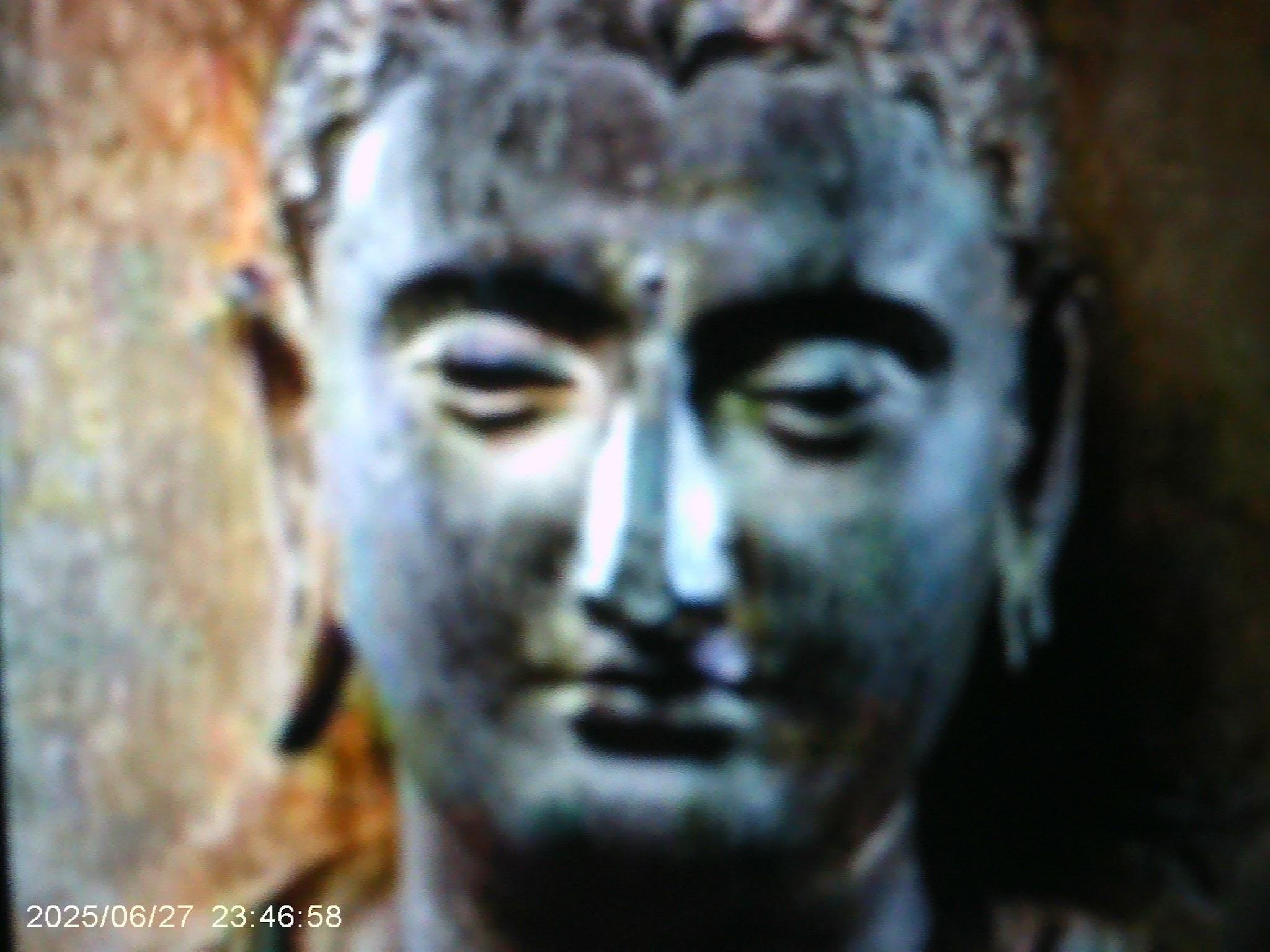
    Buddhism, in particular, has been repackaged in a rather cynical and opportunistic manner for a Western audience. It is presented as a benign alternative to Christianity, a balm, or salve for individuals damaged by its supposed harsh strictures. In reality this is a shallow interpretation. It is an intentional mischaracterisation of its teachings, an attempt to strip away the bleaker aspects of the belief system. These darker elements are often regarded as unpalatable to a Western audience, for instance Samsara in its authentic meaning is glossed over or even omitted.

    Buddhists understand this concept as an infinite cycle of human suffering, which cannot even be terminated with physical death, as the soul is just reincarnated, and the pain is simply perpetuated in another mortal body. This seems an affront to a Western audience, who continue to maintain a somewhat illusory optimism about the nature of human existence.

    It must be acknowledged that there are immense and irrevocable cultural differences between East and West, and neither are truly compatible with each other. Instead of striving to seek a commonality, differences should be celebrated, as an example of the beauty of human diversity in all of its myriad manifestations. There are too many ideologies that have attempted to homogenise humanity. Every single attempt to universalise the human race has ended in mass murder, like Nazism and Communism. Ironically, these creeds were created by fantasists who were convinced that they could engineer world peace by dehumanising others.

    Another example of the cultural differences between West and East is the notion of attachment. Buddhists believe that the attachment to worldly things is the source of all discontent and suffering. They believe that as soon as a person detaches themselves from their worldly desires, true enlightenment is achieved. Once more, this notion jars against the West with its culture of self-improvement and the almost interminable attainment for riches.

    Negating the self, or the ego is an anathema to many people living in the West today, so this theory has had to be reformulated to seem acceptable. However, such a profound belief has been trivialised, and it is instead presented as “mindfulness”, a temporary escape from selfishness and self-centredness. Watering this concept down as akin to a relaxing hobby has defeated the purpose.

    It is difficult for most people nowadays to imagine a spiritual realm. In the modern West this literally has no meaning because the material world of here and now is of primary importance. However, even in ancient times the understanding of a metaphysical world was a source of bafflement for Europeans. When Jesuit missionaries ventured into Asia they reportedly asked Buddhist monks to direct them to the geographical location of Mount Meru, unaware that this was not a literal place, but a sacred symbol representing the centre of the universe.

    Cultural misunderstanding has had profound consequences. The senior Jesuit and missionary Andre Palmeiro decided to evangelise the Chinese people on an expedition which seemed cursed from the beginning. He was perplexed by the lack of belief in the one creator of heaven and earth, and confused by their insistence that the universe was subject to a naturally occurring order. The basic elements, fire, earth, air and water simply waxed and waned alternately in an infinite cycle of life, death and renewal.

    These oscillations were interpreted by the Emperor, and obeyed without question by his subjects. It was an uphill battle to convince the Chinese people to switch allegiances. They were wholly subservient to the edicts of the Emperor, not the Pope. The Chinese people who encountered the missionaries were suspicious and fearful. They believed that if they dared to disobey the Emperor this would disrupt cosmic harmony, and chaos would ensue.

    Many Westerners have convinced themselves that Eastern belief systems are simpler and hark back to a more innocent time. They want to appear well meaning, but they actually look and sound patronising. The decline of religion in the West has coincided with an increase in degradation and decadence. A spiritually hollow population has attempted to find true wisdom and enlightenment from the East, but without considering the complexities and nuances. Scholars have dedicated most of their lives trying to understand the purpose of human suffering, and it is demeaning to find their studies reduced to greeting card platitudes.

    A spiritually moribund West needs to revert to its own traditions, and reinterpret them for a modern audience rather than misappropriate others. Stealing ideas and misrepresenting them is offensive. It is actually insulting to the people who have cherished their cultural traditions and value systems for generations.

    The West has forgotten its own civilisational foundations, in fact it has destroyed them. There is no point seeking spiritual enlightenment elsewhere, as it is embedded within the institutions of our society. The notion that all humans are equal did not arise out of thin air, it came from theologians and philosophers from Europe.

    Our culture is informed by the conventions and values that were honed over centuries. These things used to mean something, but since the late twentieth century they have been undermined. One glaring example is the toleration of blasphemy. Blasphemy was once a shocking thing, and it was considered a shameful act. Since belief has diminished, the shock has no currency anymore. It is a consequence of the contradictory notion of tolerance. Toleration, used responsibly is positive, and helps create harmony and cohesion. When toleration is misused, and put in the hands of irresponsible people it only brings discord and division. Of course, blasphemy is not the only thing that has harmed the West.

    Ignorance, arrogance and contempt in general has accelerated the degradation of our civilisation. This attitude is evident in the class of politicians that have been elected in the last thirty years. They no longer represent the people, they are instead driven by a false ideology and a lust for power. They have deliberately turned their backs on our ancient and hallowed institutions, and derided the political achievements of their antecedents.

    History has been erased, and we have no identity. However it is lucky that we still remember what happened when authoritarians tried to burn books and destroy our artistic and cultural legacy. We must never return to those dark days. Instead of searching for a different way of life, we need to revive our old ways to survive.

  • In Praise Of Heresy

    We are living in extraordinary times. Modern existence is relatively comfortable, peaceful and harmonious compared to our difficult, violent and fractious past. We rarely pause and reflect upon our good fortune, instead complacency lingers. This is dangerous, because complacency is the breeding ground for ignorance and cynicism. Without challenge or adversity, our civilization will certainly die.

    People have forgotten that there were truly dark ages, it is almost a given that the majority of the population are literate and educated, and capable of independent thought. However this is not actually a given, as we live in the internet age. These machines have the potential to do all of our thinking for us. Curiosity will soon disappear, along with self-reliance.

    In the future, if this trajectory is perpetuated, all of our intellectual achievements will simply founder and turn to dust. Our intellectual capacities and abilities to innovate and inspire future generations will vanish. We must remember that the greatest scientific, philosophical, artistic and technological discoveries derived from original thinkers, who challenged the prevailing orthodoxy.

    It must not be underestimated how dangerous it was to dare to deviate from the mainstream. Strong and brave individuals were not afraid of ridicule or contempt. They fought lonely battles against authority with immense dignity. They often encountered hostility but to them this was merely proof that they were right. The most powerful authority figures fear any challenge to their dominance.

    It seems especially acute when there is a heightened sensitivity to supposed “misinformation” and “disinformation”. In reality, there is an approved narrative, and a few dissenting voices. Dissenters face opprobrium on a daily basis. It is relentless, some are accused of being “dangerous”, when more often than not this is just hysteria.

    There are controversial opinions, but this does not mean that they are inherently harmful. Some subjects are sensitive, but avoiding these subjects simply exacerbates the problems associated with them. It is unacceptable to shut down a conversation just because it is painful or difficult to discuss it publicly.

    The medical and scientific establishments are particularly tyrannical. They operate like medieval clergy, condemning those who challenge their dogma. Their arrogant disdain has in fact caused more harm than good. They are imbued with entitlement and superiority, and rather perversely this makes them appear ignorant. It is as if they have forgotten about alleviating suffering, and more concerned with consolidating their power over us.

    This situation is unacceptable, and more people are finding the courage to question things like vaccines and medications. Many people are realising the health benefits of healthy lifestyles, including sparing time for meditation or prayer. They are acknowledging the harms posed by certain medications, and realising that big pharmaceutical corporations are more focused on maximising profits rather than prioritising our wellbeing. This is a debate that is more urgent and pressing, and we need more heretics.