Tag: politics

  • Infinite Gifts

    On the 7th August, 1941 the Bengali poet, thinker and Nobel laureate Rabindranath Tagore died. His work was praised for its depth and compassion. His life, and his legacy was celebrated all over the world, but he was revered with particular devotion in his native birthplace, and this has consolidated over the decades. His writing and philosophy remain a formative influence in India and in modern day Bangladesh and he is still regarded as an integral part of contemporary Bengali identity.

    Tagore became a prominent literary voice during the “Bengal Renaissance”. This was a unique period of Indian history when radically new ideas and artistic innovations developed. India was continually shaped and reshaped by multiple imperial conquests and occupations.

    The British arrival moulded India in a truly distinctive way, but it was a double edged sword. The Raj helped to improve prosperity, educational prospects and health outcomes but with significant costs to the liberty and freedom of ordinary Indians. It was an imperial realm, the “jewel” of the British crown, but administered under martial rule.

    India’s progression and dynamism as an emerging and thriving nation rested on this paradox. However unlike other imperial forces, the British were comparatively benign. The Mughal emperors, in comparison, were intolerant of the native religion and suppressed Indian identity. Islam was a violent imposition, and anyone who dared to resist was murdered.

    In stark contrast, when the British colonised India many of the administrators acquired an affinity for Indian culture and history. One was an esteemed and respected judge based in Calcutta, Sir William Jones. Jones was overwhelmed by the extent of India’s rich classical past. Its wealth and sophistication rivalled Ancient Greece and Rome. He devoted his life to the preservation of India’s antiquity, mastering Sanskrit, translating ancient Indian texts and using this knowledge to uncover India’s hidden history.

    Jones enthused about his new passion, declaring that the Sanskrit language was “more perfect than Greek, more copious than Latin, and more exquisitely refined than either…the warriors of the Mahabharata appear greater in my eyes, than Ajax and Achilles appeared when I first read the Iliad”. However while the histories of Ancient Greece and Rome were detailed in written sources, India’s past left no trace.

    It was a painstaking challenge to reconstruct the history purely from the remnants of archaeology. In 1794, the governor-general, Warren Hastings, became the patron of the Asiatic Society, and Jones was its original founder. The society recruited a collective of volunteers, mostly British civil and military officers who searched vast areas of the Indian countryside for historical artefacts.

    The Bengal Renaissance coincided with this new effort to reclaim Indian identity and culture. The first notable figure was the Brahmin sage Raja Ram Mohan Roy. Roy’s gifts as an intellectual and persuasive polemicist were recognised by the East India Company who employed him as a translator. Roy understood that conciliation was the best tactic. He was useful to the British as he was an effective mediator and could even quell any nascent rebellion.

    Roy was also an eminent scholar, a fluent linguist and expert theologian. He was also a practicing Hindu and was resistant to Christian conversion. In fact, he felt deeply affronted by the very suggestion. He criticised the British missionaries who “travel to a distant country for the purpose of overturning the opinions of its inhabitants and introducing their own”. In spite of this, he acquired an insight into the benevolent intentions of Christianity.

    Roy attempted to reconcile and adapt to the religion, culture and sensibilities of the British. He acknowledged that the education system that was established under British rule was fairer and more equitable than the system that preceded it. Under the previous regime, education was restricted to higher caste Indians, as learning was conducted in temples or mosques where the so-called “untouchables” were forbidden to enter. The British built schools on public land, allowing every Indian child the chance to be educated.

    Roy went on cultural exchanges, visiting officials in Britain and he soon became an instrumental figure. He managed to convince his fellow co-religionists that the practice of widow burning was heretical, quoting a verse from the 7th century Sanskrit poet Bana. Bana called these unnecessarily cruel and pointless deaths as a “mere freak of madness, a path of ignorance”. Roy’s pioneering work endeared him to the British, and to the Indians. However as Indian confidence grew, his collaboration with the imperialists was perceived with suspicion.

    He died in 1833, but for decades afterwards his work was dissected and analysed, and his reputation was mixed. Many other Indian thinkers attacked him, and sought to eradicate him from Indian history. However Tagore soon became his greatest champion, and defended his allegiance with the British.

    He admired his work in Indian education and corrected his critics. He stated that “Roy had the full inheritance of Indian wisdom. He was never a school boy of the West, and therefore had the dignity to be a friend of the West”. Tagore, as a fellow Brahmin and Hindu followed his example, and continued in the proud tradition of learning and seeking wisdom.

    Tagore’s most revered collection is “Gitanjali”, which was published in 1910. Three years later an English translation was published, entitled “Song Offerings”. These are powerful, lyrical meditations on the conflict between the spiritual and material, and the attempts to find a semblance of harmony with both. A truly harmonious existence is never truly realised, and it is intensely onerous for the narrator to find any degree of equanimity.

    The narrator is engaged in a perpetual search for transcendence, but is continually thwarted by worldly concerns. Enlightenment is clearly a luxury and indulgence in a state of material penury. However, attaining wisdom is an example of true courage in a world inhabited by those who are fixated by superficial, earthly concepts like money, status and possessions. Very few individuals are brave enough to divest themselves of these elements to seek substance and meaning. Even now, his message of universal love continues to resonate, not just in the East, but all over the world.

  • Magnificent Seven

    On the 30th June, 1688 an extraordinary invitation was issued to the Dutch prince, William of Orange. The letter was composed by the “immortal seven”, six English noblemen and a bishop. They were aggrieved and alarmed by the prospect of a Catholic Monarch, and the harm that this could pose to the constitution, and the possibility that England would no longer function as a culturally cohesive society.

    The petition was addressed to him and his English wife Mary, imploring him to thwart the danger. Catholic monarchies across the continent demonstrated only autocratic rule, and crushed religious dissenters in the most extreme and murderous ways. The alarm was raised three weeks earlier, when the reigning King James II celebrated the birth of a son and heir, James Francis Stuart. However the child was baptised Catholic, which ultimately made his future claim to the throne redundant.

    The King recalled the events that led up to his father’s trial and execution and he feared for his life and his family. The Queen disguised herself as a laundry woman and fled the country with the infant Prince of Wales. The next day the King tried to escape, but was captured by fishermen. He was imprisoned in Faversham, Kent but his guards rescued him and took him back to London.

    The situation in England was grave but this was not the first, nor the last time that the nation faced such an uncertain fate. England had torn itself apart in a series of bloody civil wars, and such a scenario was not unthinkable for the future. It was always an open secret that the King was a practicing Catholic, and this was an affront to most of his subjects.

    His piety was coupled with arrogance, and a belief that he was a devout follower of the “true” faith, calling it “a rod of steel”. His defiant obduracy would prove to be his downfall. The first six months of King James II’s rule were ominous. Loyalists in his Army were dispatched across the country to find evidence of traitorous behaviour within Baptist and Presbyterian communities.

    However, in spite of this campaign it soon became apparent that there was no substantial evidence to suggest any plot of sedition or insurrection. The real threat to the sovereignty and political independence of this country came from France, and more specifically from the French King. The Dutch could become vital allies, and many commentators admired the enterprising culture which allowed commerce to thrive. Samuel Pepys observed that, “in all things, in wisdom, courage, force, knowledge of our own streams and success, the Dutch have the best of us.” The Dutch also permitted religious tolerance, practiced superior hygiene, developed an ingenious and envious education system and provided relief for the poor.

    William was determined to restore Protestantism to England. He sent his soldiers to London, instructing them to demand that the King rescind his right to the throne. On the 23rd December King James II joined his wife and son in France. Six weeks later, William claimed the throne as his. Upon succession, both William and Mary made a promise under oath that their reign was “according to the statutes in parliament agreed on”. The coronation ceremony was a defining moment in English history.

    The presiding Archbishop declared that, “happy we, who are delivered from both extremes: who neither live under the Terror of Despotick power, nor are cast loose to the wild’ness of ungovern’d multitudes”. As soon as he delivered that speech, the congregation burst into applause. It was an immense relief to the assembled audience that England would no longer tolerate religious bigotry, and this was sealed by the acts of Parliament. We owe an immense debt to the courage of those seven gentlemen who helped to preserve the cultural and religious foundations of our country.

  • Shooting the Elephant

    On the 25th June, 1903 the author George Orwell was born. Orwell was the literary pseudonym of Eric Blair and he was born into a lower middle-class English family in India. All of his ancestors had deep and enduring connections to the British Empire. He returned to England for his education at the age of five. He won a scholarship to Eton in 1911 and although he loathed it, his nascent literary skills were honed at this august institution. He became a prolific contributor to the in-house magazine.

    When he left Eton he found employment as a military policeman in Burma. This heady experience informed and shaped his political perspective. He acquired a very real and visceral understanding of imperialism and the effects, both direct and indirect on the psyche and sensibility of the British people. It politicised him in a truly profound way, even more significantly than his school days at Eton when he was embedded with the sons of the English elites.

    Orwell’s formative years coincided with seismic historical events, and shifting epochs. Concepts of nation, and Empire were subverted throughout the twentieth century. The presence of the British in South and East Asia was fraught and complicated. The British sent administrators and military personnel to a region of the world steeped in culture and heritage. Over time, they developed a great affection for these places, and many sought to preserve and conserve the history of this fascinating corner of the world. In spite of their valiant efforts they were not always appreciated by the local people. They were met with resistance, which sometimes turned violent.

    Orwell was frustrated and even confined by this contradiction, complaining that he “was stuck between my hatred of the empire I served and my rage against the evil-spirited little beasts who tried to make my job impossible”. It inspired him to write a polemic entitled “Shooting an Elephant”, based on his work as a military policeman in a rural enclave of Burma.

    The essay details an incident involving an unruly elephant threatening the villagers. He is reluctant to kill this magnificent but dangerous beast but in the face of an angry and terrified populace he is coerced into shooting it. The tale itself is an allegory of the British Empire. The Empire focussed upon bringing the benefits of British political systems to enable other countries to develop and thrive, but in practice only served to alienate.

    It remains a bitter irony that this was a project initially conceived to revitalise the world. However it altered the nature of the countries that were colonised in a fundamental and irrevocable way, and ruined the ambitions of enterprising young men seeking fortune and adventure.

    However the failures of the Empire are actually overstated, and the benefits are often ignored. It is easy to castigate a historical entity in hindsight. Modern commentators, lacking the lived experience of the Empire builders, enjoy criticising it. It is almost a fashion, resulting from ignorance and cynicism. The same tired tropes are constantly reiterated. It is tiresome to even attempt to counter them.

    However one important distinction must be made, between English nationalism and British imperialism. These two concepts are polar opposites, and Orwell was one of the first writers to explain the difference. Orwell loved England, its culture, its history and its people. He loved the quaintness of “stamp collectors, pigeon fanciers, amateur carpenters, coupon-snippers, darts players and crossword-puzzle fans”. And, in spite of his numerous adventures and travels over the world, he longed to return to the familiarity of England, “the sleekest landscape in the world”. The British Empire was an early incarnation of globalism, and the neo-liberal economic experiment. It is like that lumbering elephant and it needs to die.

  • Never Forget

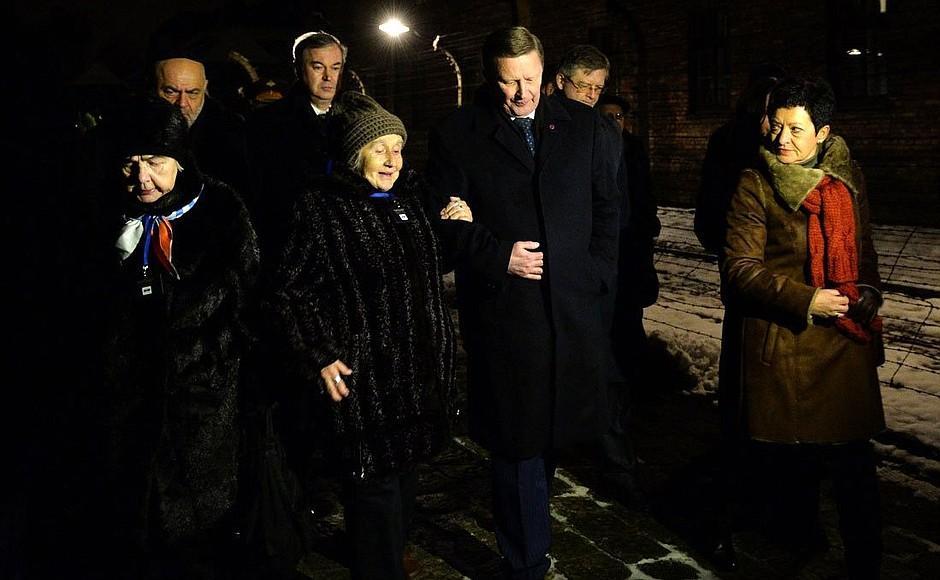
    On the 27th January, 1945 Red Army troops liberated Auschwitz concentration camp. The Second World War was drawing to a close, and as Nazi forces were on the verge of defeat, they tried to conceal their crimes. They evacuated the remaining prisoners, destroyed the gas chambers and crematoriums and dismantled the warehouses where those who had died from starvation and disease were corralled. Despite their vain attempts to erase it, the Soviets still managed to reveal to the rest of the world the brutal and inhumane realities of the Nazi project.

    The Auschwitz liberation helped to uncover the worst atrocity of the twentieth century. Since then, the world has paused to remember the Holocaust at every anniversary. It is vital that we continue to do this, we owe it to the six million Jews who were murdered. We must always keep them in our memories. We must never forget, because it negates our collective humanity if we simply banish their existence as a mere footnote in history.

    Dehumanisation was a central tenet of Nazi ideology. The Jews, in their twisted minds, were not human beings. They did not even consider them to be as lowly as animals, they actually believed that they were a disease. In the propaganda materials they portrayed them as a virus that was infecting European civilisation, and eradicating them was the only cure. It is horrific that such views were countenanced, it is even worse realising that their genocidal plans were enacted.

    This sickening act of mass murder is forever emblazoned upon our memories, footage of the concentration camps was captured on news reels and broadcast to the British population after the end of the war. We were convinced that the years of privation were worth it, if it meant securing a victory of good over evil.

    When British troops liberated the camps of Bergen Belsen, it left an indelible impression. Many of the young men who saw such levels of degradation and inhumanity were haunted for decades afterwards and could never speak about something, which by its own definition is unspeakable. One of them who did eventually speak was the actor Dirk Bogarde, who wrote extensively in his autobiography about his wartime experience.

    Bogarde states that, “when we opened up Belsen Camp, which was the first concentration camp any of us had seen, we didn’t even know what they were, we’d heard vague rumours that they were…The gates were opened and then I realised that I was looking at Dante’s Inferno…I still haven’t seen anything as dreadful. And never will. And a girl came up who spoke English, because she recognised one of the badges…and her breasts were like empty purses, she had no top on, and a pair of pyjamas, and no hair…She gave me a big kiss, which was very moving”.

    Shortly after this encounter, the girl died.

    Sadly, the Holocaust is dwindling in importance year after year and increasingly relegated as yet another part of history. My generation has grown up understanding that this is more than history, because our grandparents endured the war years. They were our only living connection to this dark episode in human history. Younger generations have no such connection, and it often appears meaningless to them.

    Tragically the Holocaust is considered simply a far off event, rather like the Boer war would have appeared to my peers. A distinction needs to be made though, between other wars in history and the Holocaust. The Holocaust was in fact, the culmination of modernity, where society had chosen to forget that we are all one human race.

    Society had chosen to forget this, because selfishness had triumphed. Amidst the horrors that unfolded during the war, Pope Pius XII pleaded to those bewitched by Hitler to heed the words of the Bible. He referred to the Book of Genesis which proclaimed that all humanity has a common origin, and all of the people on Earth had a duty to be charitable to one another. His pleas were eventually drowned out by the persuasively manipulative campaign of the Nazis.

    Another pitifully modern development is the increasing trivialisation of the Holocaust. This is something which has been utilised by malign political forces. It is a perverse method of moral inversion, and subversion. The most egregious examples occurred in the aftermath of the October 7th attacks when Hamas terrorists committed a pogrom in Israel.

    When Israel valiantly defended itself, the efforts to eliminate a racist, genocidal threat to its very existence were undermined. They were even accused of committing genocide themselves. These accusations are deeply hurtful, and belittle the memory of those who were the victims of an actual genocide.

    The Holocaust was an industrial level murder machine. It was a deliberate and intentional act, aimed at an entire people. It is true that there have been conflicts and atrocities in various parts of the world since 1945, but nothing of this level in western Europe since, so it is outrageous that words like “Nazi” and “fascist” are flung about whenever difficult political issues are contested. These words have been diluted, and their original meaning has been lost.

    It is a bitter irony that the individuals who use these words as insults have more resemblance to Nazis and fascists. These individuals attend marches denigrating the world’s only Jewish state, and argue that alternative political voices should be silenced. It is clear now more than ever that we understand what actually happened in history, to honour the memory of those who suffered and died.

  • The People’s King

    On the 20th January, 1936 King George V died. He was seventy years old. However he had spent years in poor health, originating from an accident in 1915. He was thrown from his horse while inspecting the troops on the French frontline. His injuries were compounded by his smoking addiction and he was later diagnosed with chronic bronchitis.

    Ten years later, on his doctors’ advice, he took an extended break to the Mediterranean coast as they believed that the sea air would improve his breathing. In 1928 his health declined further when he developed septicaemia. His health never truly recovered and as a consequence, he was forced to delegate many of his official duties to his son, the future King Edward VIII.

    Duty was always paramount to George. Unlike other Monarchs, he believed this was much more important than his ceremonial role. Compared to other Monarchs, he was not as enamoured by the fawning and frivolities associated with pageants or other superficial displays of Monarchical power. His sober and sombre attitude was a stark contrast to the excesses and appetites of his father, King Edward VII. In fact, he was the polar opposite, slightly built and shy.

    He did not enjoy public attention, he only participated in his duties because he understood that these things were essential. He did not adjust as well to the role as Edward did, for him it felt normal. However, George was awkward. His diffidence, ironically, was an attribute that ultimately saved him and the future of the Monarchy.

    His work ethic was admirable, in spite of his illness he made sure to attend official engagements whenever and wherever possible. It was at often great cost to his already ailing health. He was reluctant to rest and relinquish his duties. However his health took a grave turn during the winter of 1929. He was recovering from lung surgery and was forced to take another rest cure. He was sent to the seaside town of Bognor to convalesce. The civic leaders of the town were honoured to have such an illustrious guest, and consequently the suffix “Regis” was added to the name to reflect the King’s association.

    His tireless sense of duty was something that was acknowledged by representatives of the Government. George had set a new standard of behaviour for Monarchs; his conscientious character distinguished him from the leisurely antics of his father. Edward always looked the epitome of the country squire, often clad in tweeds and either engaged in a hunting party or watching the races. In contrast, George was always in the same suit, and was indifferent to the whims of fashion. He took his role as King extremely seriously and endeavoured to serve his people to the best of his ability.

    His diligence and humility set him apart from the figureheads of other European countries. The continent was in crisis, and struggling to maintain a sense of homogeneity and unity. It was actually a loosely connected entity that was fracturing from within. The United Kingdom was not immune to these effects either, the culture and society was changing rapidly.

    It was frightening that the old order was no longer considered a certainty or an inevitability anymore. During the early part of his reign nascent political movements like socialism, communism and fascism emerged. These were populist revolts against an established social order. The Liberal government, fearing possible insurrection, introduced social welfare policies to dampen down this growing threat. Meanwhile in Europe militarism continued almost unabated, culminating with the outbreak of the First World War. The King found himself in a difficult and dangerous position. However he chose to put his own people first, before making any personal considerations or decisions.

    He anglicised the Royal Family, severing them from centuries of German history and culture. He was now head of the “House of Windsor” and his relations were no longer the Battenbergs, they were the Mountbattens. This was a swift and deliberate response to the feelings of antipathy towards Germans that were widespread across the Kingdom.

    He also reformed and democratised the honours system, establishing the Companions of Honour. These were awarded to people in public service, the first recipients of these medals were the leaders of the Metal Workers, the Railwaymen and the Transport Unions. It helped appease those who sought socialist revolution, and even regicide. George re-established the charitable role of the Monarchy and exercised noblesse oblige. His subjects were thankful for it, and for his impeccable morality.

    In 1935 the King celebrated his Silver Jubilee. The nation united in a spirit of warmth and familiarity, a glorious and harmonious picture totally divorced from the dark totalitarianism that had enveloped Germany and Italy. The serenity was broken six months later when his death was announced. The calm dignity he exuded throughout his reign was crucial in securing the continuity of the Monarchy, and cementing our national identity.

  • Tower of Ivory, House of Gold

    Human imagination is vast, and grandiose in its scope. Human capability and ingenuity seems almost infinite. It is apparent in the variety of the architecture around us, from the most ornate castles and palaces and beyond. The most magnificent examples of these are preserved in posterity, but others have been lost to attrition, war or natural disaster.

    It is a testament to our strengths and abilities as a creative, ambitious and inventive species that many of our oldest buildings remain. It is impressive, considering that these were made with basic materials that derive from nature, and fashioned with human hands. In spite of their humble and ordinary origins, there is still an otherworldly quality attached to certain buildings, like cathedrals. Christian civilisation traditionally looked upwards for inspiration, and sought both meaning and succour in the higher realm. The design symbolises the human desire for spiritual ascendance, and transcendence beyond physical reality.

    Sacred spaces do not necessarily play as much of a central role in our lives, in comparison to our ancestors. However they still have a sentimental value. We remain emotionally attached to these buildings because they represent something profound. The spiritual significance has dwindled in importance in our increasingly cynical and sceptical age, but we still acknowledge the historical importance. Our past treasures are always worth preserving, but often this realisation comes to us far too late. We realised this during the first few decades of the twentieth century when a preponderance of modernists and futurists brought new ideas that captured the popular imagination. Unwittingly this fashionable scorn for heritage and tradition allowed crudely atheistic, secular and mechanistic political ideologies to foment as well.

    The inevitable consequence of this was the Second World War, and all of the precious conventions and convictions that we once held dear were turned upside down. Civilisation itself was on the brink of annihilation. Barbarism was supplanting civility. When Coventry Cathedral was bombed in the Luftwaffe raids, this was perceived as a grievous insult to the English people and a grave assault upon the very soul of England. The Cathedral was a priceless and irreparable relic of Medieval England, instantly condemned to the ashes of history.

    This was a devious tactic of war. It has been employed by every invading force since the beginning of warfare. The Nazis were no different to the barbarians of ancient times, they were just more sophisticated in their actions. The attack on the Cathedral was calculated and deliberate. They knew that this one action could demoralise the entire nation. A demoralised people are much easier to subdue, the first stage of conquest in every war.

    The Nazis followed a familiar pattern in history. The Babylonians were convinced that they could quell the Israelites when King Solomon’s Temple was destroyed by King Nebuchadnezzer’s army. However, the Israelites kept their resolve and dignity in spite of the desecration, and similarly the British kept theirs, and evil was ultimately defeated.

    However the task of rebuilding a shattered society was much harder to achieve. Houses, offices and factories could be rebuilt but it was virtually impossible to repair morale. Life in post-war Britain was austere, spare and fraught. We may have won the war, but it was at a considerable cost to our emotional well-being.

    The entire nation was traumatised by the experience. The remnants of war were evident in the rubble and detritus, but also in the broken people. The governments that were elected after the war took a decidedly paternalistic approach to politics. The state managed the practicalities of housing, health and public infrastructure.

    However societal rehabilitation was not easy, as bureaucrats were not equipped to do this, the inner resilience of the British people was the only attribute that could be depended upon. We have been an indefatigable people throughout history. We are less inclined to succumb to apathy and despair, even in the aftermath of the English Civil Wars there was a sense of a common purpose and a strong desire to rebuild society.

    The post-war governments were praised for their efficiency and their dedication to the restoration of the economy. However this is a kind of folk memory, rather than literal history that prevails, an illusion of a strong, stable, secure and unified nation. On the surface, this may have been true, but underneath there were troubling insecurities.

    Fascism was defeated, but communism remained a threat to democracy, and the nation state. The young were particularly vulnerable to the allure of it, with its false promises and simplistic answers to the struggles of life. Idealists always look for something tangible as a solution, and believe in the rhetoric of charismatic political leaders.

    It is tragic to consider that the young and the gullible lack the experience and the wisdom to understand that perfection in society is impossible. They are easy prey for political charlatans who use sophistry to lure them into their web of deceit. Similarly, naivety can inspire the most reckless behaviour, all in a vain bid to solve the eternal mystery of mankind’s suffering. In William Golding’s visionary novel “The Spire”, Dean Jocelin receives a message from God, telling him that he has a divine mission to build a hundred foot spire.

    However his plan is completely impractical, and technically impossible, yet he pursues this project like a man possessed. Eventually his delusions of grandeur lead to his untimely demise. The Spire itself is a metaphor for the folly of man, a creature imbued with an innate sense of his own superiority, but in reality as fragile as a leaf in the wind. No creation supersedes nature, we must remember this.

  • Black October

    On October 7th, 2023 Israel suffered one of the worst atrocities in its modern history. Hamas planned this with meticulous accuracy to create maximum harm and distress, timing it to coincide with the Jewish holiday of Simchat Torah, and took advantage of the low security presence on the Gazan border. It was a deliberate and intentional repeat of the devastating events that triggered the Yom Kippur war fifty years previously.

    This twenty-first century version of war was filmed on mobile phones and then uploaded on to the Internet. However this was not an impulsive act of self-defence, it was a carefully co-ordinated attack. A series of rockets were fired into Israel, then armed terrorists proceeded to storm through civilian areas, including a kibbutz and, in a sick twist of irony, a “peace” festival.

    On that dreadful and unforgettable day over a thousand people were murdered, including 38 children. Hamas also took 250 people hostage. An embattled Israel immediately launched an offensive in an attempt to neutralise the enemy and free the captives.

    The battle against Hamas has been a war of attrition, but Hamas are showing no signs of giving in, even as the humanitarian situation with the Palestinian people continues to worsen. Obscenely, they even use the scenes of starvation and death as emotional blackmail in their propaganda campaigns against the west, and their implicit support for Israel.

    However the support for Israel in the west has waned over recent decades, as there has been a decline in religious belief and young people in particular lack the necessary historical knowledge to understand or appreciate why it is so important. In the absence of religious morality, the October 7th attacks are perceived as justifiable for spurious reasons.

    Israel fighting to defend itself from certain annihilation has been called “genocide”. This doublespeak is yet another feature of the west turning its back on its moral foundations. Also the meaning of Zionism has been corrupted by the nihilists on the left, instead of its actual definition as the self-determination of the Jews to live in their ancestral homeland, it is claimed that it is racist imperialism. This reveals a shocking ignorance, as it is actually Hamas who are the racists and the imperialists, as their entire modus operandi is to occupy Israel and conquer it, just as their Islamist ancestors did several centuries ago.

    The consequences of ignoring the plight of the Israelis are extremely dire, and coupled with the prejudices, black propaganda and the lies the future is grave. It is at least comforting to know that there is a growing coterie of people who can see through all of this, they know that is obvious that those who pull on the heart strings are themselves heartless, those who bleat continuously about humanity are actually inhumane and the same people who plead others to show empathy are in fact incapable of it. Amidst this despair there is a small shred of hope.

  • The Wretched Of The Earth

    Twenty-four years ago, on an unseasonably warm September morning, two hijacked planes ploughed into the Twin Towers. The worst terrorist attack upon Americans since Pearl Harbour unfolded in front of the world’s eyes. The entire world looked on in horror as two archetypal and triumphant symbols of capitalist modernity crumbled into dust. Thousands of people died in the wreckage. None of us have forgotten that tragic day as 9/11 is seared forever on our memories.

    It is often remarked that this was when the 21st century truly began. This horrific episode was broadcast in real time all over the world and almost simultaneously amateur footage captured by the survivors was preserved and then reproduced on the Internet. The Internet was a novelty back then, but many unscrupulous individuals soon realised that these gruesome scenes could be exploited and monetised. It was the postmodern equivalent of rubbernecking.

    In the aftermath of the attacks a series of unpalatable elements coincided. Globalisation accelerated, displacing and even removing the conventions that we once cherished and took for granted. History itself was disparaged, during the twentieth century and before it was appreciated and even revered. It was regarded as a noble and prestigious pursuit of learning and a necessary exercise in understanding the present. However the Millennial interpretation was completely different. A new and perplexing idea entered the discourse, history, according to these self-appointed prophets, was merely a tool of deception and manipulation.

    However the counter narrative was replete with contradictions. Ostensibly the terrorists chose their target to wreak revenge upon America, and their supposedly imperialist foreign policy. Vocal critics of America in the UK, seemingly divested themselves of any empathy, tact or sensitivity and excused the terrorists for this very reason.

    It was shocking that these pious individuals displayed more sympathy for the terrorists and insinuated that they were the victims of American aggression, even suggesting that they agreed with their actions. These were the same people who also condemned in similarly vociferous terms the deaths of innocent people in foreign conflicts. Adding insult to injury, they even had the temerity to advise the American government that retaliation for this heinous act was inappropriate.

    The most obstinate and intransigent critics of imperialism are ignorant that their society is a precious gift from the imperial civilisations of Ancient Greece and Rome. These Empires provided democracy, law and liberty but the self-righteous are unaware that these are not universal concepts, because they have such a binary view of the world.

    It was inevitable that such a vivid, visual and extreme atrocity aroused suspicion and rumour, and eventually the rise of internet conspiracy theorists. It is not an understatement to say that the world changed irrevocably from that day. This murderous and dastardly act was enacted with clinical efficiency.

    9/11 marked the beginning of what we now know as the technocracy. The Millennial age is Aldous Huxley’s nightmare dystopia made flesh. However we are all so deeply embedded within this Brave New World that we have forgotten how abnormal this is, normality has been forgotten. The generation of adults who were born in the Millennial age do not know anything else, for them this is how the world has always been.

    This is an era where physical reality has foundered, and a virtual one has sprung up in its place. An entirely artificial world has rendered a world of unreality where borders are immaterial, the past has no meaning and the human individual has been diminished as a mechanical part in a vast world system. No human appears to have any agency, and the fate of that human has been mapped out for them. Algorithms have rewritten the stories of humanity, as libraries dedicated to the art of learning have shut and machines have replaced them.

    Computers are a substitute for information but they cannot replicate human intelligence and imagination. They are an insidious imperial force. Unique cultures have been destroyed in their wake, and people have had no choice but to totally surrender their identity.

    Sadly, there is no clamour for “decolonisation” in the age of the machine. There are no movements to liberate us from technological enslavement. In an age characterised by apathy, dislocation, deracination, atomisation and alienation, our future as a dynamic species is doomed.

  • Psychopathic Gods

    On the 1st September, 1939 Nazi Germany invaded Poland, an egregious act of aggression which spurred Britain and France to declare War. German imperial expansion was rooted within the nineteenth century ambitions of the Kaisers. However the twentieth century incarnation was darker, sinister and murderous, demonstrating an arrogance on a psychopathic scale.

    Germany was humiliated and bankrupted after losing the First World War, a painful consequence of the punishing reparations. A broken populace was easily manipulated, and convinced by falsely charismatic politicians. Adolf Hitler offered fake promises, presenting himself as the nation’s saviour, but instead of a hopeful message of peace and reconciliation he set himself and his followers on a warpath of revenge.

    It is astonishing to reflect upon the fact that Germany, a country that was renowned all over the world for its culture, intellect and civilisation could have descended into such primitive barbarism. However devious individuals have always known how to harness the tools of psychological manipulation, and can even convince the most intelligent and rational people to suspend their reasoning and their morals.

    Chillingly, Hitler justified his pathological hatred of the “other” with allusions to scientific theory, a clear misrepresentation and distortion of biology, claiming,

    “Apes massacre all fringe elements as alien to their community. What is valid for monkeys must be all the more valid for humans”. This perverse reinterpretation of Darwinism ultimately divests kindness from human society, and simply renders it a cruel and stark struggle for survival.

    In his disturbing world view the weaker elements in society have to be sacrificed for the good of the clan, tribe or troop. Now, this sounds bleak, dehumanising and reductive. However during that time vulnerable and demoralised people were susceptible and the message must have resonated, albeit in a somewhat pessimistic, and fatalistic way.

    Tragically the good people of Germany had momentarily lost their faith in the heavenly saviour of mankind, and instead sought succour in this ungodly and sadistic version who did not help the weak, but scorned and eventually condemned them. In addition to this, Hitler had a future “purified” vision of Germany and Germans. He claimed that “all who are not of good race in this world are chaff”. This shocking belief in a supposed “master race” then inspired his genocidal rampage across Europe.

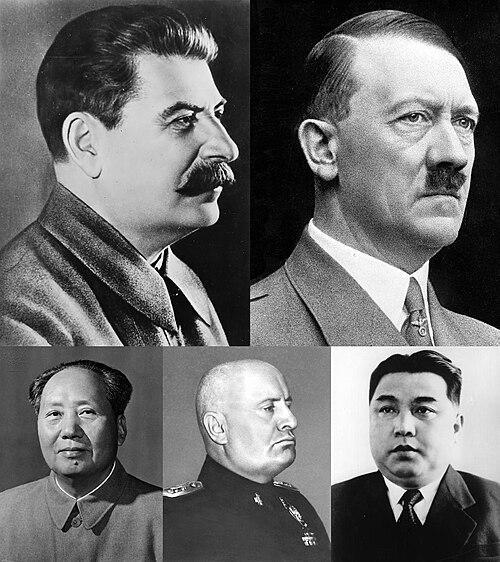
    The twentieth century spawned psychopathic gods. It was a century of cynicism, a period of history in which once cherished beliefs waned. People were less inclined to worship old gods. They sanctified their fellow mortals instead. Worshipping false idols was an unwitting disaster for the world. Totalitarianism filled the void in the absence of religion, and it was a phenomenon that ran across the political spectrum, from the far left to the far right.

    The priest and writer Richard Neuhaus reflected that if religion carves itself out of the public square then the square will “be filled by the agent left in control of the public square, the state. In this manner, a perverse notion of the disestablishment of religion leads to the establishment of the state as church”. In post-revolutionary Russia there were no qualms about destroying religion. Bishops were shot, crucified or condemned to a slow death in a prison camp. In 1926 monasteries were converted into labour camps, and monks were condemned to spend their remaining days on Earth toiling there.

    Man-made laws can be altered, but divine law is fixed and eternal. It is a supreme act of blasphemy to attach godlike attributes to flawed and fallible humans. The last world war was a vivid reminder of the evil that unfolded when people divested themselves of religion.

  • Who Killed Cock Robin?

    On the 26th August, 1676 the renowned British statesman Sir Robert Walpole was born. In 1721 he became the first Prime Minister of Great Britain. He was the longest serving Premier in our history. He established the Whig ascendancy in this country, reducing Tory dominance and influence for decades. He left an important legacy, and altered the course of British politics. He ultimately defined the role of Prime Minister, and was a model for those who succeeded him in office.

    His impressive reign was known colloquially as the “Robinocracy”. Walpole himself epitomised the era of excess, materialism and global ambition. His imposing appearance and personality symbolised the culture of this period. He was both literally and metaphorically larger than life. He had a gargantuan appetite for food, drink, sex, work, money and power.

    His prominence in public life began auspiciously. He quickly grasped the dark arts of politics and was an expert with all of the tricks and tools of manipulation. Politics was, and still is a game, and he could play other people to acquire the things that he wanted. He could be charming, but devious as well. Walpole’s rise to power could have only been achieved after the seismic events of the “Glorious Revolution”. This changed the fundamental character, and conduct of the nation.

    The Revolution helped to create modern public finance, and new concepts and innovations like the stock market, speculation, boom and conversely, bust. The most notorious example of this new phenomena was the controversy which became known as the “South Sea Bubble”. The South Sea Company was a joint stock company trading in overseas colonies. It was granted a monopoly to provide African slaves to Spanish America. These were considered assets, but to encourage investment profits were exaggerated.

    Spain and Britain were bitter rivals, and profits accrued in this trade were actually minimal. However the enmity between two major European trading powers did not curb the personal ambitions of the investors, who were convinced that this could be an easy path to riches. When the inevitable crash happened, eminent figures lost entire fortunes. This included the King, who was appointed governor of the company. At the peak of the crisis, one Parliamentarian died of a heart attack, another took his own life and one poor unfortunate was sent to the Tower.

    Walpole successfully navigated the country out of the crisis, he removed the company directors, seized 82% of their wealth and the money was returned to their victims. The stock of the South Sea Company was then divided between the Bank of England and the East India Company. His adept handling of this left a great impression upon the King, who was relieved that a major crisis had been averted. A lesser person could have led the country to ruin.

    Walpole in turn flattered the Court, as he knew that friends in high places could be used for his own gain. In the summer of 1727, King George I died, and his son George II ascended to the throne. Walpole was politically adroit and cultivated a set of distinct strategies in order to win trust, and to avoid critical challenges from his enemies.

    He enacted a spectacular coup within the Commons. He inveigled the MPs to agree to vote in favour of a bigger Civil List, which gave the new KIng more of a personal income than his father. In a cynical move, he also ingratiated himself with Queen Caroline in a bid to influence her husband and to look upon him, and his policies more favourably.

    He commented on this tactic in a typically boorish fashion. He had developed a manner of blunt speaking which reflected the crudity of his character. He said to his supporters, “I have the right sow by the ear”. The Queen agreed to meet with Walpole in secret to discuss government policy. When the King arrived for his official meeting with the Prime Minister, his familiar reticence was sufficiently mellowed. He became much more congenial, and eager to accept government proposals.

    Walpole believed that had a special kind of insight into feminine wiles and boasted that the Queen “can make him propose the very thing as his own opinion which a week before he had rejected as mine”. His powers of cunning and subterfuge were enviable, and the key to his prowess as a politician.

    However many of his fellow Whigs regarded him as a traitor and a man who wilfully sacrificed the democratic and anti-monarchical principles of his party solely to maintain power, and the favour of the King and his court. They believed that he had effectively sold out and become a Tory. Walpole was in fact exploiting the emotional weaknesses of the King, and attempting to appeal to his good nature. He used false flattery as a bribe, and the King in turn was extorted to bestow honours on to Walpole’s ministers. It was obvious that the Whigs owed an immense debt to the King’s generosity, as it consolidated Whig supremacy in Parliament.

    Domestically, Walpole’s position was assured but the French were threatening to wage war again. The Whigs were originally established to counter French dominance and aggression, but Walpole and the King sought peace. The odds were stacked against him. There was a perception that Walpole had put personal ambition before political conviction, and sacrificed the nation, its status and reputation just to maintain his dubious alliance with the King and his court.

    In 1742 the party took a vote of confidence, 253 voted in his favour, 250 against. However this was not a ringing endorsement, and three weeks later he resigned. Three years later, adrift in a political wilderness, he died. His impact upon British politics, culture and the way this country continues to conduct its economic affairs is incalculable. However the methods he utilised to secure his place in our history can also be read as a salutary tale of power, greed and corruption. In the realm of politics this is a tale which is all too familiar, and predictable.