Tag: religion

  • Psychopathic Gods

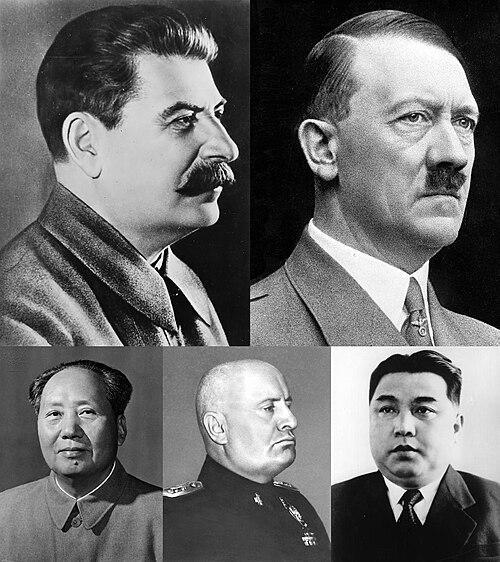
    On the 1st September, 1939 Nazi Germany invaded Poland, an egregious act of aggression which spurred Britain and France to declare War. German imperial expansion was rooted within the nineteenth century ambitions of the Kaisers. However the twentieth century incarnation was darker, sinister and murderous, demonstrating an arrogance on a psychopathic scale.

    Germany was humiliated and bankrupted after losing the First World War, a painful consequence of the punishing reparations. A broken populace was easily manipulated, and convinced by falsely charismatic politicians. Adolf Hitler offered fake promises, presenting himself as the nation’s saviour, but instead of a hopeful message of peace and reconciliation he set himself and his followers on a warpath of revenge.

    It is astonishing to reflect upon the fact that Germany, a country that was renowned all over the world for its culture, intellect and civilisation could have descended into such primitive barbarism. However devious individuals have always known how to harness the tools of psychological manipulation, and can even convince the most intelligent and rational people to suspend their reasoning and their morals.

    Chillingly, Hitler justified his pathological hatred of the “other” with allusions to scientific theory, a clear misrepresentation and distortion of biology, claiming,

    “Apes massacre all fringe elements as alien to their community. What is valid for monkeys must be all the more valid for humans”. This perverse reinterpretation of Darwinism ultimately divests kindness from human society, and simply renders it a cruel and stark struggle for survival.

    In his disturbing world view the weaker elements in society have to be sacrificed for the good of the clan, tribe or troop. Now, this sounds bleak, dehumanising and reductive. However during that time vulnerable and demoralised people were susceptible and the message must have resonated, albeit in a somewhat pessimistic, and fatalistic way.

    Tragically the good people of Germany had momentarily lost their faith in the heavenly saviour of mankind, and instead sought succour in this ungodly and sadistic version who did not help the weak, but scorned and eventually condemned them. In addition to this, Hitler had a future “purified” vision of Germany and Germans. He claimed that “all who are not of good race in this world are chaff”. This shocking belief in a supposed “master race” then inspired his genocidal rampage across Europe.

    The twentieth century spawned psychopathic gods. It was a century of cynicism, a period of history in which once cherished beliefs waned. People were less inclined to worship old gods. They sanctified their fellow mortals instead. Worshipping false idols was an unwitting disaster for the world. Totalitarianism filled the void in the absence of religion, and it was a phenomenon that ran across the political spectrum, from the far left to the far right.

    The priest and writer Richard Neuhaus reflected that if religion carves itself out of the public square then the square will “be filled by the agent left in control of the public square, the state. In this manner, a perverse notion of the disestablishment of religion leads to the establishment of the state as church”. In post-revolutionary Russia there were no qualms about destroying religion. Bishops were shot, crucified or condemned to a slow death in a prison camp. In 1926 monasteries were converted into labour camps, and monks were condemned to spend their remaining days on Earth toiling there.

    Man-made laws can be altered, but divine law is fixed and eternal. It is a supreme act of blasphemy to attach godlike attributes to flawed and fallible humans. The last world war was a vivid reminder of the evil that unfolded when people divested themselves of religion.
  • The Fire Sermon

    The West is lauded as the pinnacle of human civilisation. Yet there is an inherent paradox at the heart of Western life. Although we are blessed with material comforts and living much longer and productive lives, we are beset with ennui. The very soul of the West has diminished, and we are suffering as a consequence. Western man has been reduced to little more than a machine, and he has lost his way. The drive to find a sense of meaning has withered away, and there is a spiritual void.

    Naturally, the rise of Western fragility has meant that the creeds and philosophies of the East are gaining traction amidst an increasingly discontented populace. However most Westerners have never truly experienced or learned the cultures of the East in their appropriate context. Naivety and ignorance about this subject abound as a consequence.

    Buddhism, in particular, has been repackaged in a rather cynical and opportunistic manner for a Western audience. It is presented as a benign alternative to Christianity, a balm, or salve for individuals damaged by its supposed harsh strictures. In reality this is a shallow interpretation. It is an intentional mischaracterisation of its teachings, an attempt to strip away the bleaker aspects of the belief system. These darker elements are often regarded as unpalatable to a Western audience, for instance Samsara in its authentic meaning is glossed over or even omitted.

    Buddhists understand this concept as an infinite cycle of human suffering, which cannot even be terminated with physical death, as the soul is just reincarnated, and the pain is simply perpetuated in another mortal body. This seems an affront to a Western audience, who continue to maintain a somewhat illusory optimism about the nature of human existence.

    It must be acknowledged that there are immense and irrevocable cultural differences between East and West, and neither are truly compatible with each other. Instead of striving to seek a commonality, differences should be celebrated, as an example of the beauty of human diversity in all of its myriad manifestations. There are too many ideologies that have attempted to homogenise humanity. Every single attempt to universalise the human race has ended in mass murder, like Nazism and Communism. Ironically, these creeds were created by fantasists who were convinced that they could engineer world peace by dehumanising others.

    Another example of the cultural differences between West and East is the notion of attachment. Buddhists believe that the attachment to worldly things is the source of all discontent and suffering. They believe that as soon as a person detaches themselves from their worldly desires, true enlightenment is achieved. Once more, this notion jars against the West with its culture of self-improvement and the almost interminable attainment for riches.

    Negating the self, or the ego is an anathema to many people living in the West today, so this theory has had to be reformulated to seem acceptable. However, such a profound belief has been trivialised, and it is instead presented as “mindfulness”, a temporary escape from selfishness and self-centredness. Watering this concept down as akin to a relaxing hobby has defeated the purpose.

    It is difficult for most people nowadays to imagine a spiritual realm. In the modern West this literally has no meaning because the material world of here and now is of primary importance. However, even in ancient times the understanding of a metaphysical world was a source of bafflement for Europeans. When Jesuit missionaries ventured into Asia they reportedly asked Buddhist monks to direct them to the geographical location of Mount Meru, unaware that this was not a literal place, but a sacred symbol representing the centre of the universe.

    Cultural misunderstanding has had profound consequences. The senior Jesuit and missionary Andre Palmeiro decided to evangelise the Chinese people on an expedition which seemed cursed from the beginning. He was perplexed by the lack of belief in the one creator of heaven and earth, and confused by their insistence that the universe was subject to a naturally occurring order. The basic elements, fire, earth, air and water simply waxed and waned alternately in an infinite cycle of life, death and renewal.

    These oscillations were interpreted by the Emperor, and obeyed without question by his subjects. It was an uphill battle to convince the Chinese people to switch allegiances. They were wholly subservient to the edicts of the Emperor, not the Pope. The Chinese people who encountered the missionaries were suspicious and fearful. They believed that if they dared to disobey the Emperor this would disrupt cosmic harmony, and chaos would ensue.

    Many Westerners have convinced themselves that Eastern belief systems are simpler and hark back to a more innocent time. They want to appear well meaning, but they actually look and sound patronising. The decline of religion in the West has coincided with an increase in degradation and decadence. A spiritually hollow population has attempted to find true wisdom and enlightenment from the East, but without considering the complexities and nuances. Scholars have dedicated most of their lives trying to understand the purpose of human suffering, and it is demeaning to find their studies reduced to greeting card platitudes.

    A spiritually moribund West needs to revert to its own traditions, and reinterpret them for a modern audience rather than misappropriate others. Stealing ideas and misrepresenting them is offensive. It is actually insulting to the people who have cherished their cultural traditions and value systems for generations.

    The West has forgotten its own civilisational foundations, in fact it has destroyed them. There is no point seeking spiritual enlightenment elsewhere, as it is embedded within the institutions of our society. The notion that all humans are equal did not arise out of thin air, it came from theologians and philosophers from Europe.

    Our culture is informed by the conventions and values that were honed over centuries. These things used to mean something, but since the late twentieth century they have been undermined. One glaring example is the toleration of blasphemy. Blasphemy was once a shocking thing, and it was considered a shameful act. Since belief has diminished, the shock has no currency anymore. It is a consequence of the contradictory notion of tolerance. Toleration, used responsibly is positive, and helps create harmony and cohesion. When toleration is misused, and put in the hands of irresponsible people it only brings discord and division. Of course, blasphemy is not the only thing that has harmed the West.

    Ignorance, arrogance and contempt in general has accelerated the degradation of our civilisation. This attitude is evident in the class of politicians that have been elected in the last thirty years. They no longer represent the people, they are instead driven by a false ideology and a lust for power. They have deliberately turned their backs on our ancient and hallowed institutions, and derided the political achievements of their antecedents.

    History has been erased, and we have no identity. However it is lucky that we still remember what happened when authoritarians tried to burn books and destroy our artistic and cultural legacy. We must never return to those dark days. Instead of searching for a different way of life, we need to revive our old ways to survive.

  • A Ceremony Of Riches

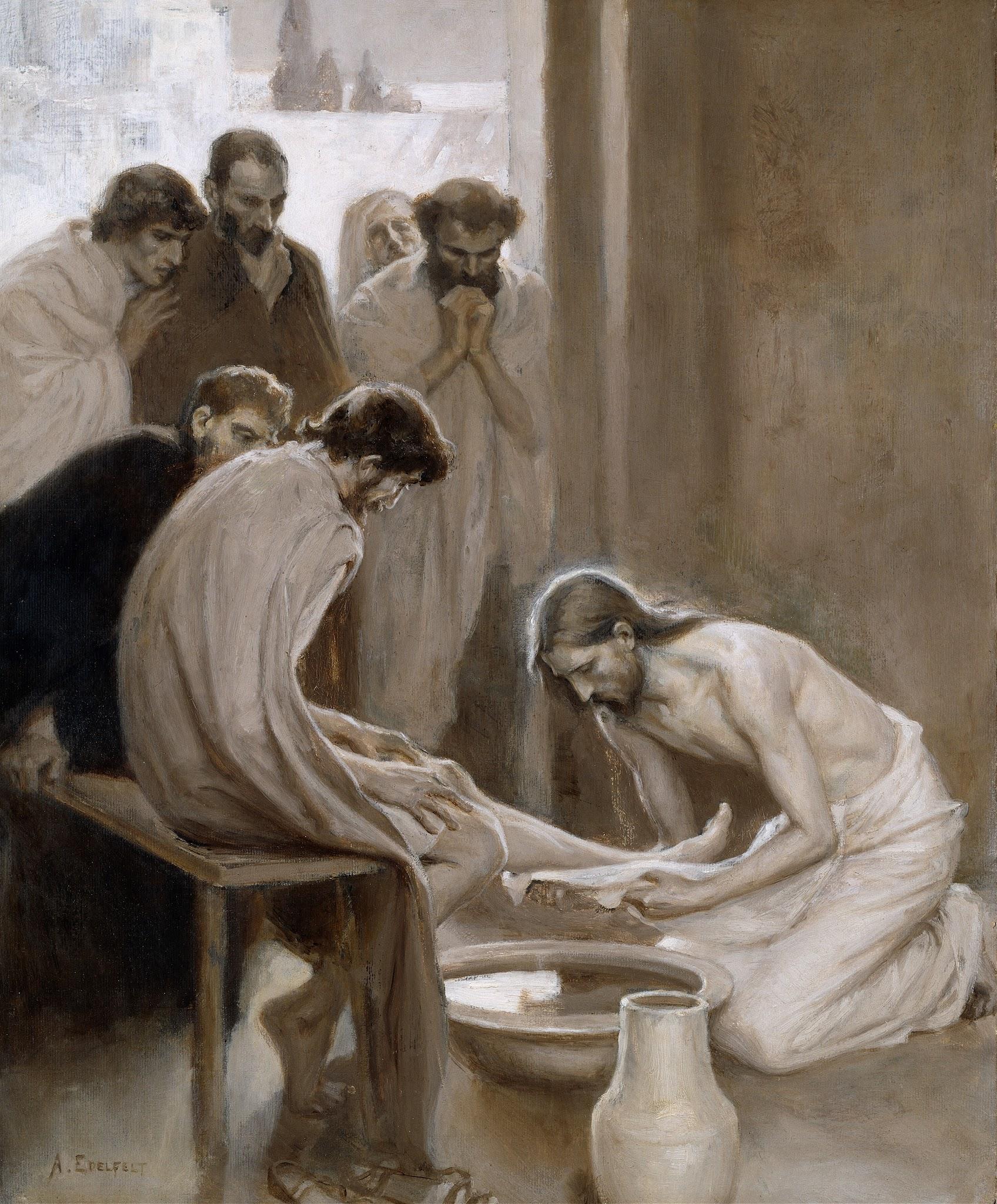
    Maundy Thursday is a significant date. It precedes Good Friday, the most solemn occasion in the Christian calendar. It commemorates Jesus washing His disciples feet in a simple act of devotion and humble piety. In many churches all over the world, similar rituals are repeated to honour Christ’s example.

    In this country, during the Middle Ages the Monarch washed the feet of his poorest subjects. It was the purest demonstration of obeisance, an integral part of noblesse oblige. In our modern and increasingly cynical secular society, such rituals are now sneered at, as it is fashionable to undermine the sacred and to diminish people with status and authority, particularly those with hereditary power.

    However this interpretation is naive and shallow. It must be emphasised that traditions matter because they are a fundamental part of who we are as people. Our shared history strengthens the bond that ties us to our ancestors, and this allows us to pass on something meaningful to those who are yet to be born.

    Unfortunately, as our society became wealthier, it moved further and further away from religion. Material concerns were the primary focus, matters of the soul were only secondary. The notion that the greatest treasure lies within the cultivation of the life of the spirit was lost, because the riches on earth provided so much joy, however temporary.

    The Reformation was a double edged sword, it brought a necessary and democratic change to our culture but ultimately it severed the most important connections. It weakened the spiritual power of the Monarch, and the most profound religious rites that they enacted were stripped of their meaning.

    Tudor and Stuart Monarchs did not inspire as much awe in the populace as their medieval forebears but they still managed to maintain a semblance of piety. The Cromwell regime divested itself of Monarchical influence altogether, along with its ceremonial trappings and perceived superstitions. After the Restoration many of the religious ceremonies were revived, including the Maundy Thursday rite of foot washing. The King’s subjects also believed that one touch from the King could cure them of their iniquities.

    In the wake of the Glorious Revolution, however, the dour Protestant King William revealed his disdain for “foolish old Popish ceremonies”, a shocking outburst reflecting his prejudices, and deep seated arrogance. When told of the power of the King’s touch he sneered, “Well, God give you better health and more sense!”. Since his accession, the Monarch’s only role on Maundy Thursday has been to distribute money to the poor. The sacred rites have disappeared.

    It is sad that these rites have been abandoned, and it is indeed telling that a practical, purposeful and material act has replaced the traditional ceremony. The Victorians, with all of their numerous faults and failings, still recognised the importance of noblesse oblige. The wealthiest members of society were often the greatest philanthropists.

    However there were still pockets of greed and selfishness which rapidly became a source of great shame. Disraeli bemoaned those with wealth who continued to ignore the plight of the poor and described this noticeable gap in society as, “between whom there is no intercourse and no sympathy…who are formed by a different breeding, are fed by a different food, are ordered by different manners, and are not governed by the same laws”. This was part of his infamous speech about the Kingdom, which far from being united, was in fact two nations separated by different values and priorities.

    The reason for disunity was the decline of the Established Church and its influence in society. During the Middle Ages the Kingdom was happy and stable. It was a rich tapestry of social classes held together by numerous threads of rights and responsibilities that maintained peace and helped to preserve people’s sense of wellbeing. As soon as the Church lost its power and influence, the poor lost their education, the land was usurped by the nobles and the Crown was blackmailed into giving up its rights of succession in favour of their own rulers. In turn, these rulers controlled the masses, with mixed success over the years.

    Disraeli saw a parallel with the medieval barons, as the country was under the yoke of a new kind of tyranny. The factory owner operating in an industrialised England was an entirely new innovation, but he was nonetheless imbued with the same avaricious intent. His only motive was profit, and he disregarded the moral values and traditions of the nation state. Disraeli’s social reforms were his attempt to revive the concept of noblesse oblige in a modern, capitalist society.

    Today should be the one day that we reflect upon the greatest gift that has been given to us, our spiritual inheritance as a Christian nation. It is worth more than gold, and we must never forget that.