Author: imagine43

  • Hallowed Meadows

    On the 20th May, 1864 the English poet John Clare died. His work was largely neglected in his lifetime. It was only during the twentieth century that his work was re-evaluated and re-incorporated into the canon of English poetry. He was renowned as a nature poet, and was revered for his fierce defence of the English countryside. Clare sought to protect the dignity of the agricultural workers who laboured ceaselessly to save it from the pernicious effects of modernisation and industrialisation.

    Clare maintained that the English landscape was sacred and that every native Englishman had and kept a pact with the land that was sacrosanct. All of this changed with the introduction of the Enclosure Acts, laws which were only enacted to benefit wealthy landowners.

    Clare saw the destruction first hand, he saw the total desecration of the fields in his native Northamptonshire. Trees and hedges were uprooted, fens were drained and pastures were ploughed. His response was both caustic and uncompromising, it was undeniable that this was both an abomination and a profanity. Clare was only fourteen when these laws were implemented. The legislators justified these as methods that would increase yields.

    However, the old way of life rapidly vanished as swathes of precious land were privatised for profit. In his poem “Helpston Green” he opines,

    “But now, alas, your hawthorn bowers

    All desolate we see

    The tyrant’s hand their shade devours

    And cuts down every tree.”

    The fields were no longer the property of hard working, humble smallholders, they became the sole preserve of the rich, indolent elites.

    These shallow, avaricious interlopers had no concept of the divinity in nature, it was simply another resource to exploit, and to further enrich themselves. These new landowners considered their new acquisition as yet another commodity. It was this casual dismissal of centuries of diligence and devotion which shocked him the most. When he learned that his favourite elm trees were to be condemned, he remarked that “I have been several mornings to bid them farewell”. He knew that the dedication of cultivation of these ancient trees was more than work, it was a vocation. In English folklore trees are divine and almost akin to holy totems.

    Clare was fragile, and vulnerable. He suffered greatly with his mental health and spent most of his life in asylums. This mental fragility threatened to overshadow his legacy as a poet. However it must still be acknowledged that in spite of his emotional difficulties, his tremendous insight and lucidity shines through his poetry.
  • Magic Kingdom

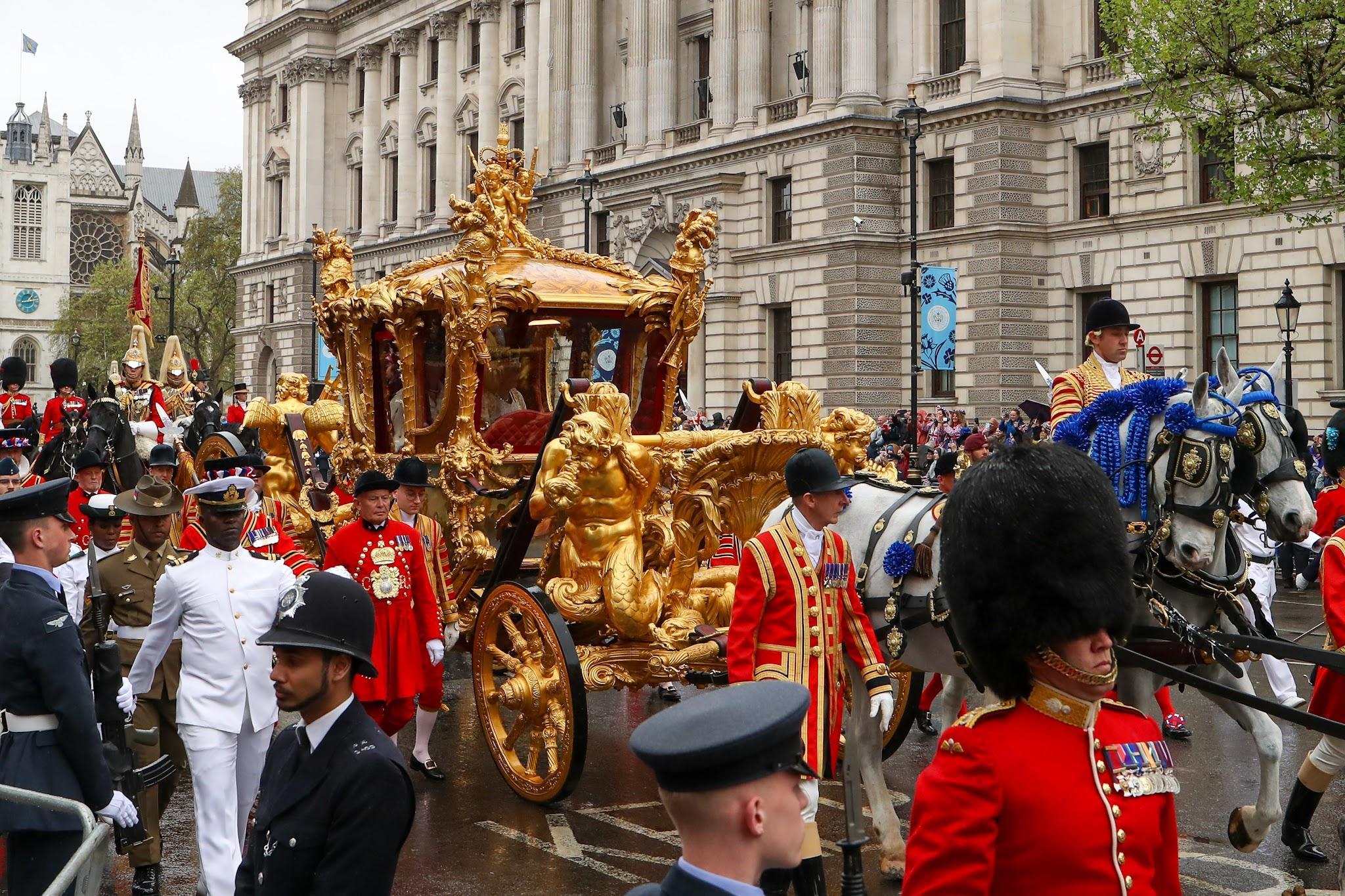
    The 6th May, 2023 was a momentous and historic day. At Westminster Abbey, the coronation of King Charles III was observed by a select, and special circle of spectators while the rest of the United Kingdom watched the occasion unfold live on their television screens.

    It was a glorious day filled with profound meaning and significance. It was also extremely emotional. British people had endured a great deal of grief after the death of Queen Elizabeth I. Her long reign represented a kind of stability and continuity that united all of the generations. Many people found themselves reflecting upon the events that led up to this day.

    The late Queen remained such a fixture in all our lives, in good times and bad, that her absence felt like a spiritual and emotional void. However, she still seemed a rather remote figure. The political impartiality required of the Monarch made her appear emotionally distant and cold. She rarely expressed a view on anything, and took a pragmatic approach to any crisis. This sort of no nonsense attitude endeared her to some, but alienated others.

    The then Prince of Wales, in contrast, felt and thought deeply about various subjects. Religion, art, music, architecture and the natural world were just a few subjects that still occupy a place in his heart. He wrote, and continues to write vast tracts and elegies devoted to these issues. When he acceded to the throne he made an implicit promise to his subjects that he would continue to pay heed to these things.

    It is apparent that he views himself as more than the Head of State and the Head of the Church of England, to him both these things are more than symbolic. It is obvious that he takes these roles seriously.

    The KIng has a deeply moral world view, and his pronouncements give him the air of a seer or a prophet. His place in our society is something sacred, this was evident during one particular part of the coronation service. The King was anointed with holy oil, oil that was consecrated in Jerusalem, although this was not shown on camera. Still, for some viewers with a degree of imagination this gave the King a bond to something eternal and transcendent.

    The ageing King, in poor health and struggling to cohere his duty as Monarch and religious leader in a time of great flux nonetheless perseveres. This is admirable and impressive. It is also almost heroic, when there is so much to disunite us. He is a central part of our culture, our history, our identity and our mythology and that is why he is still important.

  • The King Is Not Dead

    On the 1st May, 1700 the English poet and playwright John Dryden died. He was the first Poet Laureate, an honourable title that was bestowed upon him by the office of the newly restored Monarchy. His work eventually defined Restoration England, and his appointment heralded a triumphant return of English culture after the sterile and barren years of Cromwell’s Puritan regime.

    Dryden understood the powerful allure of Monarchy, and the spell that Kings, particularly the Stuart King, Charles II had over the populace. This prevailed despite the violent schism that tore the nation in two. The divide between religious dissenters and loyalists sparked the English Civil Wars, yet a sizable part of the population was committed to the King.

    His most devoted followers helped to support him in exile. There was a secret society of Monarchists who would assemble at Ham House in Richmond on Thames. They were called The Sealed Knot, and when the King returned from the Netherlands he rewarded the owner of the property with an annual pension. The belief in the divine powers of the King became so pronounced and ingrained that there were people who believed that even after his demise they could sense his ghostly presence, and some claimed that they could smell the scent of his pipe. The King almost had a cult following. Every Friday, devotees would assemble outside the Banqueting House in Westminster to receive the King’s healing touch. They were convinced that the King’s hands could cure them of the most disfiguring disease.

    The notion of the divinity of Kings had not expired, in spite of all of the political and religious upheavals that afflicted England throughout the centuries. The King had inherited the traditions of the early church, and although he was ostensibly a “Protestant” Monarch he had not abandoned the Catholic past entirely. He merely adapted it. Dryden had a profound insight into the prevailing sensibilities of English Catholicism. He expressed it in perceptive and lyrical terms as the “milkwhite hind, immortal and unchanged”. The root of English spirituality itself remains deeply embedded within the psyche of the English people, even if the practice and form has changed.

    Our ancestors always revered immortal figures, like King Arthur. Arthur was the archetypal eternal King, who had the power to unite a fractious nation. The legend was that he had not actually died, he was merely sleeping and his spirit would revive the fortunes of an island people who suffered repeated invasions and tribal wars. This fanciful legend was incorporated into the literature of the Restoration and indulged by the King, who was fond of theatrical excess. Thankfully, through the patronage of Charles II, we continue to enjoy the artistic legacy of pioneers like John Dryden.

  • Ghosts Again

    April 24th is St. Mark’s Eve, a solemn date of fasting and prayer dedicated to the dying. Tradition in England dictated that those observing the feast must keep vigil in the churchyard between 11PM and 1AM. It was believed that anyone who passed through the church porch during that time was destined to die within that year.

    The symbol most commonly associated with St. Mark is a winged lion, an indefatigable and heroic figure. It is an icon reproduced in medieval heraldry. Mark’s influence was especially pronounced in Italy and was particularly revered by communicants of the English Church. The legend still reverberates throughout our culture, albeit in a watered down version in comparison to the devotions of previous centuries.

    Mark was born in the spiritual wastelands of North Africa, yet through his tireless evangelism he established the foundations of Christianity in the desert, and ultimately across the whole of the African continent. The English poet John Keats was inspired by this prophetic story of building substance from sand, and could see parallels between this and the spiritual void of England.

    Keats spoke of “the vale of soul making”, and alluded to the perpetual struggle of the English people to find a cohesive religious and cultural identity. He also made the declaration that “I am certain of nothing but the Holiness of the Heart’s affections and the truth of the Imagination”. Keats was a visionary poet and part of a long tradition of seers and poets.

    This originated with the omens and prophecies of the Druidic priests and was established on this island before continental invasion and colonisation. It has endured and remains a part of us, and our sensibility as a people. The foundation myth of our island was itself based upon a vision.

    The legend states that the goddess Diana appeared before Brutus and declared, “beyond the realm of Gaul, a land there lies, sea-girt it lies, where giants dwelt of old. Now void it fits thy people…And kings be born of thee, whose dreaded might shall awe the world and conquer nations bold”. This is our inheritance and it has left an indelible impression on generations of English writers.

    Keats’ poem, “The Eve of Saint Mark” focusses upon a vigil attended by a young woman called Bertha. The tone is both dream-like and melancholic. Bertha is sitting in the shadows of the graveyard, reading, praying and contemplating the significance of the occasion.

    Keats illustrates this tremendously evocative scene, replete with visions of ghostly silhouettes,

    “All was silent, all was gloom

    Abroad and in the homely room:

    Down she sat, poor cheated soul!

    And struck a lamp from the dismal coal”.

    In her fatigue she reaches some level of epiphany, as the poem concludes,

    “At length her constant eyelids come

    Upon the fervent martyrdom;

    Then lastly to his holy shrine

    Exalt amid the tapers’ shine

    At Venice”.

    Keats’ observations captured a different England, now lost to modernity.

    It was a nation that was still steeped in piety, although that was beginning to wane in his lifetime. At that stage in our history, people still believed in the literal presence of ghosts. It is obvious that during a period of great privation and high mortality, certain beliefs or perhaps superstitions would be prevalent. Many churches in this country are dedicated to St. Mark and continue to attract large congregations. However the Church of England discourages these ancient practices and instead advises parishioners to light candles and pray for those facing death.

    It is sad that there are negative connotations, it reflects our disconnection between ourselves and our ancestors and the modern taboo about death. It is the only inevitability in our lives, and we should not be ashamed. Keats faced his own demise with an admirable level of maturity and acceptance. We should acknowledge our own mortality in the same manner.

  • Dark Horse

    On the 19th April, 1824 the English poet Lord Byron died. He left an enduring poetic legacy, but also a dark reputation, both historically and culturally. Byron became a legend and a kind of totem for a new and startling epoch. The Romantic age was signified by its individualism, and its cast of unique characters. Mary Shelley’s novel “Frankenstein” symbolises this, the narrative and characterisation almost mirrors the life and times of Byron. Byron was the bete noir of the English establishment and in the wake of scandal was exiled to the far fringes of Europe. Byron personified the louche sensibilities of the aristocracy. His behaviour demonstrated all of the worst characteristics associated with the upper echelons. He was libidinous and profligate with money.

    He represented amorality, and displayed the kind of behaviour that fuelled widespread resentment, but in particular within the lower echelons of society. While banished to a remote corner of the continent, he attempted to restore his literary reputation. He was accompanied by his personal doctor, John William Polidori. On that stormy weekend Byron devised a test for his friends and fellow literary luminaries; he wanted to discover who could tell the best ghost story.

    Dr. Polidori presented an early version of his story “The Vampyre”, the first prose piece of a legend only evinced in poetry. This mythic creature was also unearthly and immortal, and in Polidori’s imagination an alter ego of Byron himself. This was the first example of a “Byronic” figure before this term had even been coined. It is now such a familiar literary trope that we often fail to remember the origin. The Vampire is high born and has an impressive intellect, he is also tremendously alluring and amorous.

    In the story, a young man called Aubrey is intrigued by the presence of a strange and enigmatic figure called Lord Ruthven and the unsettling infamy entwined within the character. Ruthven’s powers are legendary but they are also terrifying, which Aubrey encounters when he meets him in Rome. He leaves under a cloud, but Ruthven’s presence continues to haunt him. This story was a formative and important influence on the Irish writer Bram Stoker, who regenerated this theme nearly eighty years later.

    “Dracula” is a new European reanimation of Ruthven, transmogrified into a dapper and urbane Count inhabiting a ghostly castle, rumoured to be the seat of Romanian aristocrats. This remnant of a palace is situated amidst the misty Transylvanian mountains. The trope is revived once more. The vampire seeks the vitality of youth and draws blood to remain immortal, and in the process ensures that the host also remains immortal. However this vampire story was simply a clever version of an old folk legend and not particularly shocking nor surprising.

    However the world was undoubtedly disturbed and shaken by the unique and unforgettable creature created by Victor Frankenstein. It is a testament to Shelley’s originality and literary brilliance that her work had a much greater and wider cultural influence, and legacy. “Frankenstein” subtitled “The Modern Prometheus” subverted all of the conventions and mores of the age.

    All of the characters imagined on that stormy night were Promethean figures. This was an entirely new concept of the Romantic era. They imagined characters imbued with superhuman and supernatural powers, defiantly challenging the natural order with their quest for omnipotence. Romantic literature exposes the flaws of the human ego when it is left unchecked. The romantic poet is a fragile figure, forced to play an unnatural role in a world of artifice. He is a ghostly presence in an arena that demands authenticity and spurns pretension.

    Ghost stories themselves are allegories, designed to illustrate transgressive or repressed sexual desires. This theme resonates throughout “Frankenstein”. There is an all pervading sense of sexual repression, a blight upon the age. The notion that an immortal being could be created and then given life by a mad scientist was in itself a shocking concept.

    However Frankenstein manufactured an unearthly and ageless being, utilising the tools of science. It was an entirely artificial construction devoid of original sin and in his own godlike vision it was a creature destined to supersede the follies of mortal men and eventually transcend death itself. Frankenstein himself does not feel ashamed that he has meddled with nature. He only feels a sense of enormous personal achievement, as the inventor of an entirely new kind of creature, one that will never die.

    His delusions of grandeur render him a secular deity, entirely detached from the historical and clerical foundations of European civilisation. Imagining a creature that is neither dead nor alive in the conventional sense is now a familiar literary trope, but it was an innovative idea for the time. This was a time of political foment on the continent, particularly in France.

    In spite of growing alarm in Britain, the antics of the French revolutionaries left a trail of devastation. They were defiantly and belligerently anti-clerical and looted the churches and monasteries. It was a repudiation of the proud legacy of religious women who raised the status of women after the indignities of Pagan Rome. They had chosen to devote their lives to Christ for centuries, until the revolutionaries forced them to relinquish their property and divest themselves of their visibly religious status. In 1794, 16 Carmelite nuns refused to surrender to them and they were arrested and put to death. Each nun approached the guillotine in calm defiance singing a hymn to the Holy Spirit, their voices silenced by the sound of the blade. It was a scene of true courage.

    Percy Shelley was another louche scion of the aristocracy. Shelley also had Byronic characteristics. He too, was profligate, promiscuous and almost by default, intensely alluring to women. The young Mary Godwin was just one out of many young women who had fallen under his spell. Their alliance was scandalous, and they too were exiled to Europe. Yet Europe was unfamiliar, strange and detached from civilisation. It was a continent that would be torn apart by the Napoleonic wars. The Faustian spirit that inspired the greatest art and literature also contained the seeds of its own destruction.

  • A Handful of Dust

    On the 10th April, 1966 the English author Evelyn Waugh died. He was part of a distinctly illustrious literary set. This was a contingent of writers who enjoyed and participated in the decadence of the Jazz Age, but in later life found a much greater meaning and solace in the Church of Rome. This was a distinguished group which also included literary luminaries such as Muriel Spark and Graham Greene.

    In a strange twist of fate, Waugh died on Easter Sunday. He had just returned from a Latin Mass at his local church. The date was significant, representing not the end, but a new beginning. Waugh’s Catholicism was not a sudden epiphany, but a gradual, and often fraught process of re-examination, self-recrimination and ultimately atonement.

    Waugh’s magnum opus, “Brideshead Revisited” is considered to be the primary conversion novel of the twentieth century. It details the long friendship of two Oxford students, Sebastian Flyte and Charles Ryder. Flyte is aristocratic, cultured, but most importantly Catholic, the descendant of an old recusant family living in the fading grandeur of Brideshead Castle. Ryder is from a comparatively ordinary, suburban and provincial family. However he is drawn into this intoxicating, exotic and rarefied world of the Flytes.

    Ryder’s first meeting with Flyte is purely accidental. Flyte is a “hearty”club of Oxford students who have dedicated themselves to high living. The hearties are hedonistic and libidinous. They are seemingly unconcerned by the intellectual rigours of Oxford and instead spend their time eating luxurious dinners, drinking and carousing. Ryder witnesses a dishevelled and shambolic figure vomiting on the lawn outside his room, this is his first and unlikely introduction to Sebastian Flyte.

    Unwittingly, this inopportune encounter leads him on to a path of discovery. The burgeoning friendship also opens up a once hidden corner of England. He discovers the ancient and sublime encapsulated in the grounds of Brideshead. This country pile is a symbol of England’s half buried past. It represents the old religion and the old ways that in spite of numerous attempts to destroy it, have never truly died. There are still traces of it, barely perceptible to us in the modern world, but remain deeply embedded within our history and our culture nonetheless.

    All of Waugh’s novels are profound and moving elegies to old England and the Catholic foundations that built it. Political saboteurs like Oliver Cromwell sought in vain to erase it, but failed. Although Waugh is considered a satirist, his cynicism does not sour his fundamental message. The epicurean antics of the young and foolish are contrasted with sombre scenes of aging, death and transfiguration.

    It is intensely revealing to observe the shallow nature of many of the characters that inhabit his novels. The Roman Catholic Church became a dominant presence in his life because it offered certainty. The moral strictures provided a constancy and comfort which have never wavered in spite of modern, fashionable opinion. This dependence on tradition has inspired many other writers and thinkers, and continues to do so today.

  • Lyric Grace

    On the 31st March, 1621 the English poet and politician Andrew Marvell was born. He lived and worked through one of the most tumultuous periods of English history, and this is reflected in his work. His first poems were published while he was still a student at Cambridge, and these were effusive tributes to the reigning King Charles I.

    However after the King was executed in 1649 his loyalties changed. Eventually he was persuaded to support the new political establishment and he firmly allied himself with the new regime. In 1650 he worked for Lord Fairfax, who was Oliver Cromwell’s military commander during the Civil Wars. He was employed as the private tutor to his daughter at his residency, Appleton House.

    The verdant surroundings inspired him to write the poem “Upon Appleton House”. This was an extraordinarily vivid poem, praising his patron and his generosity. The poem is also an allegory of England during the Interregnum, a society in great flux and wrestling with its religious and cultural identity.

    One year later he was appointed to Cromwell’s Council of State and worked as his Latin Secretary alongside his friend and fellow poet John Milton. They shared a similar sensibility, perceiving England as a uniquely sacred nation, akin to Zionism.

    This belief was sincere and profound. The argument was that just as God promised the land of Israel to the Jews, England too was a kind of Promised Land for pious and devout Protestants. This was a very common belief for the time. Milton’s epic verse was a lamentation for a lost tribe of chosen people, bewildered and exiled on England’s vast green plains searching for manna.

    This concept was often held in tandem with the practice of complete abstinence from worldly desires to maintain spiritual purity and to restore the covenant with God. Both of these beliefs were integral to the Puritan philosophy which helped to sustain Oliver Cromwell’s governance. Ultimately, however Puritanism had its limits, and its harsh strictures were questioned by the populace.

    Cromwell’s tyrannical measures against excesses of the flesh did not seem particularly Christian at all. It seemed that Puritan leaders were held captive by a delusion, believing that God had only created a spirit world, rather than a material world replete with flesh and blood humans.

    Cromwell died in 1658 and his son Richard succeeded him. It was a hallmark of the regime’s hypocrisy that one hereditary system was merely replaced with another. In 1659 Marvell was elected the Member of Parliament for Kingston-upon-Hull in the Third Protectorate Parliament. In 1660 the Monarchy was restored, and King Charles II ascended to the throne. Both Marvell and Milton were incredibly fortunate to avoid the death penalty for being possible co-conspirators and collaborators in the previous administration, one that was held responsible for the execution of the King’s father.

    It was a testament to their persuasive literary powers that they could even convince Royalty that they were not traitors. Marvell was re-elected as the MP for Hull in the Cavalier Parliament. However he was soon dissatisfied, and appalled by the extent of government corruption which had become endemic. He composed poems expressing his feelings of disgust and disappointment, but these were written surreptitiously and were only published posthumously.

    Marvell died in mysterious circumstances in 1678, reputedly this was a targeted political assassination. In the wake of the Glorious Revolution of 1688, his poetry experienced a revival, with previously unpublished poems added to the canon. His poetry felt timely and it resonated with people.

    Poems like “The Garden” and “To HIs Coy Mistress” were subtle allusions to England’s divided self, a nation and a people grappling with ambiguity. It was a perennial battle between the body and the soul, the flesh and the spirit. His oeuvre was a significant influence on T.S Eliot, who was also inspired by similar themes.

    Eliot wrote that his poetry “is more than a technical accomplishment, or the vocabulary and syntax of an epoch; it is what we have designated tentatively as wit, a tough reasonableness beneath the slight lyric grace”. This “slight lyric grace” epitomises English culture, quiet, unassuming and too hesitant to express any heartfelt emotion. His work is a delicate dedication to England, and it continues to reverberate to this day.

  • Southern Mystic

    On the 25th March, 1925 the American writer Flannery O’Connor was born. She spent all her life in Georgia, and her writing was inspired by the people and the culture that surrounded her. This was a Southern state with a unique reputation. It was characterised by its deep religious piety, but it also attracted notoriety for something altogether darker and unsettling.

    Smalltown Georgia in the forties and fifties was not an especially tolerant place. It maintained an outward civility but it remained hostile to anyone who was perceived as different. Black people, especially young black men were subject to the worst kind of prejudice and discrimination. In the pre-civil rights era, an astonishing 531 lynchings occurred, the second highest number of extralegal executions within the entire southern United States.

    O’Connor writes in an unsparing and pitiless tone about this climate of suspicion and fear, and the obstinacy displayed by the people living within it. It is a stark contrast to the wholesome and glamourised image of the south as evinced by Margaret Mitchell in her romantic novel “Gone With The Wind”. In Mitchell’s imagination this is a rich and lush landscape inhabited by a happy and harmonious set of people unscathed by slavery. O’Connor’s version of the south is bleak, and steeped in bathos. Her 1952 novella “Wise Blood” illustrates this perfectly. The narrative is nihilistic and cynical. It is purposefully stripped of any superficiality and romance to reveal the decadent underbelly.

    The book uncovers the harsh reality of post-war America. It is a battle scarred nation that is wrestling with its identity. Many of the characters are solitary figures who privately struggle with afflictions of one kind or another. Empathy is entirely absent and all that emerges from the story is the sense that desperation is the most valuable commodity. This is exploited for maximum gain. It is a merciless system where the most vulnerable are manipulated and corrupted to enrich others.

    However the individuals depicted are not presented as helpless victims of fate, they are painted as proud, dignified and singular in their suffering. They are the embodiment of martyrdom. They resemble Biblical figures who strive only to seek meaning in a place and time that has no real semblance of meaning, and seems just random and cruel. O’Connor herself had her own private health battles, and died aged only 39, but her legacy endures.

  • The Magic Mountain

    The 17th March is St. Patrick’s Day, the Patron Saint of Ireland. It is an annual celebration of Ireland, Irish history and culture. It is marked with festivities within Ireland and throughout the global Irish diaspora. Originally it was a solemn religious occasion. However in modern times the focus has been on the secular and cultural aspects of Ireland.

    The legend of Patrick is closely entwined with Ireland and the Irish people, but he was originally from Britain. When he was just seventeen years old he was snatched from his family by Irish pirates and he was taken to Ireland where he was kept in captivity as a slave.

    Fifth Century Britain was left in a vulnerable state after the collapse of the Roman Empire. The ancient Celtic Kingdom of Ireland had a distinct reputation, and it was regarded as a notorious place known for its warriors and pirates. Irish pirates frequently raided the coasts of Great Britain looking for slaves. Patrick was just one out of numerous victims of these raids, another was St. Brigid who is also revered as a sacred figure in Ireland. These incursions were more than likely opportunistic. There is no evidence to suggest that their actions were motivated by malice or that they were attempting to further humiliate or subdue an already demoralised population.

    Patrick worked as a slave for six years, tending sheep on a farm and praying for his own emancipation. However after six years he received a message from God telling him to return home, and that a ship was waiting for him. He escaped to the coast and persuaded the captain and the crew of a passing ship to transport him back to Britain. However as soon as they arrived they found a wilderness. Patrick urged them all to put their faith in the Lord. The power of prayer saved them, as a herd of wild boar suddenly appeared. This miracle made Patrick an enamoured figure among the group.

    Patrick spent years studying theology, in Britain and across continental Europe. He was ordained at Auxerre, and eventually progressed to the Bishopric. However he had not forgotten his early life in Ireland. Despite his difficult experience he felt a degree of affection for the culture, as his captors introduced him to the myths and legends of Ireland. It was while he was stationed back in Britain that he received another vision summoning him back to Ireland. It was a divine message imploring him to evangelise the pagan population.

    When he returned to Ireland as a missionary he encountered individuals with profound and enduring attachments to the old beliefs. They remained stubbornly resistant to the Catholic creed and refused to practice the necessary rites. The worship of nature was ingrained instead, and they paid homage to other gods.

    However Patrick found ingenious ways to accommodate them. He had a great insight into the Irish psyche and how magic and miracles were deeply embedded within the national consciousness. Patrick’s ministry only served to strengthen these sensibilities.

    Patrick had immense strength, courage and faith even when the pagan population were determined to kill him. On one occasion when his life was in great danger, he knelt before his antagonists and prayed to God for help to convert their souls. His prayers were so fervent that when he rose to his feet the mark of his knees were still imprinted on the ground. Another time he told the villagers to draw a circle around them, and as he prayed, water instantly sprung from the ground and they were all baptised.

    Superstition and mysticism was all around him. One of the most powerful myths relates to a giant serpent, believed to be situated close to the Galtee mountains. Patrick knew that the locals revered serpents as gods, but he cast this serpent into the lake and made a plea that this serpent remained chained to a rock until the Day of Judgement. Patrick was also believed to have cast all venomous creatures from the island of Ireland.

    Patrick understood that the people felt awe of the natural world. The Temple of Tara in County Meath is popularly believed to be the resting place of an ancient semi-divine King. Another example of a holy mountain is situated on the west of Ireland, the centre of Patrick’s evangelical work. In pagan Ireland, pilgrims would ascend to the top of the mountain to mark the summer solstice. Fruits would be offered to the gods, a bull would be sacrificed and ritual dances and plays would be enacted.

    When Patrick served in the region he learned about the mountain’s reputation and so he decided to climb to the peak to pray and fast for 40 days. He was assailed by demonic birds, but he banished them into the hollows by ringing his bell. He cleansed the mountain of evil, and released the Irish from their iniquities. The mountain is now called “Croagh Patrick” and it is devoted to Chrstian pilgrimage, rather than pagan devotions. We must remember the important legacy of St Patrick and how he shaped Ireland today.

  • Scarred Nation

    On the 9th March 1997 the Welsh screenwriter and novelist Terry Nation died. He was remembered with fondness and affection as a stalwart of British television, and the pioneering force behind television classics like “Doctor Who” and “Blake’s 7”. He was a tour de force in British broadcasting for many decades, and his example remains unmatched. He wasn’t just respected by his contemporaries in broadcasting, he was also immensely popular with audiences.

    However it is sad to reflect that imaginative, challenging television does not exist anymore, and it is less likely to be commissioned by a staid and declining art form. He was the heir to science fiction and folk horror innovators like Nigel Kneale. Kneale’s numerous films and programmes were disturbing reflections of a rapidly changing nation.

    He chronicled the difficulties of living in twentieth century Britain, exploring its uneasy relationship with the rest of the globe and vice versa. He observed how tradition jarred with modernity and how superstition conflicted with reason. He had a profound insight into the sensibility of a nation wrestling with the new whilst continuously clinging to the past. He had more of an understanding than the glut of metropolitan commissioners and producers that inhabited the echelons of British broadcasting, as he came from the Isle of Man.

    His output on the small screen exemplified the problems when modern, universalist notions were imposed on well established communities with enduring local traditions. Many will inevitably resist such an imposition, and cling to their old ways as these are more familiar to them. Our ancestors viewed themselves as an integral part of the natural world, as opposed to the modern belief that we are separate from it. There was no attempt to battle with the forces of nature, or to dominate and subdue them. This was simply unthinkable.

    The future was unfamiliar and strange. Such an intangible notion would have seemed an artifice, yet Kneale’s characters stand on the threshold between the past and the future. They are gazing into an abyss. They are standing on the precipice looking down on an open chasm of unfamiliarity, confusion and disorientation. In “Quatermass and the Pit”, an archaeological dig at a defunct Tube station recovers the remains of a Martian spaceship. This one discovery challenges the preconceptions and prejudices surrounding what actually constitutes humanity, and even material reality itself.

    It is later revealed that these Martians interbred with proto-human hominids to maintain their survival on Earth. Clearly alien and human are merely social constructs, and the distinction between them is purely arbitrary. In the final serial of “Quatermass” a new generation of Planet People yearn to escape into another cosmic dimension. Amidst the malcontent, armed street gangs tour the barricaded streets.

    This is Kneale’s bleakest vision of the future. There is no hope left in the shell of this urban wasteland, only the ghosts of a past that no-one remembers. Alien and human are disconnected, and atomised. All that remains is the overwhelming desire for annihilation, and the vain belief that they will ultimately regenerate in another manifestation in a faraway solar system.

    Time travel, and alien beings were a popular combination of subjects for prime time television. It was this interesting juxtaposition of themes that inspired the work of Terry Nation. Nation was originally a comedy writer, but branched out into science fiction when he realised the immense commercial potential. In 1963 he conceived “The Daleks” for the second series of Doctor Who. These were alien creatures created after a nuclear bomb, and who survive purely on the radiation in the atmosphere. They are war like, and in constant battle with their pacifist foes the Thals. The Doctor’s nemesis is Davros, the progenitor of the Daleks.

    Terry Nation continued to contribute to Doctor Who until 1979. He was also commissioned to write “Survivors” in 1975. This was a television series that imagined the last human lives on a planet devastated by a deadly plague. Three years later he was responsible for the science fiction series “Blake’s 7”. This followed a group of criminals and political prisoners escaping from the evil “Terran Federation” on a spaceship of an unknown origin.

    Blakes 7 ended in 1981, and Nation sought new creative opportunities in Los Angeles. He was a scriptwriter for “Macgyver” and “A Fine Romance”. He was also the author of numerous works of fiction. Nation’s creations have left an indelible mark on generations of British people, and they have even shaped our consciousness and our very identity. It is hard to imagine what our psychology would have been like without his stellar work, and we will continue to celebrate him.