St. George has been an integral part of English identity since the fourteenth century. The adoption of George as England’s patron saint has helped to bring new meaning and insight into our native culture and traditions. The legends that surround him remain a source of pride, in spite of the detractors.
It is lamentable that in our postmodern society many people have chosen to forget this essential part of our foundation story. Every nation is founded on a series of myths and legends. These intricate and elaborate tales of heroes and villains are symbolic manifestations of the nation’s character and sensibility. King Edward III recognised this, and he found inspiration in the mythology of a legendary Knight
Edward cultivated an idiosyncratic and aristocratic culture at court. The King and the nobles were brought together in a complex system based on chivalric custom, including honours, arms and pageantry. Chivalry originated from a military culture, and described the strict codes of behaviour mandated on the battlefield. War was deeply embedded within the culture of this country. However, warfare was not just about consolidating the power and influence of the Crown. The nation as a whole depended upon military strength to enable it to survive.
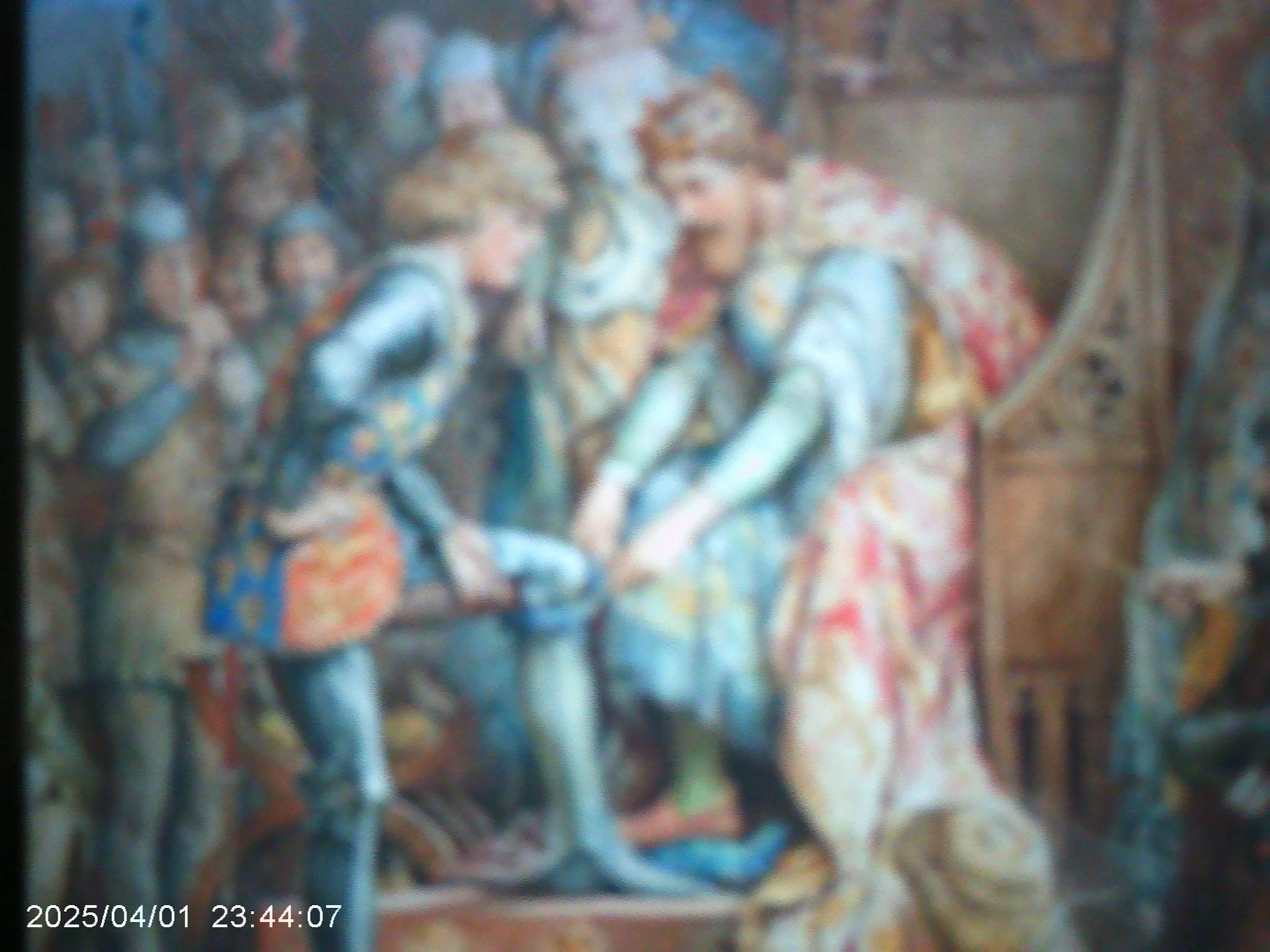
St. George was the patron saint of soldiers and nobles, and the epitome of a chevalier. The tale of his Knightly conduct was appropriated by the King and woven into an earlier legend surrounding King Arthur and his court. The legend states that the King was in attendance at a court ball when a lady accidentally dropped her garter. When everyone except the King erupted into laughter, he admonished the crowd. He retrieved the garter and said, “shame to him who thinks evil of it”. Henceforth Edward established the Order of the Garter and dedicated it to St George.
It is a strange paradox that the profoundly Christian order of Knights was nonetheless perennially engaged in war. It is difficult to reconcile a sense of righteousness with the eternal compulsion for battle. However it is justified as the moral aspect is entwined with the notion of defending the honour of a nation from evil. Medieval England, and Europe as a whole faced the imminent threat from violent and hostile outsiders who sought to usurp Christianity with a contrary religion and set of values that were in direct opposition. The story of St George slaying the dragon is a metaphorical depiction of this righteous battle, and it has been revived throughout the centuries.
The warrior spirit of the English has never truly died, even in times of relative peace. This is something which we must always hold on to, despite the evil thinkers who continue to project their shame upon us.
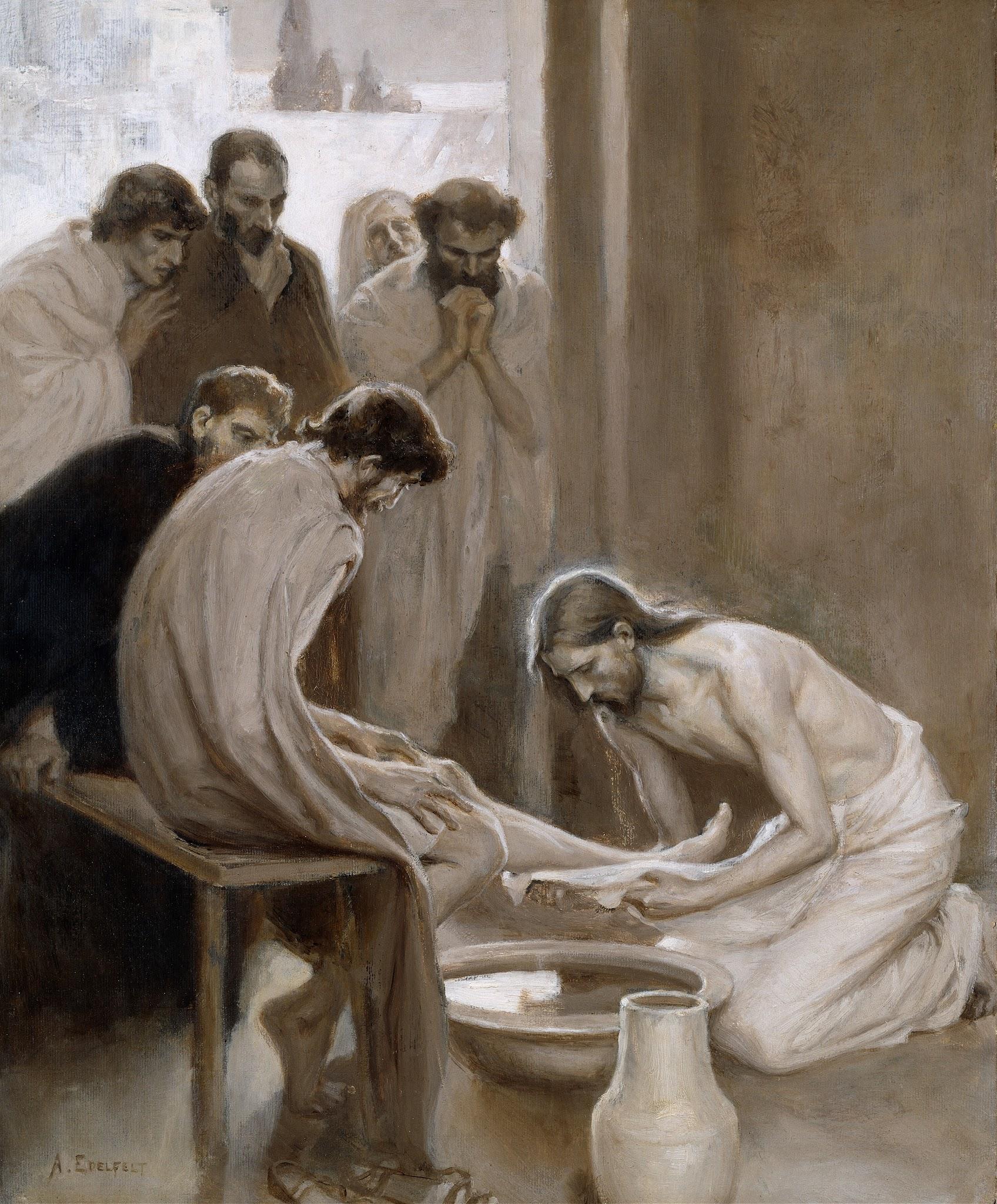
Maundy Thursday is a significant date. It precedes Good Friday, the most solemn occasion in the Christian calendar. It commemorates Jesus washing His disciples feet in a simple act of devotion and humble piety. In many churches all over the world, similar rituals are repeated to honour Christ’s example.
In this country, during the Middle Ages the Monarch washed the feet of his poorest subjects. It was the purest demonstration of obeisance, an integral part of noblesse oblige. In our modern and increasingly cynical secular society, such rituals are now sneered at, as it is fashionable to undermine the sacred and to diminish people with status and authority, particularly those with hereditary power.
However this interpretation is naive and shallow. It must be emphasised that traditions matter because they are a fundamental part of who we are as people. Our shared history strengthens the bond that ties us to our ancestors, and this allows us to pass on something meaningful to those who are yet to be born.
Unfortunately, as our society became wealthier, it moved further and further away from religion. Material concerns were the primary focus, matters of the soul were only secondary. The notion that the greatest treasure lies within the cultivation of the life of the spirit was lost, because the riches on earth provided so much joy, however temporary.
The Reformation was a double edged sword, it brought a necessary and democratic change to our culture but ultimately it severed the most important connections. It weakened the spiritual power of the Monarch, and the most profound religious rites that they enacted were stripped of their meaning.
Tudor and Stuart Monarchs did not inspire as much awe in the populace as their medieval forebears but they still managed to maintain a semblance of piety. The Cromwell regime divested itself of Monarchical influence altogether, along with its ceremonial trappings and perceived superstitions. After the Restoration many of the religious ceremonies were revived, including the Maundy Thursday rite of foot washing. The King’s subjects also believed that one touch from the King could cure them of their iniquities.
In the wake of the Glorious Revolution, however, the dour Protestant King William revealed his disdain for “foolish old Popish ceremonies”, a shocking outburst reflecting his prejudices, and deep seated arrogance. When told of the power of the King’s touch he sneered, “Well, God give you better health and more sense!”. Since his accession, the Monarch’s only role on Maundy Thursday has been to distribute money to the poor. The sacred rites have disappeared.
It is sad that these rites have been abandoned, and it is indeed telling that a practical, purposeful and material act has replaced the traditional ceremony. The Victorians, with all of their numerous faults and failings, still recognised the importance of noblesse oblige. The wealthiest members of society were often the greatest philanthropists.
However there were still pockets of greed and selfishness which rapidly became a source of great shame. Disraeli bemoaned those with wealth who continued to ignore the plight of the poor and described this noticeable gap in society as, “between whom there is no intercourse and no sympathy…who are formed by a different breeding, are fed by a different food, are ordered by different manners, and are not governed by the same laws”. This was part of his infamous speech about the Kingdom, which far from being united, was in fact two nations separated by different values and priorities.
The reason for disunity was the decline of the Established Church and its influence in society. During the Middle Ages the Kingdom was happy and stable. It was a rich tapestry of social classes held together by numerous threads of rights and responsibilities that maintained peace and helped to preserve people’s sense of wellbeing. As soon as the Church lost its power and influence, the poor lost their education, the land was usurped by the nobles and the Crown was blackmailed into giving up its rights of succession in favour of their own rulers. In turn, these rulers controlled the masses, with mixed success over the years.
Disraeli saw a parallel with the medieval barons, as the country was under the yoke of a new kind of tyranny. The factory owner operating in an industrialised England was an entirely new innovation, but he was nonetheless imbued with the same avaricious intent. His only motive was profit, and he disregarded the moral values and traditions of the nation state. Disraeli’s social reforms were his attempt to revive the concept of noblesse oblige in a modern, capitalist society.
Today should be the one day that we reflect upon the greatest gift that has been given to us, our spiritual inheritance as a Christian nation. It is worth more than gold, and we must never forget that.
The English poet, Christopher Smart was born on the 11th April, 1722. He is chiefly remembered for his startling and innovative religious poetry. However he was misunderstood in his lifetime. He was part of the tradition of fragile genius, epitomised by other original and solitary poets like John Clare. Clare was declared mad and confined to an asylum, an unhappy experience which nonetheless allowed him free rein to develop his poetic sensibility.
It is a fine line to tread, as the division between truly original thought and madness is tenuous. Conventional society is suspicious of free thinkers, and those who are blessed with the gift of imagination often find the business of ordinary living stifling. It is hard to feel confined by the everyday restrictions of life, and authority figures always attempt to undermine anyone who dares to be creative. It is therefore inevitable that artistic and creative people are prone to mental illness as they are overwhelmed by prejudices and philistinism.
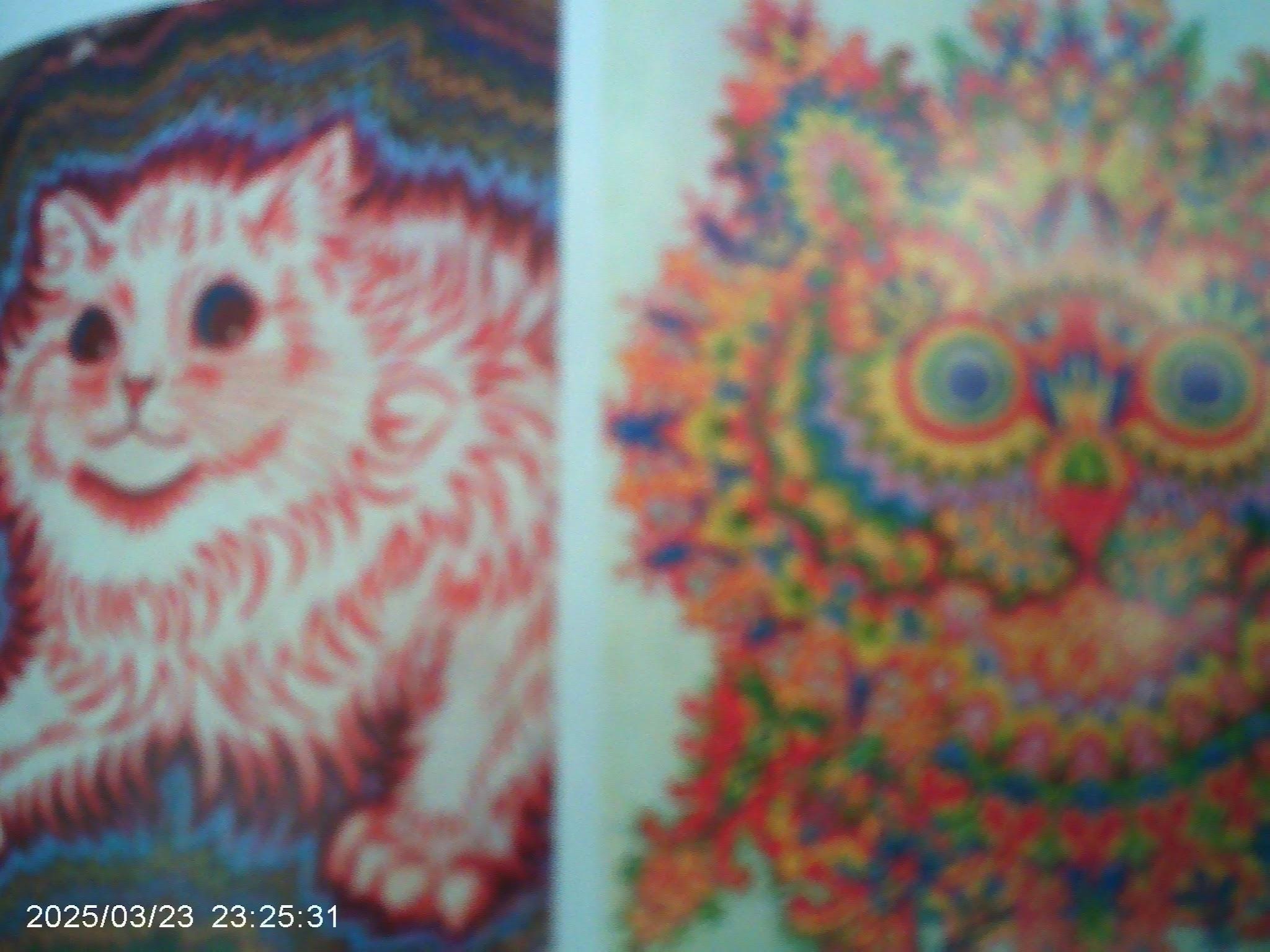
In 1757, Smart was committed to St Luke’s Hospital for Lunatics. He was isolated in this bleak, forbidding asylum with only his beloved cat Jeoffry for company. While interned at St Luke’s he composed a moving paean to Jeoffry. In “My Cat Jeoffry”, Smart pays tribute to a creature who, in his mind, embodies godly virtues. According to the poet, every action, no matter how banal, is Jeoffry’s way of communing with God.
However the poem is much more than an outpouring of love for a cherished pet, it is actually an important lesson in humility. This is something that humanity rarely takes heed, as it is a species in which the ego is paramount. As Smart acknowledges,
“For he is good to think on, if a man would express himself neatly.”
The poem is reminiscent of St Francis’ profound eulogies to animals. The animals are holy and noble, and part of the wonder and beauty of God’s creation.
Smart’s verse resonates with anyone who has ever had the privilege of owning a cat. It is not far-fetched to state that they are imbued with a distinct quality of magic wisdom. Jeoffry was just one remarkable cat among a magnificent species.
On the 7th April, 1770 the English poet William Wordsworth was born. It was fortuitous that he was born amidst the magic surroundings of the Lake District. This is a unique and astounding area of natural beauty, a phenomenon shaped by ancient geological history. The story of its creation is a thing of wonder.
Glaciers created a distinct landscape of scooped-out valleys, accompanied by a rough scree of angular stones which combined to form breccia. Skiddaw Slates were deposited first, then volcanic rocks emerged to produce the mountainous region of Langdale Pikes and Helvellyn. During the later Ice Age, an ice cap spread through the valleys which widened and deepened them. Once the ice retreated, piles of glacial debris known as moraines blocked the mouths of the valleys and produced the lakes.
Wordsworth could not help feeling enthralled by the nature that surrounded him, he spoke about “the ghostly language of the ancient earth”. He was a romantic poet, but he was also a product of the Enlightenment, an era of scientific and philosophical innovation which replaced theological dogma. Writers and thinkers cultivated a new respect for the natural world, and even developed an entirely new form of religious devotion to the Earth.
However this was just a revival of the old religion, the only exception was that they had discovered the language to illustrate it. Intellectuals were living under the misapprehension that they were living in an age of reason and had divested with superstition. Their illusions were shattered in the age of post-revolutionary terror that was inflicted upon continental Europe. This island was always immune to the contagion of radicalism, even the aberration of Cromwell was swiftly corrected. The ancient institutions of monarchy and church merely evolved with the changing times.
Wordsworth alluded to the preservation and conservation of our ancient landscape in his “Guide Through The District of the Lakes”. He imagined the solitary walker looking across the lakes and opined, “he may see or hear in fancy the winds sweeping over the lakes, or piping with a loud voice among the mountain peaks and lastly, may think of the primeval woods shedding and renewing their leaves with no human eye to notice, or human heart to regret or welcome the change”. Such plaintive words speak to a distinctly English soul.
It is an integral part of the English sensibility to find solace in nature, as J.B Priestley notes in his 1934 work “English Journey”, “give the English a foot or two of earth, and they will grow flowers in it; they do not willingly let go of the country-as the foreign people do-once they have settled in a town; they are all gardeners, perhaps country gentlemen at heart”. Our ancestors understood the sacred nature of the landscape, and we have always felt an atavistic longing to return to our roots. Wordsworth will always be the poet of the Lakes, and we must continue to remember him.
On April the 3rd, 1593 the poet and Anglican priest George Herbert was born. He was born into a prominent and influential Anglo-Welsh family. His ancestors included luminary figures, one notable member was the Earl of Pembroke. Herbert’s older brother Edward became the learned and respected Lord Herbert of Cherbury. Edward was revered as a renowned philosopher and theologian who later acquired the sobriquet “the father of Deism”. This philosophy championed the dual power of nature and reason.
The Herberts elevated education and the arts as noble pursuits. His esteemed family background meant that his ultimate destiny was certain, it was inevitable that he would make his mark as a man of letters. When he was eight years old, the family moved to a dwelling close to the Charing Cross in London.
At that time, this now unremarkable London landmark still had profound national, and spiritual significance. It was one of the twelve “Eleanor crosses”, dedicated to Eleanor of Castile. These were memorials commissioned by King Edward I to remember his late, lamented wife, and these were built at strategic points across his kingdom. Although three centuries had passed since its construction, Londoners understood the importance of the monument. The sixteenth century playwright George Peele composed a drama based on the life of the King, and devoted a section of the play to the assembling of the Charing Cross. The location, at the heart of the capital, was imbued with myth. Many other writers sensed the resonance of the King’s crosses, and inspired poems of a distinctly visionary nature.
The poetic and numinous elements of central London had a tremendous influence on the young Herbert. His spiritual sensibility continued to invigorate him throughout his literary career. His faith in a higher power provided a comforting light during the darkest episodes in his life. In spite of his privilege he was prone to episodes of ill health. He experienced tubercular disease and prolonged fevers which stifled his intellectual ambitions.
Nonetheless his inner resilience and resolve carried him through his years at Cambridge, where he ascended to the position of fellow. In 1619 he was appointed assistant to the University Orator. The Orator’s role fascinated him, and it helped deepen his understanding and appreciation of the art of rhetoric. It gave him an important grounding in his future career as a poet. He ascribed to Cicero’s maxim that the purpose of oration was to teach, to delight and to persuade. Meanwhile his mother, Magdalen, was encouraging him to seek a vocation in the Church.
Magdalen was an educated and well connected lady who regularly entertained respected figures like John Donne and William Byrd. Both used their considerable talents to promote Christian virtue. A year later Herbert himself became the University Orator. In 1623 he delivered a “farewell oration” to King James I who was on a visit to the University. The King was so moved by the sermon that he requested a written copy. Emboldened by the flattery of the King, and supported by his cousin the Earl, Herbert entered the realm of politics and he represented the constituency of Montgomery. However when the King died, his enthusiasm for politics ebbed away.
Herbert felt that he was drifting through life. In 1626 this period of torpor and ennui ended when he finally entered the priesthood. He was assigned to minister at the small parish of Leighton Bromswold in Huntingdonshire. This relatively unassuming English village was situated close to Little Gidding, an Anglican religious community later immortalised by T.S Eliot. In Herbert’s mind, however, this was a place that encapsulated the English soul. The founder of Little Gidding was Nicholas Ferrar, a close friend and confidant. Ferrar became a mentor to him, even in times of despair and doubt. He helped to cultivate and refine his poetry.
In 1629 he moved to another parish, Fugglestone St Peter with Bemerton, which was near Salisbury. While serving as rector he worked on his poetry, which had spiritual themes. He entrusted his collection to Ferrar. Unfortunately four years later his tuberculosis returned and he died. Ferrar published his entire work the same year, and he wrote the preface. Ferrar’s intervention introduced an entire readership to some of the most affecting religious poetry ever written. It is poignant to consider that in his short, painful but immensely productive life Herbert continues to inspire us today.
On the 24th March, 1603 Queen Elizabeth I died. She was the last monarch in the Tudor dynasty. Her impressive legacy as a ruler and national figurehead continues to be revered today. She is remembered for the many successes achieved during her reign. Her achievements include the restoration of Protestantism, the preservation of Royal Supremacy, quelling any malicious attack upon her crown and stopping foreign invasion.
Her place in English history is assured. In her lifetime, she was admired for her popular appeal and cultural potency. Her position in our national story is down to her intelligence and insight. She understood that our identity has always depended upon our ability to absorb other influences without compromising our uniqueness. It is indeed a strange paradox that we are defined by our ambiguity.
Our lack of clarity ensured our stability and continuity. In contrast other European powers foundered under the constraints of rigidity. Elizabeth sought a pragmatic solution to the religious conflicts that were tearing the continent apart. Her religious settlement was her ambitious attempt to find a middle path between the polar opposites of Catholicism and Protestantism. Her ambitions rapidly bore fruit. Her reforms engendered a sense of national pride which had failed to flower under the bitter and vengeful rule of her sister Queen Mary I.
The unmarried Queen soon acquired a cult status, and she became an object of veneration. Central to her myth was her inviolability. This inspired poets like Philip Sidney and Edmund Spenser. Spenser was a key figure in the Elizabethan national project, in 1580 he was appointed secretary to the Lord Deputy of Ireland.
The Queen faced rebellion from her Irish subjects who were implacably opposed to her Protestantism and had instead chosen to ally themselves with her enemies. She decided to grant land to her courtiers to prevent the rebels from establishing a base for their allies in Spain.
Spenser was given a castle and estates in County Cork. While residing here he composed a remarkable elegy to his beneficent, in the form of the epic and allegorical poem “The Faerie Queene”. He dedicated the poem to her, and honoured her strengths, virtues and distinctly feminine intelligence. These qualities are embodied in the character “Gloriana”, a regal archetype and personification of imperial might.
Another aspect to our culture is our innate conservatism, and our inclination to pay homage to our past. At the height of Tudor power, allusions were drawn to the court of King Arthur. The Tudor monarchs relied upon legend to cement their popularity, and other mythical figures were invoked, including the supposed founding father of the nation, Brutus. The poets of the era absorbed these conventions in their work.
Spenser utilises Arthurian myth and legend in the poem to reconstruct his vision of the nation under the reassuring helm of Gloriana herself. Her Empire, unlike the Catholic theocracies across the continent, is free from tyranny and oppression. It is inhabited solely by the brave, the good and the godly. In spite of the threats, her Knights have the courage to defend the Crown, the nation and her people.
In 1589, Queen Elizabeth I awarded Spenser a pension, however nine years later his castle in Ireland was set on fire during Tyrone’s rebellion. It was burned into the ground, and his youngest child succumbed to the flames and was killed. He returned to England a year later and died from a broken heart. Spenser’s verse is a vital part of the myth of Elizabeth, and his vivid depictions of the glorious Queen continue to inspire us today.
On the 19th March, 2008 the pioneering English science fiction writer Arthur C. Clarke died. He was renowned as a singular and unique figure in the canon of scientific literature. His fiction illuminated the almost infinite opportunities of space travel. At the beginning of his literary career, the journey into space was a relatively new innovation. These expeditions into the unknown seemed to have endless possibilities. It was an exciting prospect to venture into uncharted territories, as mankind had a ceaseless desire for exploration.
Clarke’s interest in other planets began while he was still in his early teens. He grew up on a farm in Somerset, and fortunately for him this gave him an unparalleled view of the skies above him. This inspired his imagination and he became an enthusiastic stargazer. He later joined the Junior Astronomical Association and was a prolific contributor to their in-house magazine “Urania”. He moved to London in 1936 and became a member of the British Interplanetary Society. When the Second World War broke out he joined the RAF and worked as a radar specialist.
His research proved invaluable to the war effort. He was part of the team that helped to create the early warning radar defence system. He was credited as one of the first inventors of the satellite system. After the war he attended King’s College London to read mathematics and physics. He graduated with a first class degree. He was appointed assistant editor at “Physics Abstracts”, and continued to pursue his interests in space travel, eventually ascending to the position of President at the British Interplanetary Society.
He continued to write a mixture of scholarly work and fiction. Many of his short stories were published in fanzines and pulp magazines. In 1948, “Startling Stories” published a novella which focused on the last days of planet Earth, a subject which he returned to some years later.
The real turning point in his writing career arrived in 1950, when he published “Interplanetary Flight: An Introduction to Astronautics”. The publication of this book proved to be immensely lucrative, and allowed him to become a full time writer. He now had the luxury to cultivate his imagination.
In 1953 a small American publisher called Gnome Press published a revised edition of the 1948 novella “Against the Fall of Night”. It is a stark and chilling vision of the future, as the last human beings living on a dying planet contemplate their fate. The last city, “Diaspar” has fallen into ruin after a devastating war with alien invaders. Once a great and proud civilisation, it has become decadent.
It rapidly becomes clear that the inhabitants existing on this desolate landscape have forgotten their ancestral roots and are totally dependent upon machines. However the youngest inhabitant, Alvin questions his existence and seeks greater meaning. He decides to delve deeper, and he discovers that there is a parallel civilisation on the other side of the planet called “Lys”. Unlike Diaspar, Lys is attuned to the natural environment.
Alvin realises that Lys was deliberately hidden along with the true history of Earth and the war with the aliens, chiefly for the purpose of propaganda. The population were psychologically manipulated by myth. He discovers that it was all part of a devious plan to prevent insurrection after the failures repelling the aliens during the cataclysmic war. However, in spite of the differences, both civilisations combine in a collective effort to rebuild.
Reflecting upon Clarke’s experience in the war, it is easy to see the connection between historical events and the nightmare vision of a decadent human civilisation unfolding. However the hope for a brighter future is embodied within the youthful figure of Alvin, an eternally inquisitive character and symbol of renewal in a rapidly diminishing world.
Clarke taught us an important lesson. Mankind is on an eternal quest of exploration, and it is a path that seemingly has no end destination. We must remember that our intelligence as a species is not fixed, it is constantly progressing, as long as we stay curious.
We are living in extraordinary times. Modern existence is relatively comfortable, peaceful and harmonious compared to our difficult, violent and fractious past. We rarely pause and reflect upon our good fortune, instead complacency lingers. This is dangerous, because complacency is the breeding ground for ignorance and cynicism. Without challenge or adversity, our civilization will certainly die.
People have forgotten that there were truly dark ages, it is almost a given that the majority of the population are literate and educated, and capable of independent thought. However this is not actually a given, as we live in the internet age. These machines have the potential to do all of our thinking for us. Curiosity will soon disappear, along with self-reliance.
In the future, if this trajectory is perpetuated, all of our intellectual achievements will simply founder and turn to dust. Our intellectual capacities and abilities to innovate and inspire future generations will vanish. We must remember that the greatest scientific, philosophical, artistic and technological discoveries derived from original thinkers, who challenged the prevailing orthodoxy.
It must not be underestimated how dangerous it was to dare to deviate from the mainstream. Strong and brave individuals were not afraid of ridicule or contempt. They fought lonely battles against authority with immense dignity. They often encountered hostility but to them this was merely proof that they were right. The most powerful authority figures fear any challenge to their dominance.
It seems especially acute when there is a heightened sensitivity to supposed “misinformation” and “disinformation”. In reality, there is an approved narrative, and a few dissenting voices. Dissenters face opprobrium on a daily basis. It is relentless, some are accused of being “dangerous”, when more often than not this is just hysteria.
There are controversial opinions, but this does not mean that they are inherently harmful. Some subjects are sensitive, but avoiding these subjects simply exacerbates the problems associated with them. It is unacceptable to shut down a conversation just because it is painful or difficult to discuss it publicly.
The medical and scientific establishments are particularly tyrannical. They operate like medieval clergy, condemning those who challenge their dogma. Their arrogant disdain has in fact caused more harm than good. They are imbued with entitlement and superiority, and rather perversely this makes them appear ignorant. It is as if they have forgotten about alleviating suffering, and more concerned with consolidating their power over us.
This situation is unacceptable, and more people are finding the courage to question things like vaccines and medications. Many people are realising the health benefits of healthy lifestyles, including sparing time for meditation or prayer. They are acknowledging the harms posed by certain medications, and realising that big pharmaceutical corporations are more focused on maximising profits rather than prioritising our wellbeing. This is a debate that is more urgent and pressing, and we need more heretics.
Popular media has the potential to distort all of our perceptions. This strangely modern phenomenon has been compounded with the advent of social media, which has exacerbated a herd-like mentality, and diminished individuality and imagination. Daily existence has become cold, loveless and inhuman, and the future ahead of us looks bleak, especially with the growing threat of artificial intelligence.
The nineties were a golden age in comparison, but reminiscing about this decade seems like a distant dream. It was a sweet memory of a dream that soon turned sour, but very few figures in culture had the foresight, or indeed the courage to predict the nightmare that unfolded. In fact, the opposite seemed to be the case. There was a rather misplaced optimism that, as the new Millennium approached, society itself was entering a new era when all of the hardships could be eased by technological advances. The flaws of this philosophy were rarely questioned, but a few courageous and perceptive people in the artistic world did.
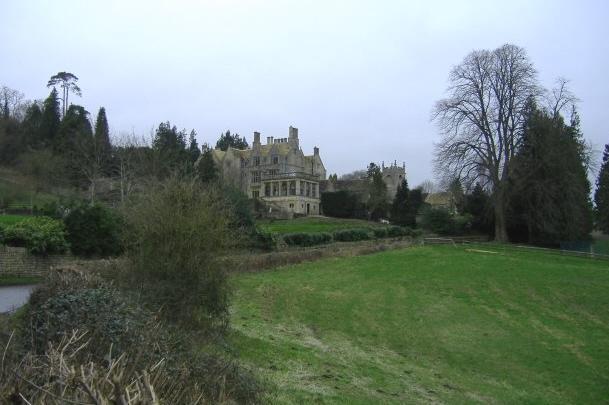
The characteristically doom laden English band Radiohead recorded their third studio album “Ok Computer” between 1996 and 1997 at St. Catherine’s Court studios in Bath. The album depicts a dystopia, dominated by a globalist technocracy. It seems a bitter irony that the Labour party were triumphantly, and cynically using D-Ream’s single “Things Can Only Get Better” as a campaign anthem. Remembering this episode of crass opportunism is jarring.
The positivity was badly misplaced because the new century was not a time of great promise. Radiohead’s prophecy proved to be correct. They envisaged the twenty-first century as a hellscape of alienation and atomisation. Even the title was a prediction that disembodied facsimiles of human voices would be recreated to replace real ones.
It seems more prescient today than when it was originally released. The new technological dawn was not a herald of greater things, it was a stark warning to humanity. Technology has not unshackled us, it has enslaved us. Our future as a once supremely intelligent and innovative species could be on the brink of destruction if we allow these machines to do our thinking for us.
Modernity does not necessarily equate improvement or amelioration. Tradition does not mean backward thinking either, it is actually the bedrock of our civilisation. There is an element of pathos in this whole story. It is poignant and rather apposite that a very modern group of musicians with highly sophisticated instruments, equipment and recording techniques decided to produce their album in the grounds of an old monastery, long dissolved in a post-religious age. In this haunting context, the music has a greater profundity which continues to resonate.
March 1st is St David’s Day, the annual celebration of Wales, Welsh history and culture. Wales has a unique status within the United Kingdom. It is regarded as the last surviving remnant of our Celtic origins. Since the Iron Age, Celtic tribes established their own separate kingdoms. These autonomous regions existed for over one thousand years. The situation changed dramatically when this island was subjected to continuous invasion.
However tribal life prevailed in spite of Roman occupation. Subsequent invasions had a much more deleterious effect on the indigenous people. The Ancient Britons had a long poetic tradition of prophecy and legend. Fragments of these poems only exist in the Irish, Cornish and Welsh dialects, but in England there is no trace of the literature. However this is a familiar story from imperial history, as Syriac manuscripts were also destroyed during the Macedonian occupation of Syria.
Wales, and Cornwall became sacred sanctuaries, and a necessary place of respite from foreign influence and oppression. Unlike Scotland, which ultimately manifested itself as a protectorate of England, Wales maintained a native identity. The Welsh people continue to maintain a strong identity which is based on myth, legend and lore rather than literal truth.
The repeated claim that the Welsh are the last surviving indigenous Britons is tenuous, considering the fact that recent DNA analysis has proven that an estimated 80% of the entire British population have Celtic, rather than Saxon or Viking genes. Part of this derives from a general misunderstanding surrounding the definitions of genetics and inheritance, many people think that they mean the same thing. However these are distinct, genetics is a biological and material fact, whereas inheritance is something that is acquired from culture and society. Language and religion, for instance, are inherited.
Invasions altered the culture of this country, but they had a barely perceptible effect on our genetics. The Welsh language is believed to be the oldest in Europe, and though the numbers are dwindling it is still spoken in parts of Wales. However the etymological root of Welsh was not completely severed, Celtic words still linger in English place names like Avon.
Despite this, the cultural dominance of the invaders overwhelmed the original cultures almost to the verge of extinction. However some historians have suggested that the interaction between the Celts and Saxons was not entirely violent, and there was some degree of affinity rather than rancour. Consequently a hybrid culture emerged. Further invasions did not engender such a positive response.
The Norman incursions had a particularly devastating impact, and Wales was no exception. A Welsh chronicler observed the violent subjugation of a once proud and defiant people, which culminated with the death of the last Welsh born prince Rhys ap Tewdwr.
The chronicler believed that his murder ultimately signified the end of a great civilisation. He portentously proclaimed, “and then fell the kingdom of the Britons”. The Norman overlords had no interest in adapting to the native culture. The vernacular languages were suppressed, and social mobility for the native people was predicated on acquiring the language of the oppressors.
The fourteenth century chronicler, Ranulf Higden lamented that,
“Children in school, contrary to the usage and custom of other nations, are compelled to drop their own language and to construe their lessons and other tasks in French….Also, gentleman’s children are taught to speak French from the time that they are rocked in their cradles and can talk and play with a child’s toy; and provincial men want to liken themselves to gentlemen, and try with great effort to speak French, so as to be more thought of”.
However the language of the original people did not wholly die, it simply evolved. Welsh and Cornish were preserved, and unlike other Celtic languages like Cumbric, these have survived into the twenty-first century.
St. David was a Welsh born saint, and a heroic figure for generations of Welsh people. Most of his life is shrouded in legend. The only information that has survived is contained within an 11th century document written by a Welsh bishop called Rhygyfarch. However historians have issued an important caveat, advising that this text is mainly propaganda, to undermine Anglo-Saxon influence and to promote a distinctly Welsh culture. Nonetheless, the story is magnificent and magical.
The story of St David is detailed In “Buchedd Dewi”, or “The Life of David” in English. He was the son of Non, a Welsh nun. Non lived at a convent called Ty Gwyn, which means “the white house”. Sanctus, the King of Ceredigion visited Non but she was “unhappily seized and exposed to the sacrilegious violence”. The consequence of this violent encounter was the conception of David.
When a local preacher visited Non, he refused to preach as he was so disturbed by her visibly pregnant state. She interpreted this as a sign that her child was destined to become a great preacher himself. A local ruler discovered that Non was about to give birth and plotted to have the child killed, but a ferocious storm descended.
Miraculously, as Non’s labour came to an end the storm began to clear. David arrived, bathed in light amongst the rocks. Non’s labour pains were so intense that as she grabbed the rocks, one rock split into two. The site is now a church dedicated to St. David, and the stone is concealed underneath the altar.
St. David fulfilled his mother’s destiny and became a great preacher. He established monastic communities throughout Wales, Cornwall and Brittany. According to the legend, St. David’s last prayer was for the Welsh people to receive a light to warn them of their death, so that they could be prepared. He received a vision where his wish was granted. He was told that they would receive the “dim light of mysterious tapers”. This legend remains the source of great comfort for generations of Welsh people.
Welsh people cling to the foundation myth of St. David, who created a beacon for the Welsh people amidst a rapidly dwindling and decaying civilisation. It remains a source of national pride that, unlike St. Patrick, St. George or St. Andrew, he is a native son. It is an inspiration that as other cultures and civilisations decline in the mindless pursuit for materialism, there is a corner of the world that strives to keep the flame alive.





 Ponderings