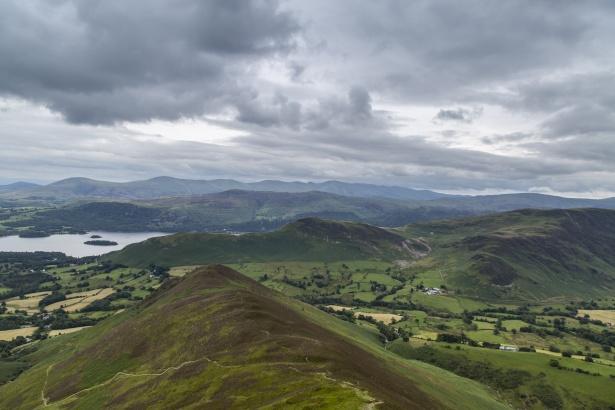
On the 7th April, 1770 the English poet William Wordsworth was born. It was fortuitous that he was born amidst the magic surroundings of the Lake District. This is a unique and astounding area of natural beauty, a phenomenon shaped by ancient geological history. The story of its creation is a thing of wonder.
Glaciers created a distinct landscape of scooped-out valleys, accompanied by a rough scree of angular stones which combined to form breccia. Skiddaw Slates were deposited first, then volcanic rocks emerged to produce the mountainous region of Langdale Pikes and Helvellyn. During the later Ice Age, an ice cap spread through the valleys which widened and deepened them. Once the ice retreated, piles of glacial debris known as moraines blocked the mouths of the valleys and produced the lakes.
Wordsworth could not help feeling enthralled by the nature that surrounded him, he spoke about “the ghostly language of the ancient earth”. He was a romantic poet, but he was also a product of the Enlightenment, an era of scientific and philosophical innovation which replaced theological dogma. Writers and thinkers cultivated a new respect for the natural world, and even developed an entirely new form of religious devotion to the Earth.
However this was just a revival of the old religion, the only exception was that they had discovered the language to illustrate it. Intellectuals were living under the misapprehension that they were living in an age of reason and had divested with superstition. Their illusions were shattered in the age of post-revolutionary terror that was inflicted upon continental Europe. This island was always immune to the contagion of radicalism, even the aberration of Cromwell was swiftly corrected. The ancient institutions of monarchy and church merely evolved with the changing times.
Wordsworth alluded to the preservation and conservation of our ancient landscape in his “Guide Through The District of the Lakes”. He imagined the solitary walker looking across the lakes and opined, “he may see or hear in fancy the winds sweeping over the lakes, or piping with a loud voice among the mountain peaks and lastly, may think of the primeval woods shedding and renewing their leaves with no human eye to notice, or human heart to regret or welcome the change”. Such plaintive words speak to a distinctly English soul.
It is an integral part of the English sensibility to find solace in nature, as J.B Priestley notes in his 1934 work “English Journey”, “give the English a foot or two of earth, and they will grow flowers in it; they do not willingly let go of the country-as the foreign people do-once they have settled in a town; they are all gardeners, perhaps country gentlemen at heart”. Our ancestors understood the sacred nature of the landscape, and we have always felt an atavistic longing to return to our roots. Wordsworth will always be the poet of the Lakes, and we must continue to remember him.


Leave a Reply