Tag: history

  • The Abomination of Desolation

    On the 6th February, 1685, King Charles II died. He is chiefly remembered as the King who returned from enforced exile to restore the Monarchy. As the newly restored Monarch he helped to rehabilitate the divided nations after years of Civil War, and his influence shaped the culture and identity of what would eventually become the United Kingdom.

    However at the time of his Restoration, the nations were neither united nor cohesive, and the Kingdom itself was a distant memory. His own father had been executed, and in the interregnum tyranny had not disappeared, it was reanimated, albeit in a different form. The King knew that his father had lost the trust of many of his subjects. They believed that he had failed them and even abrogated his duty.

    King Charles I left a painful legacy where the remnants of his Kingdom had been torn asunder. The responsibilities of his successor were unambiguous but onerous. His main task was to unify the divided entities of his realm. The political experiment of the Republic, or “Commonwealth” tested the concept of a united sovereign state without a sovereign. In theory, it was a worthy experiment but it was worthless in practice.

    Fundamentally, such an entity could not work as Kings ruled the state and the Church, and Scotland along with England. King Charles II was conflicted between these two nations. The Scottish leaders demanded that he must accept the Presbyterian tradition. They also stipulated that this must be imposed in England, and also Ireland, nations that had very different religious traditions.

    Charles found these demands offensive and insensitive. He felt personally affronted, but he was caught in an almost impossible bind between the various factions, all of whom believed that they had legitimate grievances. The bloody years of the Civil War had not been forgotten, the wounds were still fresh metaphorically speaking.

    The seventeenth century was an era of great turbulence, when religious fervour dominated the landscape and impacted the lives of everyone on these islands. The struggle to survive was not merely material, it was spiritual. The King felt this more keenly, as he had inherited the role of Defender of the Faith. It was a weighty inheritance, and a burden. Eventually, he gave a tacit acceptance of the Scots’ demands, but there were other religious forces that he had to quell.

    It was a time of extreme piety, and bigotry. It was almost impossible to find a compromise between implacable religious sects. Any sensible discussion was insoluble because reason was so limited. Self-righteousness obscured perceptions of others, and tribal loyalties were entrenched. This prevented a common understanding.

    The most extraordinary religious sect that emerged during this period was the Fifth Monarchists. They interpreted the fall of King Charles I as the end of the Fourth Monarchy, a Biblical prophecy from the Book of Daniel. Their prime belief was that the Restoration of the House of Stuart was an obstacle in the coming of the Fifth. Many followers were prepared to use violence in the name of the cause.

    However the sect foundered when their most prominent follower, Thomas Venner staged an insurrection in London. He was arrested and put to death. His zeal was undimmed, as he proclaimed from the gallows, “if they had been deceived, the Lord himself was their deceiver”. Venner’s martyrdom did not help the fortunes of this dwindling sect, and they vanished.

    The new Stuart King regarded religious extremism distasteful. One of his first interventions was the Declaration of Breda. This was his manifesto for his newly restored kingdom. It declared that, “we do Declare a Liberty to tender consciences; and that no Man shall be disquieted or called in question for differences of Opinion in matter of Religion, which do not disturb the Peace of the Kingdom”.

    The austere years of Cromwell had ended, and he was eager to reform and reconstitute his kingdom again. A dark chapter had closed.

    The contrast between his reign and the dictatorships that preceded him were stark. Suddenly his subjects were allowed to have fun, and laugh again with the advent of “Restoration drama”. One dramatist, Thomas Shadwell, met the approval of the King with his satire “The Virtuoso”. This featured a notorious character called Sir Nicholas Gimcrack, from which we derive the word “gimmick”. Gimcrack is pompous, arrogant and devoid of any imagination. The play ridicules his lack of humour, his earnestness and pedantry. He embodies all of the worst characteristics of narcissists and tyrants, as he seems impervious to notions of moderation and disagreement.

    Gimcrack is a figure of ridicule, instantly recognisable and familiar to the King. Shadwell’s satire was appreciated by him. This was noted by the diarist Samuel Pepys. Pepys recorded a meeting with the King in which he regaled him with scenes from the play and spent hours laughing about it. The culture of the Restoration, including the extravagance of the fashions has left an important legacy. It is a vital part of our identity, and we must never forget its importance.
  • Never Forget

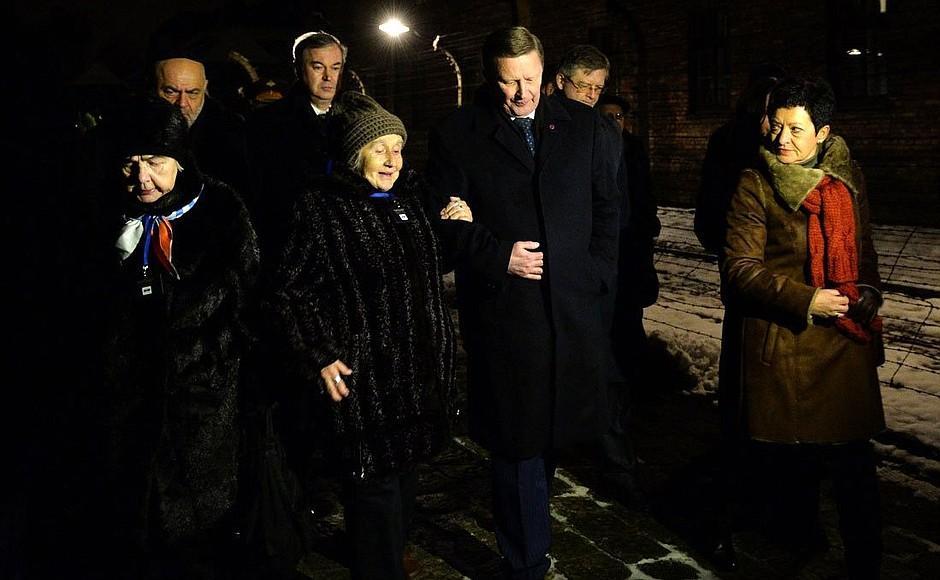
    On the 27th January, 1945 Red Army troops liberated Auschwitz concentration camp. The Second World War was drawing to a close, and as Nazi forces were on the verge of defeat, they tried to conceal their crimes. They evacuated the remaining prisoners, destroyed the gas chambers and crematoriums and dismantled the warehouses where those who had died from starvation and disease were corralled. Despite their vain attempts to erase it, the Soviets still managed to reveal to the rest of the world the brutal and inhumane realities of the Nazi project.

    The Auschwitz liberation helped to uncover the worst atrocity of the twentieth century. Since then, the world has paused to remember the Holocaust at every anniversary. It is vital that we continue to do this, we owe it to the six million Jews who were murdered. We must always keep them in our memories. We must never forget, because it negates our collective humanity if we simply banish their existence as a mere footnote in history.

    Dehumanisation was a central tenet of Nazi ideology. The Jews, in their twisted minds, were not human beings. They did not even consider them to be as lowly as animals, they actually believed that they were a disease. In the propaganda materials they portrayed them as a virus that was infecting European civilisation, and eradicating them was the only cure. It is horrific that such views were countenanced, it is even worse realising that their genocidal plans were enacted.

    This sickening act of mass murder is forever emblazoned upon our memories, footage of the concentration camps was captured on news reels and broadcast to the British population after the end of the war. We were convinced that the years of privation were worth it, if it meant securing a victory of good over evil.

    When British troops liberated the camps of Bergen Belsen, it left an indelible impression. Many of the young men who saw such levels of degradation and inhumanity were haunted for decades afterwards and could never speak about something, which by its own definition is unspeakable. One of them who did eventually speak was the actor Dirk Bogarde, who wrote extensively in his autobiography about his wartime experience.

    Bogarde states that, “when we opened up Belsen Camp, which was the first concentration camp any of us had seen, we didn’t even know what they were, we’d heard vague rumours that they were…The gates were opened and then I realised that I was looking at Dante’s Inferno…I still haven’t seen anything as dreadful. And never will. And a girl came up who spoke English, because she recognised one of the badges…and her breasts were like empty purses, she had no top on, and a pair of pyjamas, and no hair…She gave me a big kiss, which was very moving”.

    Shortly after this encounter, the girl died.

    Sadly, the Holocaust is dwindling in importance year after year and increasingly relegated as yet another part of history. My generation has grown up understanding that this is more than history, because our grandparents endured the war years. They were our only living connection to this dark episode in human history. Younger generations have no such connection, and it often appears meaningless to them.

    Tragically the Holocaust is considered simply a far off event, rather like the Boer war would have appeared to my peers. A distinction needs to be made though, between other wars in history and the Holocaust. The Holocaust was in fact, the culmination of modernity, where society had chosen to forget that we are all one human race.

    Society had chosen to forget this, because selfishness had triumphed. Amidst the horrors that unfolded during the war, Pope Pius XII pleaded to those bewitched by Hitler to heed the words of the Bible. He referred to the Book of Genesis which proclaimed that all humanity has a common origin, and all of the people on Earth had a duty to be charitable to one another. His pleas were eventually drowned out by the persuasively manipulative campaign of the Nazis.

    Another pitifully modern development is the increasing trivialisation of the Holocaust. This is something which has been utilised by malign political forces. It is a perverse method of moral inversion, and subversion. The most egregious examples occurred in the aftermath of the October 7th attacks when Hamas terrorists committed a pogrom in Israel.

    When Israel valiantly defended itself, the efforts to eliminate a racist, genocidal threat to its very existence were undermined. They were even accused of committing genocide themselves. These accusations are deeply hurtful, and belittle the memory of those who were the victims of an actual genocide.

    The Holocaust was an industrial level murder machine. It was a deliberate and intentional act, aimed at an entire people. It is true that there have been conflicts and atrocities in various parts of the world since 1945, but nothing of this level in western Europe since, so it is outrageous that words like “Nazi” and “fascist” are flung about whenever difficult political issues are contested. These words have been diluted, and their original meaning has been lost.

    It is a bitter irony that the individuals who use these words as insults have more resemblance to Nazis and fascists. These individuals attend marches denigrating the world’s only Jewish state, and argue that alternative political voices should be silenced. It is clear now more than ever that we understand what actually happened in history, to honour the memory of those who suffered and died.

  • The People’s King

    On the 20th January, 1936 King George V died. He was seventy years old. However he had spent years in poor health, originating from an accident in 1915. He was thrown from his horse while inspecting the troops on the French frontline. His injuries were compounded by his smoking addiction and he was later diagnosed with chronic bronchitis.

    Ten years later, on his doctors’ advice, he took an extended break to the Mediterranean coast as they believed that the sea air would improve his breathing. In 1928 his health declined further when he developed septicaemia. His health never truly recovered and as a consequence, he was forced to delegate many of his official duties to his son, the future King Edward VIII.

    Duty was always paramount to George. Unlike other Monarchs, he believed this was much more important than his ceremonial role. Compared to other Monarchs, he was not as enamoured by the fawning and frivolities associated with pageants or other superficial displays of Monarchical power. His sober and sombre attitude was a stark contrast to the excesses and appetites of his father, King Edward VII. In fact, he was the polar opposite, slightly built and shy.

    He did not enjoy public attention, he only participated in his duties because he understood that these things were essential. He did not adjust as well to the role as Edward did, for him it felt normal. However, George was awkward. His diffidence, ironically, was an attribute that ultimately saved him and the future of the Monarchy.

    His work ethic was admirable, in spite of his illness he made sure to attend official engagements whenever and wherever possible. It was at often great cost to his already ailing health. He was reluctant to rest and relinquish his duties. However his health took a grave turn during the winter of 1929. He was recovering from lung surgery and was forced to take another rest cure. He was sent to the seaside town of Bognor to convalesce. The civic leaders of the town were honoured to have such an illustrious guest, and consequently the suffix “Regis” was added to the name to reflect the King’s association.

    His tireless sense of duty was something that was acknowledged by representatives of the Government. George had set a new standard of behaviour for Monarchs; his conscientious character distinguished him from the leisurely antics of his father. Edward always looked the epitome of the country squire, often clad in tweeds and either engaged in a hunting party or watching the races. In contrast, George was always in the same suit, and was indifferent to the whims of fashion. He took his role as King extremely seriously and endeavoured to serve his people to the best of his ability.

    His diligence and humility set him apart from the figureheads of other European countries. The continent was in crisis, and struggling to maintain a sense of homogeneity and unity. It was actually a loosely connected entity that was fracturing from within. The United Kingdom was not immune to these effects either, the culture and society was changing rapidly.

    It was frightening that the old order was no longer considered a certainty or an inevitability anymore. During the early part of his reign nascent political movements like socialism, communism and fascism emerged. These were populist revolts against an established social order. The Liberal government, fearing possible insurrection, introduced social welfare policies to dampen down this growing threat. Meanwhile in Europe militarism continued almost unabated, culminating with the outbreak of the First World War. The King found himself in a difficult and dangerous position. However he chose to put his own people first, before making any personal considerations or decisions.

    He anglicised the Royal Family, severing them from centuries of German history and culture. He was now head of the “House of Windsor” and his relations were no longer the Battenbergs, they were the Mountbattens. This was a swift and deliberate response to the feelings of antipathy towards Germans that were widespread across the Kingdom.

    He also reformed and democratised the honours system, establishing the Companions of Honour. These were awarded to people in public service, the first recipients of these medals were the leaders of the Metal Workers, the Railwaymen and the Transport Unions. It helped appease those who sought socialist revolution, and even regicide. George re-established the charitable role of the Monarchy and exercised noblesse oblige. His subjects were thankful for it, and for his impeccable morality.

    In 1935 the King celebrated his Silver Jubilee. The nation united in a spirit of warmth and familiarity, a glorious and harmonious picture totally divorced from the dark totalitarianism that had enveloped Germany and Italy. The serenity was broken six months later when his death was announced. The calm dignity he exuded throughout his reign was crucial in securing the continuity of the Monarchy, and cementing our national identity.

  • Chipping Away

    On the 20th December, 1954 the acclaimed author and screenwriter James Hilton died. His most famous work was “Goodbye Mr Chips”. This slim novella was published in 1934 but contains lessons which resonate throughout the ages. It is a romantic evocation of a schoolmaster at Brookfield, a provincial public school for boys. Mr. Chipping or “Chips” is the archetypal teacher, a warm, paternalistic and familiar presence in a world that refuses to stay still.

    Chips knows that history has undoubtedly shaped him, but he is uncomfortably aware that the future is a constant intrusion into his carefully ordered life. Chips finds himself in later years,a solitary widower after losing both his wife and child in childbirth. He is bereft of biological children, but nonetheless perceives himself as the adopted father of hundreds of boys. The boys who were fortunate enough to have been taught by him regard him as a mentor and a confidante, and by extension a father figure.

    The old “boys” of the school include high ranking church ministers, top businessmen, judges, lawyers and assorted pillars of the community. Chips’ role in their success has been incalculable, he is not merely a teacher to them he is the arbiter of moral correction. His lessons in civilisation are set and precise formulas for everyone to follow, this, he believes, is the natural order of everything.

    Chips’ is a traditionalist and a conservative. He is an unfashionable figure in a world that is constantly striving for modernity and the future. However his political and ethical position is not completely implacable, as it is revealed that his young wife helped to soften his stance. In their brief but eventful marriage he opens himself up to her liberal outlook.

    Under her influence he is willing and receptive to new ideas, and his prejudices, particularly those around class, are confounded. Yet his actual standards never change, and he refuses to waver, even in the face of external pressures, as Hilton explains,

    “Because always, whatever happened and however the avenues of politics twisted and curved, he had faith in England, in English flesh and blood, and in Brookfield as a place whose ultimate worth depended on whether she fitted herself into the English scene with dignity and without disproportion”.

    Chips is ultimately a product of a specific time and place. He is the personification of Victorian England, an upstanding figure, both patrician and correct.

    However the radicalism of the early twentieth century is alarming to him, along with the increasing appetite for war. As the First World War erupts, he is forced out of retirement to replace the younger masters who are conscripted. Every Sunday assembly is punctuated with a roll call of death notices, a poignant reminder of the waste wrought by war. An interesting twist occurs when it is announced that the master of German had been killed, another victim of this random and senseless event in history. Chips correctly admonishes the boys who denounced him as the “enemy” when in fact he was called up by his country’s government and had no real choice in the matter.

    Chips never forgets any of his pupils, he continues to invite them to tea at his lodgings. He is loved for his wisdom, his kindness and his tireless duty. The concluding chapter, when Chips says his final goodbye is so touching it is difficult to read it without tears. The vision of England that Hilton depicts, of immaculate cricket lawns and impeccable manners may not have existed, but it is recognised by most of us as the country in which we would like to live.

    This hopeful vision is dwindling year after year and seems more remote than ever in an age of technocratic globalism. Cynics paint this as a sanitised view of the country, and sneer at the supposed absurdity, complaining that it is excessively sentimental.

    However this criticism is hollow and contemptuous, revealing a coarseness and a bluntness which we have sadly become too accustomed to, it offers nothing positive. Hilton’s elegy to a lost England is timely, and even more necessary today than when it was written.

  • The Last Walk

    The mission to reach the South Pole was a bleak and forbidding endeavour. It was a testing expedition for even the most battle hardened men. Captain Scott’s journey across the barren and blank Antarctic was not just exacting physically, it was a supreme test of psychological endurance.

    His team were determined to reach their goal, in spite of the dangers to life. One of his men, Captain Oates displayed the most extreme example of courage in the face of adversity. Lawrence Oates heroically sacrificed his mind, body and spirit to save the mission of his fellow explorers.

    He left the tent to walk out into certain death with the famous last words,

    “I am just going outside and may be some time”.

    These words, so genteel and polite were befitting of an English gentleman, and characteristic of an officer who had served his country proudly and courageously in the Second Boer War. In that conflict he received a gunshot wound in his left thigh bone, which left his left leg an inch shorter than his right leg.

    However he remained fearless and undaunted by the scale of fighting, he did not want to give up. In spite of the clamouring calls from the other soldiers, he urged them to persevere, stating “we came to fight, not to surrender”. His fierce tenacity and bravery impressed military luminaries of the time, like Lord Kitchener.

    However the Antarctic was an entirely different frontier, and in this situation he had to surrender. He died in a blizzard on the 17th March 1912. It was his 32nd birthday. He had gangrene and frostbite and knew that his condition was beyond hope. His last and lonely walk into oblivion is immortalised in history.

    This was the age of exploration, and young men dreamed of becoming explorers. No frontier seemed too remote or arduous to them. It was the greatest competition on planet Earth, and many were determined to win. It did not matter that they sacrificed their lives to achieve it. Oates was a true hero, but in a typically British understated way. His courage lies within his willingness to sacrifice himself for the team.

  • The Inheritor Of Unfulfilled Renown

    On the 20th of November, 1752 the English poet Thomas Chatterton was born. He was born in Bristol to a family who played an important and prestigious role in the office of sexton for St Mary Radcliffe Church. His mother, Sarah Chatterton was a part-time seamstress. His father, also called Thomas, was a numismatist who died shortly after he was born.

    He was educated at Edward Colston’s charity school, reputedly on the site of a ruined Carmelite convent. His childhood was steeped in mystery and myth, but also difficulty and poverty. This inauspicious start in life did not bode well for his future. In spite of his efforts to establish himself as a professional poet he died at the tragically young age of 17. His death occurred in murky circumstances. Many assumed that he had taken his own life.

    However other commentators have suggested that his demise may have been accidental, as his death was attributed to arsenic poisoning. Arsenic was a common treatment for venereal disease at that time. Nonetheless his death still created a myth that lingers to this day, of the tortured, doomed and misunderstood poet destined for obscurity.

    His death and the legend that surrounded it influenced other writers and artists for at least a century afterwards, and beyond. In 1835 the French playwright Alfred de Vigny wrote the visionary drama “Chatterton”. The troubled Victorian poet and Catholic mystic Francis Thompson believed that he was saved from suicide by the comforting presence of Chatterton’s ghost.

    The myth was also immortalised in the popular imagination by the pre-Raphaelite artist Henry Wallis in his 1856 painting “The Death of Chatterton”. In 2010 the outsider artist George Harding was inspired to create his own interpretation of this iconic image in the painting “Everything is Real except God and Death”, inspired by his experience as an in-patient at Bethlem hospital.

    Harding re-imagined the mythic figure of Chatterton, and re-created the infamous death scene with himself at the centre. However in the painting, Harding is not dead, but in a state of madness and confusion. In the grip of his delusion, he has no head, in its place is the Eye of Providence. The painting illustrates that disturbing and unsettling no-man’s land that exists between reality and insanity in which death itself has no meaning.

    Chatterton’s extraordinary life and death provides a dark inspiration for those who have found themselves adrift in society. Chatterton was an imaginative and sensitive child. When he was six he amused himself with solitary pursuits, and spent entire days reading and writing. At school he was prone to daydreaming, and neglected his academic work. He started writing poetry at the age of eleven, and this was encouraged by his mother.

    He was fascinated by history, particularly folklore and many of his earliest writings illuminate the old myths and tales of England. The ancient legends and landscapes of England, especially Bristol animated his verse. This was something that he cultivated while still a schoolboy at Colston’s school. It was staggering to consider that he was only sixteen, and unlike many youths of today who are only too keen to forge ahead and create new ideas for the future, he was more inclined to look back into the past.

    Chatterton adored the rarefied world of Medieval England. This was a period replete with ornate mythology and lore. It was a realm so captivating that he would frequently lose himself within it. He even adopted the persona of a Medieval poet, and attempted to appropriate the syntax and style. He created the pseudonym “Thomas Rowley”. The “Rowley” poems are an astounding testament to his literary and linguistic talents, honed at such a young age.

    Chatterton believed that the character that he imagined, of a Medieval scholar, scribe and Priest, was so convincing, that he could fool the literary establishment. He appealed to the great and good of Bristol. He told them that he had discovered a neglected masterpiece written by an unknown and unrenowned poet from the fifteenth century. However they were unwilling to remunerate him.

    Unchastened by this rejection, he sent his appeal further, to the esteemed Horace Walpole, who initially believed his account until he was informed of Chatterton’s age. He was sceptical of the veracity of the poems, and consulted his friend Thomas Gray. Gray instantly declared that the poems were fake. Walpole wrote a denouncing letter to Chatterton in which he called his poems “facile”, and the correspondence ended.

    The rejection wounded him, and it sent Chatterton on a path to self-destruction, and led to his untimely demise. It seems tragic now to consider that he died not knowing that his work of medieval parody and pastiche would become a major influence on the Romantic poets, and inspire further generations of English poets.

  • The Hero King

    On the 13th November, 1312 King Edward III was born. At the tender age of fourteen, he was crowned King. His accession was marked with a three day tournament. This celebration was a stark contrast to the decidedly dour attitude of his father and predecessor, Edward II, who actually banned such festivities.

    The young Edward III certainly proved himself to be a master of the joust. However this was just a foretaste of his long, magnificent and extraordinary rule. He was the personification of the age of knights, fantasy castles, honours, arms, pageantry and jousts. England’s national identity became steeped in the semiotics of war, and Edward was the warrior in chief leading his tribe in glory.

    However Edward’s ascendance as King was not seamless. His father, Edward II was deeply unpopular, except for one particular member of his household with whom he lavished flattery and favour, to the exclusion of his trusted advisers and even his long suffering wife. Piers Gaveston was the King’s favourite, provoking understandable suspicion, jealousy and contempt. Faced with growing pressure from the barons, and his wife’s family he sent Gaveston into exile. Edward’s wife, Queen Isabella, came from an illustrious Royal house in France, and his emotional detachment from her was enough to cause consternation and disquiet from the French Monarchy.

    Medieval England had only a semblance of stability. There was always a hint of tension between the Crown and the noble ranks, particularly amongst the barons. This was enough to disturb and endanger the cohesion of the Kingdom. In addition to this, England had an almost intractable dispute with the rival Kingdom of Scotland, and the borderlands of Wales (known as the Marches). Edward II proved himself to be a disaster on both accounts. His attempts to reconcile these factions ended in tragedy.

    The King was evidently lacking in any resolve to improve hostilities, so the bullying barons decided the direction for him. Gaveston was murdered in grisly circumstances and his estranged wife began an affair with the notorious Marcher Lord, Roger Mortimer. Edward was humiliated, and his authority was weakened. He sought sanctuary in Wales, but he was later captured and then murdered at the behest of Mortimer.

    The Kingdom was effectively relinquished to Mortimer, who seized land and power for himself. However, in spite of his age, the new King used cunning to thwart the tyrannical influence of Mortimer. A meeting was due to take place at Nottingham Castle to debate the affairs of state. While Mortimer slept, Edward III and his troops entered the Castle via an underground tunnel. Mortimer received a sudden and rude awakening, as he was accosted, arrested, condemned and eventually executed at Tyburn as a traitor.

    Edward III was determined not to repeat the mistakes of his father. England had been left in a perilous state, and the King’s legacy was characterised by degeneracy and ignominy. He was keen to reverse the negative reputation of the office of King and acquired a deeper insight into the actual workings of the court, and worked hard to earn back the respect of the nobles.

    A unique and distinct aristocratic culture was cultivated by the King, inspired by the legend of King Arthur and the Knights of the Round Table. However in spite of all of these romantic allusions, nothing could ever disguise the fact that this was a society that glorified violence and conquest. Edward pursued both, with successful military campaigns in Scotland and France.

    The new soldier-King instituted St. George as the patron saint of England, supplanting native born saints particularly St Edmund. George was the saint of nobles and soldiers, and it seemed suitably apt and pertinent to adapt his legacy as an honourable example to follow for all true English gentlemen.

    The art of war almost became a personal obsession for him. Edward realised that a new weapon was proving to be a major success on the battlefield, namely the longbow. Consequently he enacted a law banning all sports, except archery. This one act consolidated England as a formidable and fearsome military power, as victory was guaranteed with a highly skilled army.

    The English people responded to the King’s prowess as a military leader with a renewed feeling of confidence, which was observed by the French chronicler Jean Froissart. He noted that, “the English will never love and honour their king unless he be victorious and a lover of arms and war against their neighbours and especially against such as are great and richer than themselves”. The campaign in France, in particular, was a source of pride, after the tribulations of the Norman Conquest.

    Edward’s impressive fifty year reign left an important legacy, chiefly in terms of England and its military capability. He was responsible for raising the standard of the English soldier, marching courageously under the banner of St. George. This is something which we must be thankful for, as he alone represents dignity and honour.

  • Tower of Ivory, House of Gold

    Human imagination is vast, and grandiose in its scope. Human capability and ingenuity seems almost infinite. It is apparent in the variety of the architecture around us, from the most ornate castles and palaces and beyond. The most magnificent examples of these are preserved in posterity, but others have been lost to attrition, war or natural disaster.

    It is a testament to our strengths and abilities as a creative, ambitious and inventive species that many of our oldest buildings remain. It is impressive, considering that these were made with basic materials that derive from nature, and fashioned with human hands. In spite of their humble and ordinary origins, there is still an otherworldly quality attached to certain buildings, like cathedrals. Christian civilisation traditionally looked upwards for inspiration, and sought both meaning and succour in the higher realm. The design symbolises the human desire for spiritual ascendance, and transcendence beyond physical reality.

    Sacred spaces do not necessarily play as much of a central role in our lives, in comparison to our ancestors. However they still have a sentimental value. We remain emotionally attached to these buildings because they represent something profound. The spiritual significance has dwindled in importance in our increasingly cynical and sceptical age, but we still acknowledge the historical importance. Our past treasures are always worth preserving, but often this realisation comes to us far too late. We realised this during the first few decades of the twentieth century when a preponderance of modernists and futurists brought new ideas that captured the popular imagination. Unwittingly this fashionable scorn for heritage and tradition allowed crudely atheistic, secular and mechanistic political ideologies to foment as well.

    The inevitable consequence of this was the Second World War, and all of the precious conventions and convictions that we once held dear were turned upside down. Civilisation itself was on the brink of annihilation. Barbarism was supplanting civility. When Coventry Cathedral was bombed in the Luftwaffe raids, this was perceived as a grievous insult to the English people and a grave assault upon the very soul of England. The Cathedral was a priceless and irreparable relic of Medieval England, instantly condemned to the ashes of history.

    This was a devious tactic of war. It has been employed by every invading force since the beginning of warfare. The Nazis were no different to the barbarians of ancient times, they were just more sophisticated in their actions. The attack on the Cathedral was calculated and deliberate. They knew that this one action could demoralise the entire nation. A demoralised people are much easier to subdue, the first stage of conquest in every war.

    The Nazis followed a familiar pattern in history. The Babylonians were convinced that they could quell the Israelites when King Solomon’s Temple was destroyed by King Nebuchadnezzer’s army. However, the Israelites kept their resolve and dignity in spite of the desecration, and similarly the British kept theirs, and evil was ultimately defeated.

    However the task of rebuilding a shattered society was much harder to achieve. Houses, offices and factories could be rebuilt but it was virtually impossible to repair morale. Life in post-war Britain was austere, spare and fraught. We may have won the war, but it was at a considerable cost to our emotional well-being.

    The entire nation was traumatised by the experience. The remnants of war were evident in the rubble and detritus, but also in the broken people. The governments that were elected after the war took a decidedly paternalistic approach to politics. The state managed the practicalities of housing, health and public infrastructure.

    However societal rehabilitation was not easy, as bureaucrats were not equipped to do this, the inner resilience of the British people was the only attribute that could be depended upon. We have been an indefatigable people throughout history. We are less inclined to succumb to apathy and despair, even in the aftermath of the English Civil Wars there was a sense of a common purpose and a strong desire to rebuild society.

    The post-war governments were praised for their efficiency and their dedication to the restoration of the economy. However this is a kind of folk memory, rather than literal history that prevails, an illusion of a strong, stable, secure and unified nation. On the surface, this may have been true, but underneath there were troubling insecurities.

    Fascism was defeated, but communism remained a threat to democracy, and the nation state. The young were particularly vulnerable to the allure of it, with its false promises and simplistic answers to the struggles of life. Idealists always look for something tangible as a solution, and believe in the rhetoric of charismatic political leaders.

    It is tragic to consider that the young and the gullible lack the experience and the wisdom to understand that perfection in society is impossible. They are easy prey for political charlatans who use sophistry to lure them into their web of deceit. Similarly, naivety can inspire the most reckless behaviour, all in a vain bid to solve the eternal mystery of mankind’s suffering. In William Golding’s visionary novel “The Spire”, Dean Jocelin receives a message from God, telling him that he has a divine mission to build a hundred foot spire.

    However his plan is completely impractical, and technically impossible, yet he pursues this project like a man possessed. Eventually his delusions of grandeur lead to his untimely demise. The Spire itself is a metaphor for the folly of man, a creature imbued with an innate sense of his own superiority, but in reality as fragile as a leaf in the wind. No creation supersedes nature, we must remember this.

  • The Dark Season

    The glorious season of autumn is dwindling and the bleaker winter months are creeping upon us. However our ancestors had a very real and visceral dread of the cold, dark days and nights. Without twenty-first century comforts and luxuries, this was a season that could literally mean death.

    In a primitive and superstitious age devoid of any science or technology, old customs provided the only solace for the troubles and problems that people suffered. Christianity was the official religion of this country, but the original belief system of the native people had never truly dissipated. In the absence of logic and reason, the old rituals were utilised, sometimes to ward off bad luck. These activities were clandestine, but they continued in spite of official censure. However these were not tolerated for long. Witchcraft in particular was considered a grave heresy by the authorities.

    When King James VI ascended to the throne he was both fascinated and fearful of the occult. Later on in his reign he became convinced that his divine authority was under threat, and considered that it was even possible that his power would eventually be usurped by witchcraft. In 1604 he persuaded the English Parliament to make witchcraft a capital offence. The law meant that anyone convicted would receive the death penalty. Little did he know that one year later, the real threat to his life was manifested entirely differently. Catholic terrorists, rather than witches, had plotted to kill him instead.

    James’ successor, King Charles I pursued this campaign of persecution with renewed vigour. A trusted lawyer, and clergyman’s son named Matthew Hopkins was appointed the “Witchfinder General”. The entire country was convinced that witches were a force for evil. However the concept of tolerance did not exist in those days and difference was not something to be celebrated, it was actively discouraged.

    Societal conformity was almost rigidly adhered to, this was never questioned or challenged. Hopkins’ witch hunt targeted obvious outsiders, and very often their accusers were motivated solely by personal malice. Many of those accused of witchcraft were simply scapegoats. Failing harvests, sick livestock and infant deaths were tragedies.

    However, people needed to find a cause and it was much easier to blame an errant neighbour than take any personal responsibility for what could have been either an honest mistake or an act of simple neglect. The solitary eccentrics of the village were the most likely people to be accused, and later condemned.

    In remote communities, isolated individuals, many of them women, were convenient targets. Older women were especially vulnerable, a lonely and depressed elderly woman talking to herself could be accused of casting a devilish spell, those who could only rely on a cat for a companion were castigated for keeping an animal possessed with Satan’s spirit.

    Hopkins’ and his fellow witch hunters were natural allies of the Puritan cause. Their agenda was inspired by the same level of piety, and bigotry. Amidst the turmoil of the English Civil Wars the most enterprising and ambitious amongst them were rewarded by their victorious leader Oliver Cromwell. They were granted land in Ireland. Other Puritans sought new opportunities in the British colonies of North America.

    It is significant that the same sensibility that motivated the witch hunters in England found a home in the “new world”. The state of Massachusetts became notorious for its “witch trials”. Many of us can still see parallels between the witch hunts of today and the dark episodes of the past. It is a shame that this mode of thinking has become ingrained upon our consciousness and we cannot learn from history.

  • A Mile From Cheney Row

    On the 27th September, 1825 the first steam locomotive was launched in Stockton. This otherwise unassuming coal mining town in North-East England instantly made world history. The launch ushered in a new era, which changed the future of this country, and transformed societies all over the world.

    The advent of the first train, and the construction of the railway network hastened the rapid industrialisation of Great Britain. This was the brainchild of one man, George Stephenson. Stephenson was a self-taught engineer with impressive ingenuity and determination. He collaborated with the businessman Edward Pease to construct a unified transportation system that combined iron tracks, flanged wheels and steam power.

    The original 26 mile line has been replicated for the past 200 hundred years, covering the globe with more than 800,000 miles of track. The railway boon brought new economic fortunes across the country and prevented the decline of rural villages. He understood that farmers and merchants required a public route to sell goods, and coal needed a more efficient form of transportation from the mines to the docks.

    He demonstrated the urgency of a rail link by walking from Witton through Darlington and on to Stockton. It revealed the impracticality of canals and the coach and horse as modes of commercial travel and highlighted the necessity of a national rail network. Work began in earnest, and along with railway construction, other services and amenities were put into place such as railway stations, signals and timetables. These are the basic elements of train travel which we now take for granted, but were innovative for the time.

    The railway began in the North of England, but the South, particularly London literally depended upon the network for its very survival. As the population expanded, demand for coal to heat houses and power factories increased. Railway lines were built to ferry the coal directly to the docks. Railway labourers, colloquially known as “navvies” used 100,000 bricks per day in the construction of London’s railway arches, a familiar sight in the city today.

    However, as cities industrialised, the allure of the country grew. The capital, in particular soon became a place of alienation and decadence, the epicentre of all of the ills of urbanisation. In 1883, the Cheap Trains Act allowed Londoners to decamp to the commuter belt of Surrey, as travelling outside the centre became more affordable.

    Many Londoners were forced into permanent exile by the peasouper fogs that obscured the city’s skies and they found vital refuge in this rural idyll. However others were less fortunate and could only visit rural counties for respite on the weekends.

    E.M Forster was so enamoured of the trains that he enthused,

    “They are our gates to the glorious and unknown…through them we pass out into adventure and sunshine, to them, alas! We return.”

    Ann Bronte also enjoyed the benefits of railway travel. She escaped the dirty, industrialised skies of Bradford and travelled to Scarborough, a seaside town renowned for the healing and calming properties of its spa waters.

    Railways had immense commercial advantages, and offered more leisure opportunities. However there were other benefits. News travelled faster, ensuring the democracy of this country remained intact. The construction of suburbia itself was a new democratic phenomenon, a creation entirely of the railway.

    Most of us have only experienced provincial life. 84% of the population now live in the suburbs. In 1973, Sir John Betjeman paid an affectionate tribute to English suburbia with a BBC documentary film called “Metroland”. His fondness for small scale English pride and patriotism was a defiant riposte to the metropolitan elites who viewed their provincial neighbours with sneering condescension and contempt.

    The snobbery surrounding supposedly small-minded suburbanites was encapsulated by the patronising pomposity expressed by Jonathan Miller. Miller was the epitome of an arrogant London liberal and frequently appeared on television programmes pontificating rather loftily about politics. He was reportedly so horrified by the popularity of Margaret Thatcher, he complained in a notoriously bilious and spiteful rant that she represented “odious, suburban gentility and sentimental, saccharine patriotism, catering the worst elements of commuter idiocy.”

    Even now, such nastiness prevails. Prejudices about people categorised as lower middle-class remain.

    It is considered socially acceptable to rail against aspirational, law abiding, god fearing folk with simple pleasures. People who make up the bulk of the country’s population are routinely insulted and dehumanised, merely for the supposed crime of voting Conservative and reading the Daily Mail every day. However these are the only people who have pride in our country and seek unity and continuity, and this is thanks to the tenacity of George Stephenson.