Twenty-four years ago, on an unseasonably warm September morning, two hijacked planes ploughed into the Twin Towers. The worst terrorist attack upon Americans since Pearl Harbour unfolded in front of the world’s eyes. The entire world looked on in horror as two archetypal and triumphant symbols of capitalist modernity crumbled into dust. Thousands of people died in the wreckage. None of us have forgotten that tragic day as 9/11 is seared forever on our memories.
It is often remarked that this was when the 21st century truly began. This horrific episode was broadcast in real time all over the world and almost simultaneously amateur footage captured by the survivors was preserved and then reproduced on the Internet. The Internet was a novelty back then, but many unscrupulous individuals soon realised that these gruesome scenes could be exploited and monetised. It was the postmodern equivalent of rubbernecking.
In the aftermath of the attacks a series of unpalatable elements coincided. Globalisation accelerated, displacing and even removing the conventions that we once cherished and took for granted. History itself was disparaged, during the twentieth century and before it was appreciated and even revered. It was regarded as a noble and prestigious pursuit of learning and a necessary exercise in understanding the present. However the Millennial interpretation was completely different. A new and perplexing idea entered the discourse, history, according to these self-appointed prophets, was merely a tool of deception and manipulation.
However the counter narrative was replete with contradictions. Ostensibly the terrorists chose their target to wreak revenge upon America, and their supposedly imperialist foreign policy. Vocal critics of America in the UK, seemingly divested themselves of any empathy, tact or sensitivity and excused the terrorists for this very reason.
It was shocking that these pious individuals displayed more sympathy for the terrorists and insinuated that they were the victims of American aggression, even suggesting that they agreed with their actions. These were the same people who also condemned in similarly vociferous terms the deaths of innocent people in foreign conflicts. Adding insult to injury, they even had the temerity to advise the American government that retaliation for this heinous act was inappropriate.
The most obstinate and intransigent critics of imperialism are ignorant that their society is a precious gift from the imperial civilisations of Ancient Greece and Rome. These Empires provided democracy, law and liberty but the self-righteous are unaware that these are not universal concepts, because they have such a binary view of the world.
It was inevitable that such a vivid, visual and extreme atrocity aroused suspicion and rumour, and eventually the rise of internet conspiracy theorists. It is not an understatement to say that the world changed irrevocably from that day. This murderous and dastardly act was enacted with clinical efficiency.
9/11 marked the beginning of what we now know as the technocracy. The Millennial age is Aldous Huxley’s nightmare dystopia made flesh. However we are all so deeply embedded within this Brave New World that we have forgotten how abnormal this is, normality has been forgotten. The generation of adults who were born in the Millennial age do not know anything else, for them this is how the world has always been.
This is an era where physical reality has foundered, and a virtual one has sprung up in its place. An entirely artificial world has rendered a world of unreality where borders are immaterial, the past has no meaning and the human individual has been diminished as a mechanical part in a vast world system. No human appears to have any agency, and the fate of that human has been mapped out for them. Algorithms have rewritten the stories of humanity, as libraries dedicated to the art of learning have shut and machines have replaced them.
Computers are a substitute for information but they cannot replicate human intelligence and imagination. They are an insidious imperial force. Unique cultures have been destroyed in their wake, and people have had no choice but to totally surrender their identity.
Sadly, there is no clamour for “decolonisation” in the age of the machine. There are no movements to liberate us from technological enslavement. In an age characterised by apathy, dislocation, deracination, atomisation and alienation, our future as a dynamic species is doomed.
On the 1st September, 1939 Nazi Germany invaded Poland, an egregious act of aggression which spurred Britain and France to declare War. German imperial expansion was rooted within the nineteenth century ambitions of the Kaisers. However the twentieth century incarnation was darker, sinister and murderous, demonstrating an arrogance on a psychopathic scale.
Germany was humiliated and bankrupted after losing the First World War, a painful consequence of the punishing reparations. A broken populace was easily manipulated, and convinced by falsely charismatic politicians. Adolf Hitler offered fake promises, presenting himself as the nation’s saviour, but instead of a hopeful message of peace and reconciliation he set himself and his followers on a warpath of revenge.
It is astonishing to reflect upon the fact that Germany, a country that was renowned all over the world for its culture, intellect and civilisation could have descended into such primitive barbarism. However devious individuals have always known how to harness the tools of psychological manipulation, and can even convince the most intelligent and rational people to suspend their reasoning and their morals.
Chillingly, Hitler justified his pathological hatred of the “other” with allusions to scientific theory, a clear misrepresentation and distortion of biology, claiming,
“Apes massacre all fringe elements as alien to their community. What is valid for monkeys must be all the more valid for humans”. This perverse reinterpretation of Darwinism ultimately divests kindness from human society, and simply renders it a cruel and stark struggle for survival.
In his disturbing world view the weaker elements in society have to be sacrificed for the good of the clan, tribe or troop. Now, this sounds bleak, dehumanising and reductive. However during that time vulnerable and demoralised people were susceptible and the message must have resonated, albeit in a somewhat pessimistic, and fatalistic way.
Tragically the good people of Germany had momentarily lost their faith in the heavenly saviour of mankind, and instead sought succour in this ungodly and sadistic version who did not help the weak, but scorned and eventually condemned them. In addition to this, Hitler had a future “purified” vision of Germany and Germans. He claimed that “all who are not of good race in this world are chaff”. This shocking belief in a supposed “master race” then inspired his genocidal rampage across Europe.
The twentieth century spawned psychopathic gods. It was a century of cynicism, a period of history in which once cherished beliefs waned. People were less inclined to worship old gods. They sanctified their fellow mortals instead. Worshipping false idols was an unwitting disaster for the world. Totalitarianism filled the void in the absence of religion, and it was a phenomenon that ran across the political spectrum, from the far left to the far right.
The priest and writer Richard Neuhaus reflected that if religion carves itself out of the public square then the square will “be filled by the agent left in control of the public square, the state. In this manner, a perverse notion of the disestablishment of religion leads to the establishment of the state as church”. In post-revolutionary Russia there were no qualms about destroying religion. Bishops were shot, crucified or condemned to a slow death in a prison camp. In 1926 monasteries were converted into labour camps, and monks were condemned to spend their remaining days on Earth toiling there.
Man-made laws can be altered, but divine law is fixed and eternal. It is a supreme act of blasphemy to attach godlike attributes to flawed and fallible humans. The last world war was a vivid reminder of the evil that unfolded when people divested themselves of religion.
On the 26th August, 1676 the renowned British statesman Sir Robert Walpole was born. In 1721 he became the first Prime Minister of Great Britain. He was the longest serving Premier in our history. He established the Whig ascendancy in this country, reducing Tory dominance and influence for decades. He left an important legacy, and altered the course of British politics. He ultimately defined the role of Prime Minister, and was a model for those who succeeded him in office.
His impressive reign was known colloquially as the “Robinocracy”. Walpole himself epitomised the era of excess, materialism and global ambition. His imposing appearance and personality symbolised the culture of this period. He was both literally and metaphorically larger than life. He had a gargantuan appetite for food, drink, sex, work, money and power.
His prominence in public life began auspiciously. He quickly grasped the dark arts of politics and was an expert with all of the tricks and tools of manipulation. Politics was, and still is a game, and he could play other people to acquire the things that he wanted. He could be charming, but devious as well. Walpole’s rise to power could have only been achieved after the seismic events of the “Glorious Revolution”. This changed the fundamental character, and conduct of the nation.
The Revolution helped to create modern public finance, and new concepts and innovations like the stock market, speculation, boom and conversely, bust. The most notorious example of this new phenomena was the controversy which became known as the “South Sea Bubble”. The South Sea Company was a joint stock company trading in overseas colonies. It was granted a monopoly to provide African slaves to Spanish America. These were considered assets, but to encourage investment profits were exaggerated.
Spain and Britain were bitter rivals, and profits accrued in this trade were actually minimal. However the enmity between two major European trading powers did not curb the personal ambitions of the investors, who were convinced that this could be an easy path to riches. When the inevitable crash happened, eminent figures lost entire fortunes. This included the King, who was appointed governor of the company. At the peak of the crisis, one Parliamentarian died of a heart attack, another took his own life and one poor unfortunate was sent to the Tower.
Walpole successfully navigated the country out of the crisis, he removed the company directors, seized 82% of their wealth and the money was returned to their victims. The stock of the South Sea Company was then divided between the Bank of England and the East India Company. His adept handling of this left a great impression upon the King, who was relieved that a major crisis had been averted. A lesser person could have led the country to ruin.
Walpole in turn flattered the Court, as he knew that friends in high places could be used for his own gain. In the summer of 1727, King George I died, and his son George II ascended to the throne. Walpole was politically adroit and cultivated a set of distinct strategies in order to win trust, and to avoid critical challenges from his enemies.
He enacted a spectacular coup within the Commons. He inveigled the MPs to agree to vote in favour of a bigger Civil List, which gave the new KIng more of a personal income than his father. In a cynical move, he also ingratiated himself with Queen Caroline in a bid to influence her husband and to look upon him, and his policies more favourably.
He commented on this tactic in a typically boorish fashion. He had developed a manner of blunt speaking which reflected the crudity of his character. He said to his supporters, “I have the right sow by the ear”. The Queen agreed to meet with Walpole in secret to discuss government policy. When the King arrived for his official meeting with the Prime Minister, his familiar reticence was sufficiently mellowed. He became much more congenial, and eager to accept government proposals.
Walpole believed that had a special kind of insight into feminine wiles and boasted that the Queen “can make him propose the very thing as his own opinion which a week before he had rejected as mine”. His powers of cunning and subterfuge were enviable, and the key to his prowess as a politician.
However many of his fellow Whigs regarded him as a traitor and a man who wilfully sacrificed the democratic and anti-monarchical principles of his party solely to maintain power, and the favour of the King and his court. They believed that he had effectively sold out and become a Tory. Walpole was in fact exploiting the emotional weaknesses of the King, and attempting to appeal to his good nature. He used false flattery as a bribe, and the King in turn was extorted to bestow honours on to Walpole’s ministers. It was obvious that the Whigs owed an immense debt to the King’s generosity, as it consolidated Whig supremacy in Parliament.
Domestically, Walpole’s position was assured but the French were threatening to wage war again. The Whigs were originally established to counter French dominance and aggression, but Walpole and the King sought peace. The odds were stacked against him. There was a perception that Walpole had put personal ambition before political conviction, and sacrificed the nation, its status and reputation just to maintain his dubious alliance with the King and his court.
In 1742 the party took a vote of confidence, 253 voted in his favour, 250 against. However this was not a ringing endorsement, and three weeks later he resigned. Three years later, adrift in a political wilderness, he died. His impact upon British politics, culture and the way this country continues to conduct its economic affairs is incalculable. However the methods he utilised to secure his place in our history can also be read as a salutary tale of power, greed and corruption. In the realm of politics this is a tale which is all too familiar, and predictable.
Eighty years ago this month, two atomic bombs were dropped on the Japanese cities of Hiroshima and Nagasaki. These acts would ultimately end the Second World War, but at a great cost to human life. The bombings were estimated to have killed between 150,000 and 246,000 people, mainly civilians. A month after the attacks the Japanese government signed an instrument of surrender and all hostilities ceased.
There is an official narrative of the Second World War, but this is not a clear eyed, objective view. It is obscured by a series of popular, propagandist myths which upon closer inspection fall apart. History is actually very complicated and riddled with bias and prejudice. There are so many contradictions that it is difficult to present the facts as nothing is ever that straightforward, there are always ambiguities.
The concluding episodes of the war have been framed as a triumphant proclamation of good over evil, but there is a profound moral conundrum. It is an oxymoron to refer to a “righteous war”, when it is the innocent and blameless who are sacrificed. Justifying the attacks on Japan in basic and simplified terms is of course virtually impossible, because the bombs did not just destroy military targets, they obliterated entire cities. There are dangers in swallowing the official narrative whole, because we forget that ignorance is what led to the War in the first place.
Our modern sensibility is much more aware of the dangers of stereotyping groups of people, and making generalised assumptions without considering the full information. This is an important lesson that we have garnered from our recent history.
It must be acknowledged that at that time the Japanese people were also unduly influenced by malign propaganda. Equally, western chauvinism dismissed the military and imperial might of Japan, and British complacency about the strength of its own Empire proved to be a deadly mistake. The Japanese captured British territory across Asia, and took civilians captive. These prisoners of war were subject to the most horrific acts of torture and brutality.
In a state of war, lines are drawn between allies and enemies. Propaganda is utilised as a vital weapon, as it helps to reinforce these battle lines. However propaganda is not objective truth, it is a deliberate confection of distortion and exaggeration. It is easy to manipulate a frightened population, as they are vulnerable and suggestible. Fear and ignorance are easily sublimated into vicious acts of hatred and aggression.
It is naive and foolish to condemn past atrocities when most of the world is in a relative state of peace. At that time, the entire world was trapped in a deadly and cruel war, while the curtain had fallen on the theatre of war in Europe, Japan remained an outlier. This intransigence and obstinacy was frustrating the rest of the world powers, and this was a major stumbling block on the path towards world peace.
This was evident when the terms of the Potsdam Declaration were presented to the Japanese government. The terms were unequivocable, Japan had to surrender, or face “prompt and utter devastation”. It seems unfathomable to us now, but the Japanese leaders were prepared to sacrifice an already starved and demoralised populace to avoid losing the war. However they refused to give in, and the most deadly force was unleashed.
In the aftermath, the entire world was forced to reflect on the ethics of war. It is especially pertinent today, as world powers are ramping up aggression once more. There is a genuine fear that history will repeat itself, but with deadlier consequences.
The West is lauded as the pinnacle of human civilisation. Yet there is an inherent paradox at the heart of Western life. Although we are blessed with material comforts and living much longer and productive lives, we are beset with ennui. The very soul of the West has diminished, and we are suffering as a consequence. Western man has been reduced to little more than a machine, and he has lost his way. The drive to find a sense of meaning has withered away, and there is a spiritual void.
Naturally, the rise of Western fragility has meant that the creeds and philosophies of the East are gaining traction amidst an increasingly discontented populace. However most Westerners have never truly experienced or learned the cultures of the East in their appropriate context. Naivety and ignorance about this subject abound as a consequence.
Buddhism, in particular, has been repackaged in a rather cynical and opportunistic manner for a Western audience. It is presented as a benign alternative to Christianity, a balm, or salve for individuals damaged by its supposed harsh strictures. In reality this is a shallow interpretation. It is an intentional mischaracterisation of its teachings, an attempt to strip away the bleaker aspects of the belief system. These darker elements are often regarded as unpalatable to a Western audience, for instance Samsara in its authentic meaning is glossed over or even omitted.
Buddhists understand this concept as an infinite cycle of human suffering, which cannot even be terminated with physical death, as the soul is just reincarnated, and the pain is simply perpetuated in another mortal body. This seems an affront to a Western audience, who continue to maintain a somewhat illusory optimism about the nature of human existence.
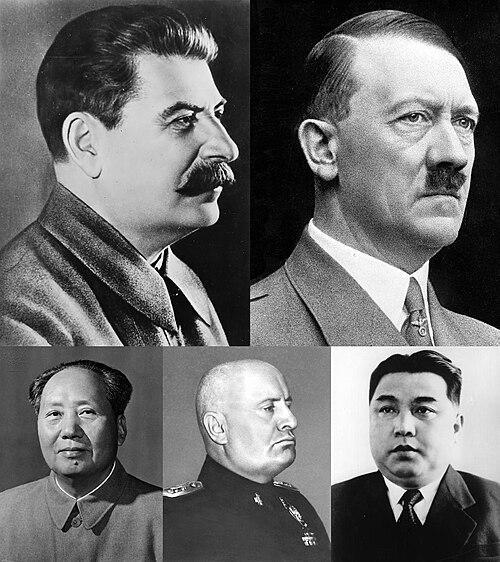
It must be acknowledged that there are immense and irrevocable cultural differences between East and West, and neither are truly compatible with each other. Instead of striving to seek a commonality, differences should be celebrated, as an example of the beauty of human diversity in all of its myriad manifestations. There are too many ideologies that have attempted to homogenise humanity. Every single attempt to universalise the human race has ended in mass murder, like Nazism and Communism. Ironically, these creeds were created by fantasists who were convinced that they could engineer world peace by dehumanising others.
Another example of the cultural differences between West and East is the notion of attachment. Buddhists believe that the attachment to worldly things is the source of all discontent and suffering. They believe that as soon as a person detaches themselves from their worldly desires, true enlightenment is achieved. Once more, this notion jars against the West with its culture of self-improvement and the almost interminable attainment for riches.
Negating the self, or the ego is an anathema to many people living in the West today, so this theory has had to be reformulated to seem acceptable. However, such a profound belief has been trivialised, and it is instead presented as “mindfulness”, a temporary escape from selfishness and self-centredness. Watering this concept down as akin to a relaxing hobby has defeated the purpose.
It is difficult for most people nowadays to imagine a spiritual realm. In the modern West this literally has no meaning because the material world of here and now is of primary importance. However, even in ancient times the understanding of a metaphysical world was a source of bafflement for Europeans. When Jesuit missionaries ventured into Asia they reportedly asked Buddhist monks to direct them to the geographical location of Mount Meru, unaware that this was not a literal place, but a sacred symbol representing the centre of the universe.
Cultural misunderstanding has had profound consequences. The senior Jesuit and missionary Andre Palmeiro decided to evangelise the Chinese people on an expedition which seemed cursed from the beginning. He was perplexed by the lack of belief in the one creator of heaven and earth, and confused by their insistence that the universe was subject to a naturally occurring order. The basic elements, fire, earth, air and water simply waxed and waned alternately in an infinite cycle of life, death and renewal.
These oscillations were interpreted by the Emperor, and obeyed without question by his subjects. It was an uphill battle to convince the Chinese people to switch allegiances. They were wholly subservient to the edicts of the Emperor, not the Pope. The Chinese people who encountered the missionaries were suspicious and fearful. They believed that if they dared to disobey the Emperor this would disrupt cosmic harmony, and chaos would ensue.
Many Westerners have convinced themselves that Eastern belief systems are simpler and hark back to a more innocent time. They want to appear well meaning, but they actually look and sound patronising. The decline of religion in the West has coincided with an increase in degradation and decadence. A spiritually hollow population has attempted to find true wisdom and enlightenment from the East, but without considering the complexities and nuances. Scholars have dedicated most of their lives trying to understand the purpose of human suffering, and it is demeaning to find their studies reduced to greeting card platitudes.
A spiritually moribund West needs to revert to its own traditions, and reinterpret them for a modern audience rather than misappropriate others. Stealing ideas and misrepresenting them is offensive. It is actually insulting to the people who have cherished their cultural traditions and value systems for generations.
The West has forgotten its own civilisational foundations, in fact it has destroyed them. There is no point seeking spiritual enlightenment elsewhere, as it is embedded within the institutions of our society. The notion that all humans are equal did not arise out of thin air, it came from theologians and philosophers from Europe.
Our culture is informed by the conventions and values that were honed over centuries. These things used to mean something, but since the late twentieth century they have been undermined. One glaring example is the toleration of blasphemy. Blasphemy was once a shocking thing, and it was considered a shameful act. Since belief has diminished, the shock has no currency anymore. It is a consequence of the contradictory notion of tolerance. Toleration, used responsibly is positive, and helps create harmony and cohesion. When toleration is misused, and put in the hands of irresponsible people it only brings discord and division. Of course, blasphemy is not the only thing that has harmed the West.
Ignorance, arrogance and contempt in general has accelerated the degradation of our civilisation. This attitude is evident in the class of politicians that have been elected in the last thirty years. They no longer represent the people, they are instead driven by a false ideology and a lust for power. They have deliberately turned their backs on our ancient and hallowed institutions, and derided the political achievements of their antecedents.
History has been erased, and we have no identity. However it is lucky that we still remember what happened when authoritarians tried to burn books and destroy our artistic and cultural legacy. We must never return to those dark days. Instead of searching for a different way of life, we need to revive our old ways to survive.
The 11th of July is a vital and integral part of Ulster Protestant culture, a day in which Unionist communities in Northern Ireland anticipate the “Glorious Twelfth” with the construction of bonfires. It is a tradition, which takes place every year to mark Protestant victory over Catholic forces.
However it has had a controversial history, and the celebrations have been overshadowed by episodes of sectarian violence, and the threat of Loyalist terrorism. As a consequence, recent attempts have been made to restore the peaceful nature of the festivities, and to emphasise its real meaning. It is a pity that the historical significance has almost vanished in the wake of such malevolence, and the mischief of bad actors with political grievances. This year, contemporary political events have infiltrated the occasion, and almost sabotaged the proceedings.
However, fifteen years ago, in Belfast concerted efforts were made to depoliticise the event. Bonfire committees were established, in order to maintain peace and to eliminate the divisive nature of some of the eleventh gatherings. They all agreed that burning the Irish tricolour flag was, in a literal sense, far too incendiary, and the display of Loyalist symbols and flags actually spoiled the commemorations.
Belfast council later acknowledged that it was important for the community to gather together to celebrate their heritage and culture, but not at the expense of others, especially Catholics who do not share the same beliefs.
The precarious state of Northern Ireland, and the ambiguity that prevails with its relationship to its Southern neighbour, and indeed with its tenuous relationship with the rest of the United Kingdom has been a source of contention since its inception a hundred years ago.
A sense of mistrust has ebbed and flowed over intervening years. It is a tremendously emotive subject, as religious and cultural ties are not so easily severed. People will always remain attached to their beliefs and religious feelings. There is a strong sense of affection and loyalty, so loosening the knot is unthinkable.
These deeply held sentiments are profound, even though outsiders will inevitably observe the situation differently. The people of Northern Ireland are in a double bind. Superficial reports paint them in an unfair light, as religious bigots, or warring tribes with no hope of reconciliation. It only suits the politicians to diminish people in this reductive way, but does not help the future of the union in the long term, or indeed its future in relation to the rest of Europe.
However, the delicate and fragile peace that has been maintained for some decades is not a given, it has evolved and it was a huge sacrifice, both literally and metaphorically. This is not a new situation. This is a union that has been forged over 600 years. It is the foundation of our constitution, and it is the reason why the United Kingdom is unique as a sovereign entity. It is also the reason why the UK as a state distinguishes itself as separate from Europe, both politically and culturally. Unlike the volatile continent, the UK sought to conciliate, rather than antagonise. This has not been easy or smooth, uniting four distinct nations under one sovereignty has over the centuries been an almost impossible task.
This was evident during the English Civil War. Basically, this was a conflict between two autocrats, both of whom professed that their religious and political authority was correct. Rebellion in Ireland ensued. This was vicious and bloody, leaflets from that time opined that “we have waded too far in that crimson stream (already) of innocent and Christian blood”. Unfortunately the bitter legacy of that time is still fresh in the memory of Irish people today, and many of them are too aggrieved to forgive and forget.
Cromwell was eventually victorious, but his short-lived experiment as Lord Protector of the Commonwealth merely replaced the tyranny of the King with a new kind of despotism. The Monarchy was restored in 1660, but the Kingdom was a pale shadow of its former glory. The power of Parliament, in the face of absolutism had also waned. There were fears that enmity would rise again against the Crown.
The last four years of King Charles II reign were autocratic, as he ruled without the interventions of Parliament. He was fortunate enough to receive the financial support of his cousin, the French King Louis XIV. Throughout these years the United Kingdom remained passive in the face of French ambition. After Charles’ death, his brother James ascended the throne. James’ Catholicism was more overt than his predecessor, and there were hints that he wanted to emulate King Louis’ absolutist style of rule.
James’ illegitimate son, the Duke of Monmouth was living in political exile at the time of his father’s accession. Ensconced in the safe company of his allies in Holland he hatched a plot to dethrone the King and proclaim himself the rightful heir. His comrades and fellow conspirators were political refugees from the Whig party who fled when their previous plan to prevent Charles’ accession failed. They severely underestimated the might of their adversaries in the Tory party and were banished.
Monmouth led a fleet of three ships containing eighty-three men to the shores of Lyme Regis in Dorset. This was the seat of English Republicanism and was renowned as a stronghold of dissenting Protestantism. He pledged that he would release the Kingdom from the “Absolute Tyranny” that was put in place by his uncle. Three thousand men from Lyme Regis joined him in his crusade against the forces of Catholicism.
However these men were no match for the King’s Army. 500 were killed and 1,500 were imprisoned. The Duke managed to escape by disguising himself as a shepherd. Two days later he was discovered in a ditch, and he was summoned to London to face the King. He was charged with treason and executed at the Tower. The Duke became a martyr for the cause. The urgency of the cause became more pressing after King Louis reversed the Edict of Nantes, a law designed to prevent the persecution of French Protestants.
The diarist John Evelyn recounted the effects of this reversal, stating,
“The French persecution of the Protestants raging with utmost barbarity…The French tyrant abolishing the Edict of Nantes…and without any cause on the sudden, demolishing all their churches, banishing, imprisoning, sending to the galleys all the ministers, plundering the common people and exposing them to all sorts of barbarous usage by soldiers sent to ruin and prey upon them”.
Parliament was recalled, as a new constitutional crisis appeared on the horizon.
It soon became clear that James did seek absolute power, and to undermine the Protestant cause to re-establish the Catholic Church as the official religion of the country. It was fortuitous that James’ daughter was married to the Dutch King, William of Orange. William had more persuasive powers than Monmouth, and he was alarmed by the antics of Louis. He was afraid that the whole of Europe would fall under his absolute rule, and the freedom of religious conscience would be sacrificed.
William’s English supporters sent him an invitation to enter the Kingdom. His arrival, in Brixham on the 5th November 1688, set in motion a chain of events known as “The Glorious Revolution”, when James was forced to relinquish his position and accept that William was the legitimate King of a free and democratic Kingdom. However this was not acceptable to the Catholic subjects in Ireland, who were loyal to James. They were known as Jacobites, and they resisted his authority. It led to an all out war, but the Orange cause was victorious in spite of the money that was lavished on the Jacobite Army by the French King.
Today “Orangemen” continue to pay tribute to the man who helped to liberate them from religious tyranny. It is a continuing cause of celebration in Northern Ireland, but it is regarded with ambivalence in the Republic of Ireland. The Irish Republic was supposed to be a democratic, secular state, nominally Roman Catholic, but still hospitable to the minority Protestant population.
However the fate of the Republic did not turn out in the way it was envisaged, the Catholic Church actually dominated society. The years of religious tyranny appeared to be returning with a vengeance. The veteran Irish writer John Banville opined,
“The war of independence and the civil war were disastrous for us. The bad people took over. The partition took away that Protestant dissenter tradition and the 26 counties were left to the priests”.
This was noticed by large swathes of the population. However the Republic of Ireland has evolved into a more secular state. Consequently attitudes towards their Northern neighbours have softened.
There is a faint possibility that the historical achievements and contributions of Protestants will finally be acknowledged, not just in Ireland but in Great Britain as well. I hope that a proportionate and balanced view of history will prevail.
The 4th of July is a date of immense significance in the United States of America. It is an annual celebration of American independence, traditionally marked with patriotic displays, fireworks and family gatherings. This year, the national festivities have an element of piquancy, in the wake of the Biden/Harris defeat which was widely perceived to be a universal rejection of globalist and “woke” politics.
However this situation is not new. The USA has always struggled to define its cultural identity. Competing and often contradictory political ideologies are a perennial feature preventing the nation from fully realising itself. Americans themselves will have different ideas about what it actually means to be American, especially in the modern age.
The defining picture for those of us who are not American, is totally different. The portrait we are shown of Americans is often unflattering. It is quite apt that this was the nation that popularised animation, as the depiction of the average American is cartoonish. It is sad that this caricature of Americans as coarse, obese, loud and over familiar perpetuates. It is, however, a goldmine for writers, who have rich material to play with these stereotypes. Many of them have a field day.
The stereotype originates from the post-war period, a time of increased prosperity. Many Americans enjoyed the benefits of material comforts and luxuries, but there was a paucity of spiritual meaning in their lives. Their increased wealth meant that they became detached from their ancestors, who endured many hardships in their quest to build a new nation. Their sense of a shared history did not seem to matter to them anymore, as they looked forward to the promises of the future instead.
In 1952, Kurt Vonnegut published his debut and prophetic novel “Player Piano” which predicted the emergence of what we now define as the globalist technocracy. It is an America dominated by machines, and Americans are the servants, rather than the masters of them.
It is a desolate, alien landscape, haunted with ghosts from the ancient past, as he notes,
“Here in the basin of the river bend, the Mohawks had overpowered the Algonquins, the Dutch the Mohawks, the British the Dutch, the Americans the British. Now, over bones and rotting palings and cannonballs and arrow heads, there lay a triangle of steel and masonry buildings…Where man had once howled and hawked at one another, and fought nip-and-tuck with nature as well, the machines hummed and clicked…the fruits of peace”.
Vonnegut recognised that the American sensibility was characterised by conflict. Violence was at the core of its creation, it seemed embedded within the psyche.
American society was admired across the world. Many people left their home countries, driven by the alluring promise of success and wealth to find a new life on this vast new frontier. However cultural and spiritual values were frequently set aside in this quest. It did not seem quite so important to acknowledge the principles of the Founding Fathers, those honourable men who built the foundations of the nation on virtue, civility and divine providence. Maintaining a strong and dynamic economy is not enough, a nation can only survive with a shared vision.
Consequently, the hope that once inspired people dwindled into despair and cynicism. Cultural misunderstandings spiralled into malevolent sectarianism, and the rise of gangs. Civil society was under threat, but in reality this was always tenuous. The majority were afraid of minorities. Prejudice and discrimination seemed inevitable, and this tribal mentality was reactivated once more. In 1971, E.L Doctorow published “The Book of Daniel”, a work of fiction loosely based on the trial and execution of the Rosenbergs.
Doctorow alludes to the subtle, and not so subtle undercurrents of antisemitism that coincided with the real fears that the USA could be torn asunder by the “Reds”. The fifties were a decade of real paranoia as Americans had only just defeated another foreign threat. Doctorow reflects,
“Many historians have noted an interesting phenomenon in American life in the years immediately after a war. In the councils of government fierce partisanship replaces the necessary political conditions of wartime…It is attributed to the continuance beyond the end of the war of the war hysteria. Unfortunately, the necessary emotional fever for fighting a war cannot be turned off like a water faucet..like a fiery furnace at white heat, it takes a considerable time to cool”.
Now, contemporary chroniclers have noted that President Trump has revived a new kind of fiery rhetoric in an attempt to unify Americans.
However American civic society has been hanging by a delicate thread, it has been riven with cultural divisions for decades. The so-called culture war was a battle driven by the forces of modernity at the expense of tradition. The intransigence stems from those who remain wedded to the belief that progress is both inevitable and unstoppable.
Vonnegut’s prescient novel predicted the ennui of twenty-first century America, as one of his protagonists laments,
“People are finding that, because of the way the machines are changing the world, more and more of their old values don’t apply any more. People have no choice but to become second rate machines themselves, or wards of machines”.
This brilliantly encapsulates the technocracy, and the consequent withering away of American cultural life.
Americans have been accused of being the chief instigators of artificiality and fake sentimentality. This accusation was levelled against the main creator of such a hollow world, Walt Disney. Doctorow recognised this, in the closing chapter of the novel he observes,
“The ideal Disneyland patron may be said to be one who responds to a process of symbolic manipulation that offers him his culminating and quintessential sentiment at the moment of purchase”.
Obviously, the USA is not Disneyland. However individuals like Disney have been guilty of perpetuating an entirely false portrayal of America and its people. It is time now, that the true picture of the country must emerge.
On the 18th June, 2010 the exiled Portuguese author Jose Saramago died. He was 87 years old, and had been suffering from leukaemia. He spent his final years on the Spanish island of Lanzarote. This was an important refuge for him, allowing him the space and the freedom to write without the fear of censure.
Saramago had long been the bugbear of the Portuguese establishment. His work was a great affront to those in power. He wrote from a place of profound conviction, determinedly opposed to authoritarianism in its numerous guises. It did not matter the source, whether it derived from the Catholic Church, the Government or the associated agencies engaged in imperialism or militarism overseas. Enforced conformity had the same effect, whoever enacted it.
Portugal had an intensely turbulent history, marked by revolution, counter revolution and dictatorship. Saramago’s personal experience of living through this history both informed and inspired him. It provoked an instant and visceral dislike of any regime or institution that attempted to control the population. His approach, however, was characteristically oblique. He preferred to employ allegory and metaphor to draw out uncomfortable truths.
His novels are part of a tradition of metafiction, an obvious homage to his compatriot Fernando Pessoa who cultivated elaborate literary personas, or heteronyms to reveal alternate realities. These characters are created to provide a mirror of society. It is pertinent to note that every authoritarian regime in history has deliberately manipulated the population to maintain their control. It is psychological gaslighting on a grand scale.
The 1997 novel, “Blindness” illustrates this, in graphic detail. An entire nation has been cursed with the affliction of blindness, and is left wholly dependent upon the authorities. A helpless population is easy to control, and is easily manipulated. The state of blindness is a metaphor, an allusion to historical regimes which utilised indoctrination to keep people unenlightened to the truth. In the book, people are literally living in darkness.
However Saramago’s most controversial work was the novel published six years earlier, “The Gospel According to Jesus Christ”. This was regarded as objectionable and offended a deeply pious Portuguese elite. Saramago was reimagining the Gospel in his own inimitable way, and attempting to expose both religious hypocrisy and the abuse of a divine office like the Catholic Church.
Saramago was a staunch defender of the powerless, and he devoted his life and work to express his distaste of the exploitation and abuse of the powerful. Throughout history, those invested with power and influence have used their might to crush dissent. It is a strange paradox that Saramago is regarded as essentially Portuguese, and still bound up with the culture and the history that shaped him, but also the fiercest critic of Portugal as a political entity. He learned to live with the ghosts of his previous existence, and his legacy remains with a body of work that champions the courage of the individual amidst oppression.
On the 10th June, 1921 Prince Philip was born on the island of Corfu, Greece. His birth, and his long and eventful life are well documented. He became the consort of the British Queen, and the father of the future King. It was a remarkable story. Indeed, the whole history of the Royal Houses of Europe was remarkable, and turbulent. These Houses constitute different branches of an illustrious family tree, who have consistently consolidated power and influence across the continent.
The legacy of the remaining Royal Families in Europe is assured through essential ancestral links. However Philip’s connection to Greece was only tenuous. The Greek Monarch was never ethnically Greek but in fact a Prussian-Danish hybrid. The Greek Monarchy was created as a necessary bulwark against hostile forces in the wake of independence from the Ottomans.
The first Greek King was a Bavarian Prince called Otto. His apparent reluctance to integrate himself into Greek culture and society failed to redeem his reputation. His inability to produce any heirs also caused deep consternation. Fearing a possible coup, he went into exile in 1862. A year later, the Greek National Assembly sent an invitation to Prince William of Denmark, requesting whether he was willing to become the new King of Hellenes. He accepted, and ascended to the throne as King George I. George was assassinated in 1913 by a socialist agitator, and his son Constantine became King. One year later, World War One broke out, and Constantine’s supposed neutrality proved to be too controversial and he resigned. His son Alexander succeeded him.
The German connection had been noted by the Greek people, and there was a great suspicion that the King had deeper family loyalties. The Greek public felt threatened and the Family were banished, including Prince Andrew, Philip’s father. Philip’s parents were exiled to “Mon Repos” on Corfu, the summer retreat of the Greek Royals.
Princess Alice, Philip’s mother was 36 when Philip was born. His imminent arrival was the cause of great anxiety, so her doctor decided that she should give birth in the dining room. In the first few months of his life, a series of English nannies looked after him.
Royal childcare in the nineteen twenties was laissez faire. An alarming anecdote reveals that when the young Prince was just six months old he was left unsupervised with the nanny’s pin cushion, and enjoyed playing with the pins. This somewhat reckless disregard for health and safety, and the implication that children are harmed if they are mollycoddled left a distinct impression upon him and even influenced his own parenting.
Alice, however, was fragile. When Philip was just nine years old Alice suffered a mental collapse and she was sent to an institution in Switzerland. At the time of her crisis her husband was living with his mistress in the South of France. The shocking lack of empathy for her plight was characteristic of this family, who chose repression and coldness over openness and warmth.
The apparent insensitivity was a damning charge that would be continuously redirected against the British Royal Family. In 2012, Alice’s niece Lady Pamela Hicks confessed that, “it was difficult to talk to other people about it because they were embarrassed or ashamed…In those days it was something to be kept quiet about”. A frank and blunt confession like that looks, to an outsider, rather selfish and callous. However Philip, along with the rest of the family learned to suppress emotion as a kind of crude survival tactic.
Philip had to adapt to an itinerant life from the age of 9 until his marriage to the young Princess Elizabeth at the age of 28. One of his acquaintances, Lady Myra Butter observed, “the effect of not having a home is imponderable. You didn’t go into those things then, but now people like Philip would be counselled all the time”. Philip himself remarked upon this with his infamous bluffness, “I just had to get on with it. You do. One does”. Again, this typically crass, basic and clumsy language seems rather hollow and thoughtless, but it was a philosophy of sorts that he depended upon.
Philip was educated at Gordonstoun School, an institution inspired by the principles of Ancient Sparta, a militaristic, warrior culture. He thrived under the regime, and it honed vital skills which were invaluable in his future career as a Naval Officer. Courage, resilience and indefatigability served him well. His war record revealed his heroism on HMS Valiant where he bravely intercepted and destroyed enemy vessels on the battlefront of the Mediterranean Sea. After the war, Philip was posted to Malta, where he served as first lieutenant. In 1952, he was promoted to the rank of commander. When King George VI died, he was forced to relinquish his career in the Royal Navy, as his wife, Queen Elizabeth II ascended to the throne.
Philip’s experiences undoubtedly shaped his personality. He was not just a bluff person, he was unflappable, often irascible and sometimes just a bit rude. One of his greatest achievements in this country was to establish the Duke of Edinburgh Award, which encouraged resilience in generations of young people. The downside to his life derived from his unswerving belief that feelings must be bottled up, and this belief was something that his eldest son railed against, not to mention the wider British public who reacted strongly against his apparent indifference to the tragic death of his daughter-in-law.
However his position as the strong, paternalistic presence in the twentieth century British Monarchy remains in the memory. As the Poet Laureate, Simon Armitage notes in his closing stanzas of “The Patriarchs”,
“Last of the great avuncular magicians,
they kept their best tricks for the grand finale:
Disproving Immortality and Disappearing Entirely.
The major oaks in the wood start tuning up,
and skies to come will deliver their tributes.
But for now, a cold April’s closing moments
parachute slowly home, so by mid-afternoon
snow is recast as seed heads and thistledown”.
This poem, composed on the event of his death on the 9th April 2021 is the perfect tribute to this unique figure in British cultural history.
On the 28th May 1972, the exiled and disgraced Duke of Windsor and former King, Edward VIII died. He ascended to the throne in 1936, but abdicated within the same year. His rapid accession, abdication and banishment was just a misfortune in a series of misfortunes which almost threatened to topple the British Monarchy itself. Within four decades the status of the Crown appeared to be diminishing into insignificance.
At the turn of the twentieth century, the United Kingdom made a decision to forge alliances with European powers. However the result of this was far from inconsequential. Unwittingly, this decision plunged the Kingdom into the First World War. It fought a bitter, bloody and protracted campaign against Germany. The once close cultural connection between these two countries was severed, and the warmth, affinity and familial affection that the British public felt for the partly German Royal Family waned to an alarming degree.
In 1917, at the height of war, the Kingdom was in a fragile state, it was far from united. It was in a frayed position, riddled with strikes, mutiny and increasing political radicalisation. King George V was forced to divest the Family of its foreign associations, and he decided to rebrand it for a more modern and progressive age. His first decision was to anglicise the Royal Family. He renamed the Royal Dynasty “The House of Windsor”. His German relations who still resided in the Kingdom were no longer Battenbergs, but became Mountbattens instead.
Although George had foreign ancestry, he remained culturally English, despite the leftist author H.G Wells’ complaints about “an alien and uninspiring court”. However these words were brushed off by an unruffled King.
Wells’ strident admonitions seemed harsh and unfair but were met with the King’s firm and witty riposte, “I may be uninspiring but I’ll be damned if I am an alien!”. George’s second decision was to reform the honours system, which was regarded as elitist and undemocratic.
He established the Order of the British Empire, which acknowledged the achievements of both women and men from across the social classes. In an astounding break from tradition, he arranged his first investiture within the grounds of Ibrox stadium in Glasgow, the home of Rangers football club. The first recipient of the award was the humble khaki clad Lizzie Robertson, who was rewarded by the King “for devotion to duty in a national projectile factory”. He also established the Companions of Honour, which paid tribute to those who worked hard to protect the rights of ordinary British workers.
It seemed for a time that the Crown was secure. With these new measures, he managed to stave off the dangers of socialist revolution which had cost the lives of his cousins in Russia. King George V was truly the “people’s King”. The silver jubilee celebrations brought a feeling of national unity while the continent was tearing itself apart. However six months later, on the 20th January, 1936, the beloved King died.
The old continental alliances were fracturing once more. An embattled and humiliated Germany was on a dark path towards totalitarianism. The British Prime Minister Stanley Baldwin believed that the political and religious settlement encapsulated by the presence of the constitutional monarchy was an essential bulwark against dictatorship in this country.
Baldwin paid tribute to the late King, commending his legacy. He said that he was responsible for “bringing in the moral authority, honour and dignity of the throne”. Edward’s accession did nothing to allay the fears of a population that had barely recovered from the last war.
Unlike his father, Edward revealed a shocking lack of empathy for the poor and the unemployed. While on an official engagement to the poverty stricken villages of South Wales, he uttered with spectacular insensitivity that “something must be done” but offered no words of comfort to those without work. His affair with the American socialite Wallis Simpson was common knowledge, but despite protestations he refused to relinquish it. One year after his abdication they married.
Edward’s actions looked increasingly selfish, arrogant and disloyal. He alienated himself from his family, who were appalled that he put his own feelings first, rather than serve the interests of his country. He was marooned in self-imposed exile in France. In October 1937, he added insult to injury when he toured Nazi Germany with the Duchess. His visit was promoted and published as vital propaganda by the German media. He was filmed meeting Hitler at his Bavarian retreat, and Edward performed a Nazi salute. Edward made no secret of the fact that he favoured Nazism as a political ideology, which he perceived as preferable to Communism.
Edward’s blatant admission made him a profound liability to the British state at the height of the Second World War. There were rumours swirling around that he was a spy and leaking secrets to the German military. There were even suggestions that he was about to revive the days of imperial Prussia and was about to be parachuted in as the new Kaiser. In 1940 he was appointed governor of the Bahamas, but he disliked the role and resigned after five years.
At the end of the war, the Duke and Duchess returned to France. They were feted as a celebrity couple by the French, but the British public never forgave their treachery. The duke died from complications following heart surgery at his home in France. His legacy as the traitor King has never been forgotten.