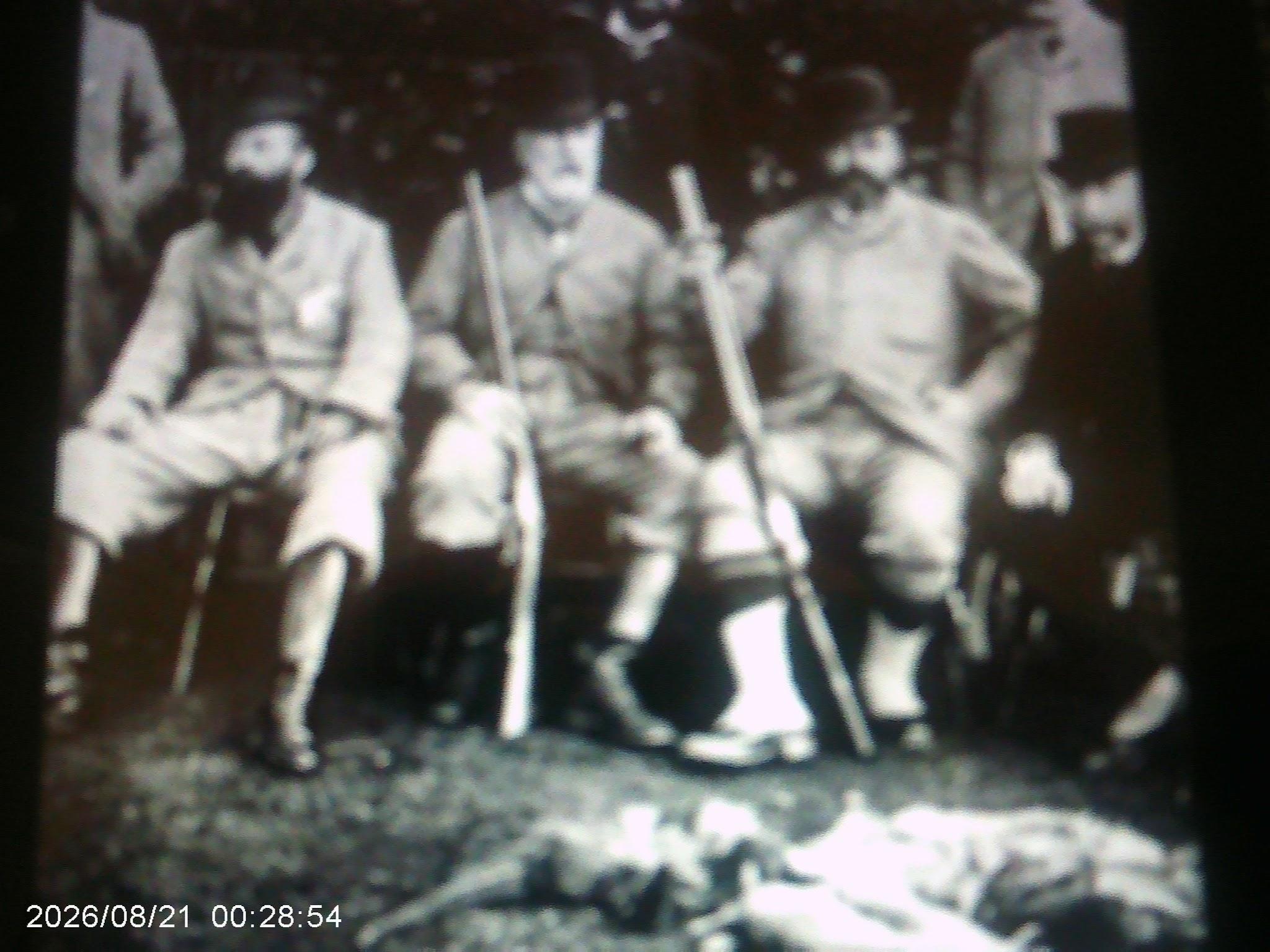
On the 10th September, 1931 the English author Isabel Colegate was born. Her most acclaimed work was her 1980 novel “The Shooting Party”. The narrative focuses on a society event on a grand estate on the eve of the First World War. It captures a place and time that has now vanished, as before the Great War there was a sense of familiarity and order. There were seasons, a pattern and a routine to life on the grand estates. Everyone and everything had a place in a fixed hierarchy.
On this particular estate, life revolved around the annual shooting party. The quarry were bred and reared to be prey at exactly the same time every year. Every creature played a part, from the lowliest moth to the most magnificent specimen of deer. It ran like clockwork.
However as the narrative unfolds, it soon becomes apparent that there are vague but palpable signs threatening both the social order and the cycles of nature. The first sign manifests itself in the form of a stranger arriving on the grounds of the estate. He arrives to spread subversive and dangerous ideas, disturbing the sense of peace and harmony. He makes a declaration in words that sound eerily prophetic, stating, “Until we can recognise the universal kinship of all living creatures we shall remain in outer darkness”. The atmosphere is redolent of an outer darkness and it strikes a chord within the reader, who senses that there is an inevitability to the brief existence faced by the animals. The reader accepts, albeit with resignation and sadness that these animals have no rights, and no agency.
These animals exist as the hunted and their fate is sealed immediately from the point of their conception. They remain a constant and interchangeable feature whose entire destiny is inextricably entwined with the earth that sustains them. Their lives are so short that their fleeting presence seems negligible.
It is a pattern of life that has a solemn futility to it. The lives of the agricultural workers who toil the land are an exact mirror of the brutal, limited lives of the animals. Nature appears like a cruel mimic, as these desperately poor men eventually succumb to the same meaningless deaths when they are hunted down and killed on imperial battlefields. Their lives are virtually the same, as the author readily admits. She can see the obvious parallels, she expounds upon this theme,
“The sacrifice now was not of men but of birds, handsome creatures, bred in every luxury a bird could wish for…fed, protected from predators, set loose for a few months of life in what was to be presumed might be a pheasant’s Eden, only to be cast forth by a whole host of rustic angels, bearing not so much flaming swords as sticks and whistles, forced to take to the air reluctantly- heavy birds, a flight of more than a few feet exhausts them-forced up and out to meet a burst of noise and a quick death in that bright air”. However, the ominous words of that stranger come back to haunt the hunters when tragedy strikes.
A minor member of the party is accidentally shot, and he dies of his injuries. In an instant, he is a martyr. A greater sacrifice of young men ensues when war breaks out. The aftermath of this loss was devastating, not just of youth but tradition, old money and hierarchical society. The diminishing members of the old guard who survived these seismic events were the last remaining witnesses of a vanished world. Their numbers continued to dwindle in the modern era. These changes simply swept everything of value away, Colegate reveals one character’s insights, stating, “Although he felt himself now too old to be able quite to make out what were the assumptions, orthodoxies, hypocrisies even events of the new age, he was certain that they embodied changes for the worse, a sort of mass loss of memory, and the replacement of the common understandings of a civilised society by the destructive egotism of a barbaric one”. Even now, the historic parallels seem strangely similar in our contemporary postmodern society.
 Ponderings
Leave a comment