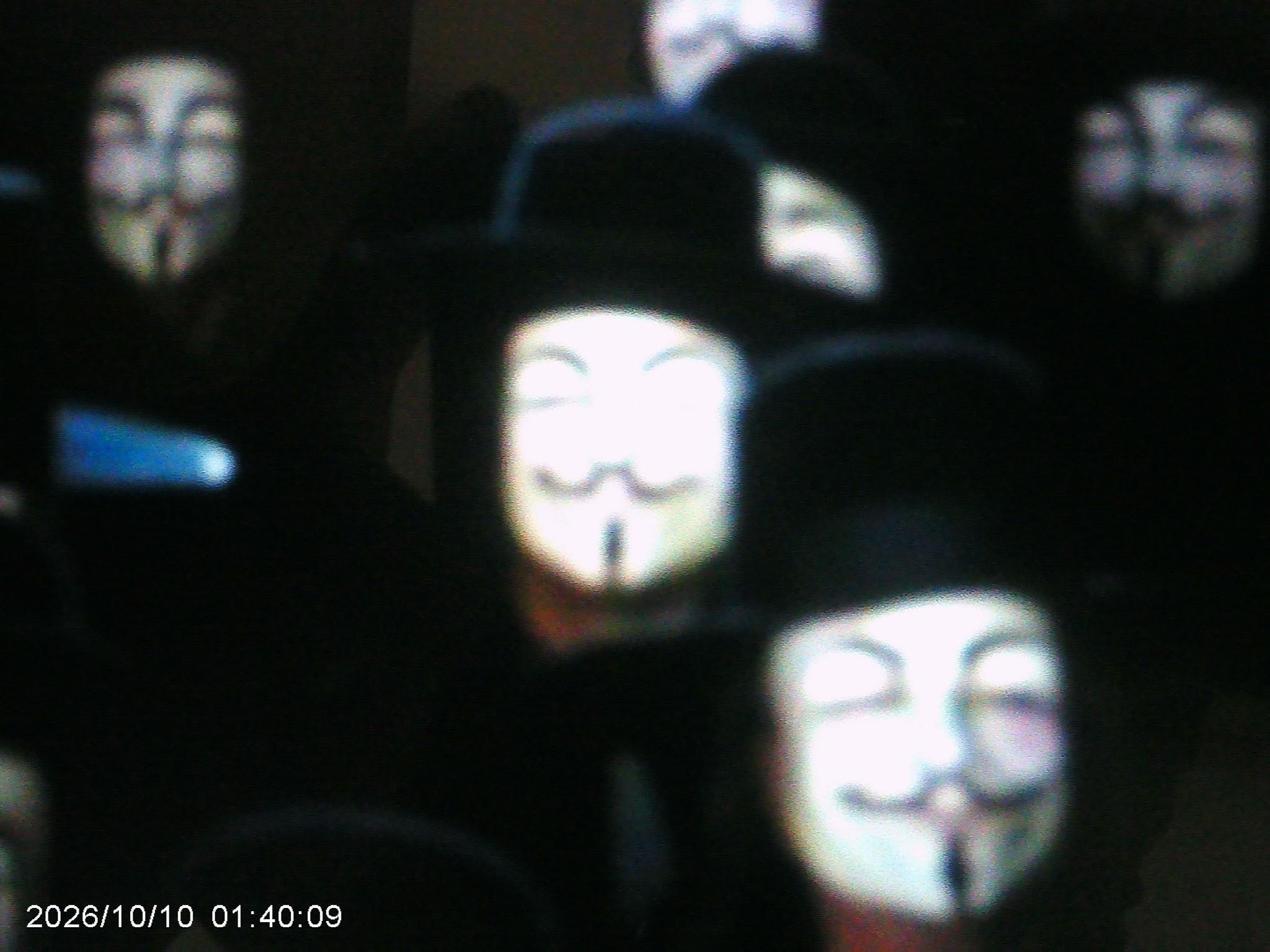
The 5th November 1605 is a date that is etched upon the collective memory, at least in England. However every year it dwindles in importance and relevance. This has arisen in the wake of globalisation. History itself has become an irrelevance when the future of humanity is complete homogenisation. Modernity is solely based upon our combined ability to purchase and to consume, so the past literally has no purpose. I belong to the last generation where our unique culture and heritage was still celebrated, as it still had some meaning and significance.
However there were early signs that this was beginning to wane. At the height of Thatcherite Britain, when this country had finally recovered its own self-confidence in the world, a vindictive political campaign was launched. The methods employed by these campaigners were insidious. They decided to launch a cultural revolution, akin to Maoist China, but through subversion, stealth and sabotage.
However, their motivation was unambiguous, in spite of the barely concealed subterfuge. They were deeply aggrieved that Thatcher had torn up the post-war political consensus, and that she had initiated an economic revolution that drastically altered the role of the state. It was a positive progression from the economic stagnation of the previous decade. It led to more innovation and prosperity as individuals had more freedom and liberty and were less reliant on the state.
The state was a sclerotic, leviathan like structure. However many resisted the attempts to reduce it, some resisted it with counter-revolutionary methods. Political activists, averse to the changes wrought by Thatcherism, infiltrated the established institutions and tried to subvert them. The BBC, the judiciary, the civil service and the education system were all targets, along with statutory organisations that were designed to encourage people in the arts. Creativity was scorned. Propaganda was promoted, and every effort to enhance imagination and inquisitiveness was suppressed.
The propaganda was designed to undermine and to corrode any nationalist sentiment. Emotional blackmail was a tool, wielded like a weapon, along with historical guilt. It engendered a generation that was less sure of itself, and more fragile and disturbed than previous generations. This was a deliberate and devious manoeuvre, as lost and broken people are much easier to control. It was in keeping with their twisted plot to create the necessary conditions for international socialism. The propagandists actually loathed history, they only used it in order to manipulate minds, and to disorientate people by detaching them from their ancestral past.
However political and cultural propaganda campaigns within this country are nothing new, in fact they are all too familiar. Jacobean England in particular, was also a hotbed of political intrigue. The King ascended to the throne in 1603. He had huge ambitions for the future. He took his inspiration from his great-great-grandfather Henry VII who revived the reputation of the Monarchy after the ruinous and catastrophic Wars of the Roses. The crown that he personally commissioned, the Imperial Crown, symbolised national reconciliation. King James, imitating his ancestor, imbued this with a more profound message for his kingdom. He styled himself Rex Pacificus, the peacemaker king.
His ambitions were extraordinarily impressive, he sought peace between Catholics and Protestants, England and Spain, and England and Scotland. His greatest achievement was to unite England and Scotland under one realm. His indefatigable commitment to peace and unity was eventually rewarded when the twenty year conflict with Spain ceased, and the bridge of friendship between the warring Scots and the English, once regarded as irreconcilable, was finally built.
None of these measures satisfied the extremist elements that still existed within society. The King’s pragmatism was viewed as a betrayal. A contingent of fanatical Catholics perceived the concession to Protestants as an act of extreme disloyalty and contempt. In this febrile atmosphere, a conspiracy was hatched. A plot to kill the King, and all of his Parliament was planned. Fortunately, the King was informed of these secret plans in an anonymous letter warning him that “a terrible blow” was about to be inflicted upon the centre of political power, the Houses of Parliament, which he was about to open.
He immediately issued a search warrant, and at 11 pm on the 4th November the unmistakable figure of Guy Fawkes was discovered beneath the vaults of Westminster Palace guarding a pile of firewood and thirty-five barrels of gunpowder. The fuse was found in his pocket. This could have potentially been the most deadly terrorist attack enacted on English soil, yet it was foiled.
In the early hours of the 5th November Fawkes was arrested and imprisoned. He was then subjected to a merciless and torturous interrogation. Eventually, he confessed to a “horrible conspiracy” to blow up Parliament. He was sentenced to death, and was hanged on 31 January 1606. He was just 35 years old.
Fawkes was transformed into a folk devil, and his legacy as the bete noir of the British establishment was sealed. He became the personification of a sinister, foreign and hostile element that threatened the democratic values that were forged in painstaking detail by the newly crowned British Monarch.
Fawkes hotheaded militancy was never forgotten, nor did it actually die. It was continually revived in successive decades, albeit for wildly different causes. He represented a youthful zeal and arrogance that has never truly disappeared, it has only remained dormant. Whenever a national crisis appears, his example is resurrected again. The ghost of Guy Fawkes and his crudely naive revolutionary spirit remain with us. His dark presence still haunts us. The spectre never really fades, in spite of the various attempts to banish his evil deeds. He lingers in the shadows, waiting to be reanimated.
Fanatics of every stripe are vain and selfish, and never really consider the feelings of others. They only serve to alienate people from their cause. They are so consumed with self-righteous indignation that they lose their sense of empathy and humanity. Anger is a powerful emotion, but it is negative, destructive and often irrational. Often their only answer to perceived injustice is to destroy rather than build. Their antagonism only breeds more anger, spite and revenge. The profound symbolism of Bonfire Night provides a vital catharsis for every English and British person. It is a night when we burn the totems that represent intolerance and bigotry. This is why we must always “remember, remember”.


Leave a Reply